Written by Sulaiman Razvi
It is an observable fact that a preoccupation with sexuality forms a central theme in the discourse of many Hindu fanatics. They derive perverse pleasure in mocking other religions with fabricated references, a practice that has proven immune to mere rebuttal. The only effective response is to hold a mirror to their own faith, confronting them with the unvarnished facts about their gods and sages as detailed in their own scriptures. My objective is not to mock or to hurt the innocent, but to counter attack. The relentless vilification from these quarters has shown that simple refutation is insufficient, one must decode the entirety of Hinduism to reveal the true nature of what its most vocal followers so blindly champion. These fanatics, whose understanding is often curated by sanitized television epics like the Mahabharata and Ramayana, labor under the delusion that theirs is the most decent religion and their gods the most virtuous beings to have ever existed.
Historically, this arrogance was nurtured by a lack of proportional response. Hindus began their polemical writings against Islam in the 19th century, and while Muslim scholars refuted these attacks, they largely declined to expose the profound vulnerabilities within Hinduism itself. This restraint was mistaken for weakness, and thus served as an encouragement. The truth is that the filth of every kind is endemic to their tradition: from rape and bride-selling to paedophilia, sodomy, prostitution, Niyoga, wife swapping and incest, from a pornographic manual like the Kamasutra to obscene idols carved upon their very temples, Hindu gods were rapists, homosexuals, illegitimates, pimps, cuckolds, zoophiles, you name it. Despite this staggering legacy, they have the audacity to point fingers at others. One can only imagine the relentless mockery Hindus would unleash if any other faith possessed even a fraction of the depravity found in their own sacred texts and practices. Their current campaign of actively insulting other religions online is the very provocation that compels this necessary exposure. Certain verses are reiterated across multiple categories, as their thematic relevance allows for discussion within varied contexts. This repetition was deemed necessary to facilitate a more comprehensive understanding.
Description of Women
Women are frequently portrayed in a demeaning manner in Hindu scriptures, often depicted as lustful, as objects of sexual gratification, or merely as child bearing machine.
Mahabharata 5.39.67 “The fruits of the Vedas are ceremonies performed before the (homa) fire; the fruits of an acquaintance with the scriptures are goodness of disposition and conduct. The fruits of women are the pleasures of intercourse and offspring.” Tr. K.M. Ganguli (Source)
Skanda Purana V.iii.103.9-16 “…It is cited by expounders of the Vedas that a woman is one who gives sexual pleasure and a son…” Tr. G.V. Tagare (Source)
Shiva Purana, UmaSamhita 5, chapter 24, verses 16-36 “There is none more sinning and more sinful than women. Women are at the root of all sins…Women usually do not observe the limitations of conventional decency. If at all they stand by them with their husbands it is because no man makes advances to them or because they are afraid of their husbands…They carry on their dalliances with any man ugly or beautiful…Even women of noble families aspire for the life of lascivious women who in their prime of youth adorned with lovable ornaments and beautiful wearing garments move about frivolously…Women become desperate when they do not get men…women are not satiated with the number of men they cohabit with. O excellent sage, there is another secret of all women that immediately on seeing a man their vaginal passage begins to exude slimy secretions. On seeing a man fresh and clean from his bath with his body perfumed with sweet scents, the vaginal passage of women begins to exude like water dripping from a leather bag…on hearing her words Narada was satisfied in his mind. Considering it to be the truth.” Tr. Board of Scholars, Edited by Jagdish Lal Shastri (Source)
Nirukta 4.15 “…Kanya (maiden) is (so called because) she is an object of love…” Tr. Lakshman Swarup (Source)
Swami Prabhupada writes, “The heavenly pleasure for the conditioned soul is sexual pleasure, and this pleasure is tasted by the genitals. The woman is the object of sexual pleasure, and both the sense perception of sexual pleasure and the woman are controlled by the Prajapati, who is under the control of the Lord’s genitals…” A.C. Bhaktivedanta Swami Prabhupada on Srimad Bhagavatam 2.10.26 (Source)
Rape
Hindu Scholars on Rape
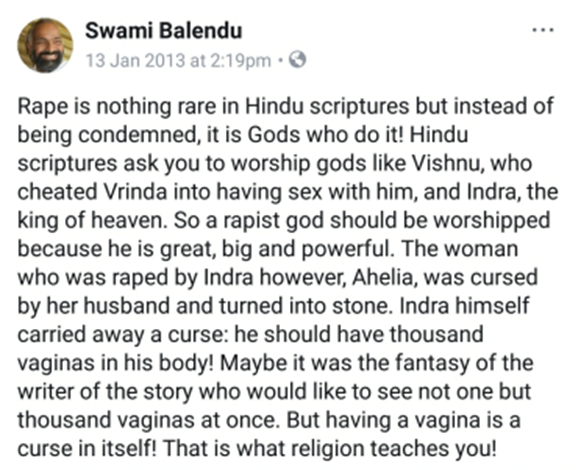
Ex Hindu, formerly known as Swami Balendu spills the beans, stating in his Facebook post that rape is nothing unusual in Hindu scriptures and that even the gods themselves are depicted committing it.
Swami Prabhupada the founder of ISKCON writes.
“…In this regard, the word vikhyātam is very significant. A man is always famous for his aggression toward a beautiful woman, and such aggression is sometimes considered rape. Although rape is not legally allowed, it is a fact that a woman likes a man who is very expert at rape.” Swami Prabhupada on Srimad Bhagavatam 4.25.41 [ Source ]
“Both man and woman desire one another; that is the basic principle of material existence. Women in general always keep themselves beautiful so that they can be attractive to their lusty husbands. When a lusty husband comes before his wife, the wife takes advantage of his aggressive activities and enjoys life. Generally when a woman is attacked by a man-whether her husband or some other man—she enjoys the attack, being too lusty…” Swami Prabhu on Srimad Bhagavatam 4.26.26 [ Source ]
Hindu spiritual leader Maate Mahadevi says Molestation is women’s fault. (Source)
Bajrang Muni Das of Maharishi Shri Laxman Das Udasi Ashram threatens Muslim women with rape. He was arrested after 11 days and soon granted bail. (Source)
Asaram blames rape victim, “She should have called the culprits brothers and begged before them to stop. This could have saved her dignity and life. Can one hand clap? I don’t think so,” CNN-IBN quoted Asaram Bapu as saying in a Jaipur-datelined report. (Source)
Asaram pretended to be Krishna to sleep with innocent women.
( Source )
Swami om justifies lap dance with a bikini model, compares himself with Krishna.
( Source )
Baba Virendra Dev Dixit wanted to bed 16100 women, many girls were rescued from his Ashram.
( Source )
Hindu Scriptures on Rape
The Hindu tradition’s stance on rape is not one of clear prohibition but of profound and disturbing ambiguity. While its legal texts (shastras) do prescribe punishments for sexual assault, these injunctions are systematically undermined by other core principles. The Rakshasa form of marriage, explicitly detailed in the Manu Smriti and celebrated in epic narratives, is nothing less than the sanctification of abduction and rape as a legitimate union. This permissive attitude extends to the marital sphere, where a wife’s consent is rendered irrelevant, and to the battlefield, where the violation of ‘demoness’ women is often presented as a permissible act. Furthermore, the penalties for rape in certain texts, when they are applied, can be shockingly lenient, suggesting a devaluation of the victim’s suffering. This moral bankruptcy is epitomized in the Mahabharata’s Svargarohanika Parva section 1, where Duryodhana who orchestrated the public stripping and sexual harassment of Draupadi is admitted in heaven temporarily for his “warrior’s valour”.
Mahabharata states that rape or adultery was once allowed.
Mahabharata Adi Parva 1, section 122 “It hath been heard by us that there was a great Rishi of the name of Uddalaka, who had a son named Swetaketu who also was an ascetic of merit. O thou of eyes like lotus-petals, the present virtuous practice hath been established by that Swetaketu from anger. Hear thou the reason. One day, in the presence of Swetaketu’s father a Brahmana came and catching Swetaketu’s mother by the hand, told her, ‘Let us go.’ Beholding his mother seized by the hand and taken away apparently by force, the son was greatly moved by wrath. Seeing his son indignant, Uddalaka addressed him and said, ‘Be not angry. O son! This is the practice sanctioned by antiquity. The women of all orders in this world are free, O son; men in this matter, as regards their respective orders, act as kine.” Tr. K.M. Ganguli (Source)
Matsya Purana not only allows sex with a prostitute and concubine, but also allows gang rape of a concubine and prostitute, the fine is her payment.
Matsya Purana 227.142-6 “…a twice born indulging with a whore should be made to pay her wages…If a man after bringing a harlot does not indulge with her, the king should make him pay her twice as much and should levy a similar amount of fine for himself. Dharma will not thereby be upset. If a number of people forcibly indulge with a concubine, the king should make each one of them pay her double the amount of her wages.” Tr. Taluqdar of Oudh, edited by B.D. Basu (Source)
The punishment for rape by a Brahmin is mere tonsuring the head, for other castes, it is death penalty.
Manu Smriti 8.379 “Tonsure has been prescribed as the death-penalty for the Brāhmaṇa; for other castes the penalty would be actual death.” Tr. M.N. Dutt (Source)
Yajnavalkya Samhita treats rape as a minor offense.
Yajnavalkya Samhita 294 “For committing rape on female servants (who are prevented by their husbands to visit other people), one shall have to pay a fine of ten ganas, according to Law. If many persons know a woman against her will, each of them should be fined twenty-four panas.” Tr. M.N. Dutt (Source)
Brihaspati Smriti states that if a woman is raped by a man of inferior caste, she shall be put to death.
Brihaspati Smriti 23.13-14 “When a woman has been enjoyed against her will, she shall be kept in the house well guarded, smeared (with ashes), lying on a low couch, and receiving a bare maintenance only. To atone for her sin, she shall be caused to perform the Krikkhra or Parâka penance, in case she had intercourse with her equal in caste; but if she has been enjoyed by a man of inferior caste, she shall be abandoned and put to death.” (Source)
Certain Hindu texts reflect a tendency to place moral blame on women who experience rape, suggesting that the act brings impurity or sin upon the victim, even while simultaneously advising that she should not be abandoned. Narratives such as that of Ahalya, who was deceived and violated by Indra and later cursed by her husband Gautama, illustrate this perspective. Similarly, Sita’s ordeal by fire (Agni Pariksha) is portrayed as a test of chastity following her abduction by Ravana. The Parashar Smriti also prescribes rituals through which a woman who has suffered sexual assault may “regain her purity.”
Parasara Smriti 10.25-26 “A woman forcibly ravished by a man, in captivity, as well as she, who accommodates a man on account of being physically over-powered, or out of a sense of danger to her life, should regain her purity by practising a Santapanam penance. This is what has been enjoined by Parasara. A woman, who having been once ravished by another man, turns back with repugnance from the path of inequity, should expiate her sin by practising a Prajapatya penance, whereby she would be pure after her next monthly period.” Tr. Manmatha Nath Dutt (Source)
Some other texts say, she is purified in her next menstrual period. A case was reported in Madhya Pradesh’s Rajgarh where the victim’s father was instructed to host a feast to “purify” his daughter.
Rape Can be Forgiven
Hindu scriptures mention expiation for rape.
Garuda Purana I.222.16 “Expiation for indulging in sexual intercourse with an unwilling woman is Paraka. There is no expiation for a low caste man in a similar context.” Tr. J.L. Shastri (Source)
Rape and Abduction are Legitimized
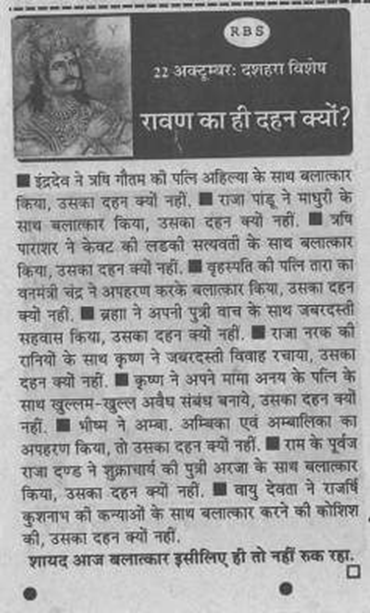
Hindu scriptures list several forms of marriage, one of them is known as Rakshasa marriage. Rape and abduction of females are legitimized under this form of marriage. Manu explains Rakshasa marriage in the following way.
Manu Smriti 3.33 “The forcible abduction of a maiden from her home, while she cries out and weeps, after (her kinsmen) have been slain or wounded and (their houses) broken open, is called the Rakshasa rite.” (Source)
This form of marriage is permitted for the Kshatriya caste.
Manu 3.24-26 “For Kshatriyas those before-mentioned two rites, the Gandharva and the Rakshasa, whether separate or mixed, are permitted by the sacred tradition.…The sages state that the first four are approved (in the case) of a Brahmana, one, the Rakshasa (rite in the case) of a Kshatriya, and the Asura (marriage in that) of a Vaisya and of a Sudra.” (Source)
Medhatithi writes in the commentary of Manu Smriti 3.33.
“…‘Crying out and weeping;’—i.e., unwilling girl. This is what distinguishes this from the ‘Gāndharva’ form. ‘Crying out’ stands for such loud wailings as—‘there is none to protect me, I am being taken away, save me,’ and so forth: while ‘weeping’ stands for shedding tears, which is the characteristic of all frightened women.—(33)” (Source)
Swami Prabhupada writes.
“…There are other kinds of marriage, such as gāndharva marriage and marriage by love, which are also accepted as marriage. Even if one is forcibly kidnapped and later on accepted as a wife, that is also accepted…” Swami Prabhupada on Srimad Bhagawatam 3.22.15 (Source)
It is also mentioned in Mahabharata.
Mahabharata 1.73.8-11 “…There are, in all, eight kinds of marriages. These are Brahma, Daiva, Arsha, Prajapatya, Asura, Gandharva, Rakshasa, and Paisacha, the eighth. Manu, the son of the self-create, hath spoken of the appropriateness of all these forms according to their order. Know, O faultless one, that the first four of these are fit for Brahmanas, and the first six for Kshatriyas. As regards kings, even the Rakshasa form is permissible. The Asura form is permitted to Vaisyas and Sudras. Of the first five the three are proper, the other two being improper. The Paisacha and the Asura forms should never be practised. These are the institutes of religion, and one should act according to them. The Gandharva and the Rakshasa form are consistent with the practices of Kshatriyas…” Tr. K.M. Ganguli (Source)
Mahabharata 13.44 mentions the Raksasa form of marriage without explicitly permitting or forbidding it, but categorizes it among the unrighteous types of marriage.
Baudhayana Dharma Shastra Prasna I, Adhyaya 11, Kandika 20 (I, II, 20), Verses 7-8 “(If the bridegroom receives the maiden) after gladdening (the parents) by money, (that is) the rite of the Asuras (asura). (If the maiden is wedded) after being forcibly abducted, (that is) the rite of the Rakshasas (rakshasa). [12] Among these the sixth and the seventh agree with the law of Kshatriyas. For power is their attribute.” Tr. George Buhler (Source)
Vasistha Dharma Shastra 1.34 “If they forcibly abduct (a damsel), destroying (her relatives) by strength (of arms), that (is called) the Kshâtra-rite.” (Source)
Sankha Samhita 4.3 “Of these, the first four forms of marriage are commendible in respect of Brahmanas; the Gandharva and Rakshasa forms are commendible in respect of Kshatriyas.” Tr. M.N. Dutt
Garuda Purana chapter 95 “The Gandharva and Rakshasa forms are commended in the case of a member of the warrior caste” Tr. M.N. Dutt (Source)
Some Hindu apologists cite Manu Smriti 3.42 to claim the Rakshasa form of marriage is prohibited. But does this mean the text contradicts itself? Not at all. Manu Smriti 3.42 merely states that some marriage forms are superior to others and recommends choosing the superior ones. In fact, Manu Smriti 2.36 explicitly permits Gandharva and Rakshasa marriages, either separately or mixed. Furthermore, Srimad Bhagavatam 10.52.18 confirms that Krishna married Rukmini through a Rakshasa marriage (albeit mixed with Gandharva). Does this mean Krishna violated Hindu law? We have here a clear example of a god practicing a mixed Rakshasa-Gandharva marriage. While some Dharmashastras like the Vishnu Smriti mention the Rakshasa form without explicitly permitting it for Kshatriyas, and Apastamba mentions it without granting permission, the fact remains that the practice is both described in scripture and exemplified by a central deity.
One can find another example of Rakshasa marriage from the Mahabharata. Bhishma attended the Swayamvara of the three princesses of Kashi namely Amba, Ambika, and Ambalika for his half brother Vichitravirya. Instead of allowing them to choose, he seized all three and killed many. Among his challengers was King Salya, whom Bhishma also vanquished but spared. Bhishma then brought the princesses safely to Hastinapura for Vichitravirya. However, Amba confessed she loved another, King Salva, and was released, while Ambika and Ambalika married Vichitravirya. After seven years, Vichitravirya died young, leading to the next major turn in the Kuru lineage’s story.
Mahabharata Adi Parva 1, Section 102 “The wise have directed that when an accomplished person has been invited, a maiden may be bestowed on him, decked with ornaments and along with many valuable presents. Others again may bestow their daughters by accepting a couple of kine. Some again bestow their daughters by taking a fixed sum, and some take away maidens by force. Some wed with the consent of the maidens…But the sages have said that, that wife is dearly to be prized who is taken away by force, after the slaughter of opponents, from amidst the concourse of princes and kings invited to a self-choice ceremony. Bhishma cut off, with his arrows, on the field of battle, bows, and flagstaffs, and coats of mail, and human heads by hundreds and thousands…Then that foremost of all wielders of weapons having vanquished in battle all those monarchs, pursued his way towards the capital of the Bharatas, taking those maidens with him.” Tr. K.M. Ganguli (Source)
Brihadarayaka Upanishad permits marital rape.
Brihadaranyaka Upanishad 6.4.7 “If she does not willingly yield her body to him, he should buy her with presents. If she is still unyielding, he should strike her with a stick or with his hand and overcome her, repeating the following mantra: “With power and glory I take away your glory.” Thus she becomes discredited.” Tr. Swami Nikhilananda
Rapist Gods
Vishnu
Vishnu’s Rape of Vrinda/Tulsi
Vishnu is said to have raped Tulsi/Vrinda by disguising himself as her husband. What could be more repulsive than a god committing such an act against a chaste woman? Even more disturbing is the fact that this act is not condemned but celebrated, Hindus commemorate the rape of Vrinda by Vishnu as an annual festival known as Tulsi Vivah.
Shiva Purana, Rudra Samhita 2, Yudha Khanda 5, Ch 23, verses 38-45 “On seeing her husband, Vrnda too was delighted. She forgot her sorrow. She considered everything a dream. Delighted in the heart and with all the dormant passions kindled up, she sported with him for many days in the middle of that forest. Once at the end of the sexual intercourse she realised that it was Visnu. Vrnda rebuked him angrily and spoke thus. Vrnda said:—Fie on this misdeed of Visnu in outraging the modesty of another man’s wife. I have now realised you as the wielder of illusion, appearing in the guise of an ascetic. Sanatkumara said:—O Vyasa, saying thus in great anger she showed her brilliant powers as a staunch chaste lady by cursing Visnu. “O base foe of the Daityas, defiler of other people’s virtue, O wicked one, take this curse from me, greater in force than all persons. The two persons whom you made to appear in front of me shall become Raksasas and abduct your wife. You will be distressed on account of separation from your wife roaming about with Sesa ‘lord of snakes’ who posed as your disciple here. You will seek the help of monkeys in the forest.” Tr. Board of Scholars, Edited by Jagdish Lal Shastri (source)
This story is also mentioned Skanda Purana II.iv.21-10-24; Shiva Purana, Rudra Samhita 2, Yudha Khanda 5, Ch 41 verses 1-35; Brahma Vaivarta Purana, Prakriti Khanda 21.18-31 and Devi Bhagavatam 9.24.14-22 with a slight variation. I will avoid repeating the same story from multiple scriptures, as that would make the article unnecessarily lengthy. The variations in this story are mainly in the names, Tulsi is also referred to as Vrinda, and her husband Shankachuda is sometimes replaced with Jalandhar.
This unfortunate woman, Vrinda (Tulsi), was a devoted worshipper of Vishnu. It must have been devastating for her to be violated by the very deity she worshipped so faithfully each day. According to the Shiva Purana, Rudra Samhita section 5, chapter 41, verses 3–5, Vishnu assumed the form of her husband and raped her at the command of Shiva. It was Shiva who ordered this heinous act, done with the intent to ensure the death of her husband on the battlefield. Her husband, Shankachuda (also known as Jalandhar), was believed to be invincible as long as his wife’s chastity remained intact.
Shiva, who is part of the Trimurti and revered as “the Destroyer,” was unable to destroy Jalandhar himself. So, he instructed Vishnu to violate Vrinda/Tulsi. Enraged and heartbroken, Vrinda cursed Vishnu to become a stone and declared that in his next incarnation as Rama, his wife (Sita) would be abducted by a demon and he would have to rely on monkeys (Hanuman and the Vanara Sena) for her rescue. According to this narrative, Ravana’s abduction of Sita was not a sin but the destined consequence of Rama’s past misdeed, the rape of Vrinda/Tulsi.
Vishnu’s Rape of Several Women
Shiva Purana 5.4.17 states that Vishnu had raped many women.
Shiva Purana, Uma Samhita 5, chapter 4, verse 17 “O great sage, Viṣṇu was deluded by Kāma by the power of Śiva’s Māyā. He outraged the modesty of other men’s wives many times.” Tr. J.L. Shastri (source)
Indra
Indra’s Rape of Ahalya
Indra was notorious among the gods and sages for violating others’ wives, and he did the same to Ahalya by disguising himself as her husband, Sage Gautama.
Skanda Purana V.iii.136.2-16 “There was a Brahmana named Gautama who was like another Brahma. He was endowed with truthfulness and piety. He was engrossed in the Vanaprastha stage of life. His blessed wife named Ahalya was very famous in all the three worlds as a woman endowed with beauty and prime of youth. Satakratu [Indra], the king of Devas, was infatuated by the exceptional beauty of Ahalya. The Slayer of Bala, therefore, tempted her. “O beautiful lady of uncensured features, resort to me, the king of Devas, Sport about with me. You shall be one honoured in all the three worlds. What will you do with this Brahmana who has become lean and emaciated due to his over-zealousness for purity and conventional rites and austerities and Vedic studies! O lady of beautiful eyes, you must be rather undergoing sufferings now.” …Getting an opportunity, he assumed the excellent guise of the sage and carnally delighted Ahalya who believed (that he was Gautama) in the inner apartment. Within a moment thereafter, O descendant of Bharata, the excellent sage hurriedly entered the apartment. On seeing Gautama come Purandara became terrified and he went out. Seeing him he thought (knew) that it was Sakra. So Gautama became highly enraged and he cursed Devendra: “Since you could not control your senses, be one with a thousand vaginal apertures.” On being cursed thus, Devendra was instantly covered with a thousand vaginal apertures.” Tr. Ganesh Vasudeo Tagare (Source)
This story is also found in the Brahma Purana Gautami Mahatmya, Part IV, 16.39–44 and the Brahma Vaivarta Purana Krishna Janma Khanda, Chapter 61. When Indra saw Sage Gautama leaving with his disciples, he seized the opportunity and violated Ahalya by assuming Gautama’s form. Ahalya was unaware of the deception; according to Brahma Purana Gautami Mahatmya, Part IV, 16.51, she asked Indra, “Who are you?” and immediately rose from the bed in shock. But according to Valmiki Ramayana, Bala Kanda, Sarga 48, verse 19, it was not a rape but consensual sex between Indra and Ahalya. When Sage Gautama discovered Indra’s vile act, he cursed both Indra and his wife Ahalya. Indra’s punishment, as described, is rather peculiar, he lost his testicles and penis and was marked with a thousand vaginas all over his body.
Brahma Purana, Gautami-Mahatmya 16.59 Gautama said: – “Sin has been committed by you due to your passion for the vagina. Hence become a person with a thousand vaginas in your body”. Tr. Board of Scholars, Edited by J.L. Shastri (source)
Padma Purana 1.54.1-5 “(I have) told (you) about Adrohaka’s greatness, unbearable to the people. Having resisted (the temptation of cohabiting with) a woman occupying the same bed, he conquered everything. He made convenient (i.e. easy) what was difficult to be accomplished by the wise, and by the celibate sages, and which was difficult for gods, demons and men. Which man, but Adrohaka, is capable of conquering the sexual desire, which is naturally difficult (to overcome)? 0 brahmana, he (i.e. Adrohaka) aloneis a man who has conquered everything. Suresa (i.e. Indra) had vaginal marks (on his body) because of having outraged Ahalyã only. Then again, due to the favour of Goddess (Indraks1), he, became well-known as Sahasraksa (one having a thousand eyes). This is known in the entire mobile and immobile world.” Tr. N.A. Deshpande (source)
Mahabharata 12.343.19-57 “In consequence of his licentious assault on Ahalya, Indra was cursed by Gautama, her husband, through which Indra got a green beard on his face. Through that curse of Kausika Indra lost, also, his own testicles, which loss was afterwards (through the kindness of the other deities) made up by the substitution of the testicles of a ram.” Tr. K.M. Ganguli (source)
Brahmanda Purana 1.2.27.23 “Formerly, the penis of Indra along with his scrotum, O sage conversant with virtue, was made to fall down on the earth by the infuriated sage Gautama.” Tr. Ganesh Vasudeo Tagare (Source)
This might also be referenced in the Vedas.
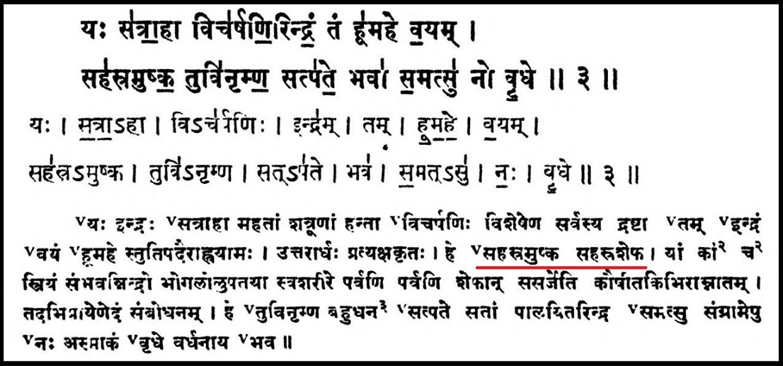
यः सत्राहा विचर्षणिरिन्द्रं तं हूमहे वयम |
सहस्रमुष्क तुविन्र्म्ण सत्पते भवा समत्सु नो वर्धे ||
yaḥ satrāhā vicarṣaṇirindraṃ taṃ hūmahe vayam |
sahasramuṣka tuvinṛmṇa satpate bhavā samatsu no vṛdhe ||
Rig Veda 6.46.3 “We invoke that Indra who is the destroyer of mighty foes, the supervisor (of all things): do thou, the many-organed, the protector of the good, the distributor of wealth, be unto us (the insurer of) success in combats.” Tr. H.H. Wilson
The Sanskrit word mentioned here to describe Indra is Sahastra+Mushka which means thousand vaginas/testicles. Some have also interpreted this as thousand powers. One can check the meaning of Mushka ( मुष्क ) in V.S Apte’s dictionary available online uchicago.edu and also from another online dictionary Spokensanskrit.de. Some also interpret Sahastra Mushka as Thousand Powers. Sayana interpreted the word Sahastra Mushka as Sahastra-Shepha (thousand penises).
Swami Prabhupada writes.
“…Once he raped the wife of Gautama Muni by using his disappearing art, and similarly by becoming invisible he stole the horse of Maharaja Prthu….” A.C. Bhaktivedanta Swami Prabhupada on Srimad Bhagawatam 4.24.5 [ http://vanisource.org/wiki/SB_4.24.5 ]
Indra somehow got the scrotum of a ram fixed in his body, and the marks of thousand vaginas were later turned into thousand visions.
Valmiki Ramayana Bala Kanda 1, Sarga 49, verses 3-7 “By Gautama’s anger I am rendered testicle-less and his wife Ahalya is also rejected by the sage, and thus by his releasing a severe curse his propriety for ascesis is dwindled, therefore his ascesis is pre-empted by me. ‘Therefore, oh, all gods with the assemblages of sages and caarana-s, it will be apt of you to make me virile again, as I have acted for the benefit of gods.’ Thus Indra spoke to all gods. On hearing the words of the officiator for Hundred-Vedic-rituals, namely Indra, all of the gods and other assemblages of celestials, together with the groups of Marut-gods came to the godly manes keeping the Fire-god in van, and appealed. ‘This ram is with testicles and Indra is indeed rendered testicle-less. Taking the testicles of this ram they may be given to Indra quickly.‘ Thus Fire-god started his appeal to manes. ‘This ram that is being offered to you shall now be gelded to give its testes to Indra, and though this ram is deprived of its organ it will be complete and it endows complete satisfaction to you. To those humans who hereafter offer testes-less rams in sacrifices for the purpose of your gratification, you shall truly offer them plentiful and unmitigated benefits.’ Thus Agni, the Fire-god spoke to manes.” (source)
Indra’s Rape of Rambha
Brahma Vaivarta Purana mentions the rape of Rambha by Indra. Rambha was the daughter of Sucandara and the wife of King Janamejaya. King Janamejaya had planned to perform the Ashvamedha Yajna, but Indra stole the sacrificial horse. Indra raped Queen Rambha in the stable, she committed suicide due to the assault by the Vedic deity Indra. Indra wasn’t remorseful, but he feared the consequences from King Janamejaya and fled to Indraloka. This seems to be another version of the story mentioned in Harivamsa Purana, Bhavishya Parva 3.5.11–13 which I have discussed in Ashvamedha Yajna article.
Brahma Vaivarta Purana, Krishna Janma Khanda, chapter 14, verses 45-51 “…now I am going to narrate the story of Rambha to you, Rambha was born in the land of Bharata as daughter of Sucandara…the king Sucandra gave away his daughter in marriage to Janamejaya along with several riches…The king enjoyed her company at several places. Once the king started and Asvamedha sacrifice. At that point of time Indra stole away the sacrificial horse and concealed himself in the royal palaces. Thinking that the Sacrificial horse would be quite beautiful she went to the stable alone playfully. On reaching the horse, Indra appeared on the scene and forcibly enjoyed her company. He had sex with her in spite of her objecting to it. After the performance, Indra was fainted and he lost the senses about the day or night. The beautiful ladies coming in touch with Indra ended her life and Indra getting terrified from the king went back to the heaven.” Tr. Shanti Lal Nagar, edited by Acharya Ramesh Chaturvedi (source)
Devi Bhagavatham Purana 9.40.13-25 “Nârâyana said :– In ancient days, Indra the Lord of the three worlds, intoxicated with wine and becoming lustful and shameless, began to enjoy Rambhâ in a lonely grove. After having enjoyed her, he became attracted to her; his mind being wholly drawn to her, he remained there in that forest, his mind becoming very passionate.” Tr. Swami Vijnananda (source)
Indra’s rape of Utathya’s Wife
Skanda Purana 2.7.23.9-20 “He went to the hermitage of (Brhaspati’s brother) Utathya. There he saw his wife who was pregnant and hence could walk only very slowly. She was well adorned with a girdle tied to her tremulous hips. The sweet jingling sound of the bangles surpassed that of the inebriated bees and cuckoos. She had beautiful garments of various colours. The beautiful lad was sweet-voiced with beautiful smiles. Her pair of breasts resembled a pair of very fine pitchers. Her eyes were like blue lilies. When she laughed her face resembled a lotus. She appeared very charming with her pale cheeks resembling the interior of a Ketaki flower-bunch. On account of weariness she took deep breaths. Her eyes indicated her pitiable plight. She lay somewhere near the entrance to the hut. She was asleep on her bed. On seeing her, Indra became enamoured and raped her though she was pregnant. The foetus in the womb became miserable and feared that it might fall it out. Hence, it closed the vaginal passage by means of its foot. Thereupon, the seminal fluid of the enemy of Bali became scattered on the ground. Therefore Lord Indra became furious with the foetus. With the edge of the eyes turned red like copper, he furiously cursed him: “O wicked one, become blind at the very birth, since you have insulted me by closing the vaginal passage.” Thereafter, the son named Dirghatapas was born. (Defective Text) Jalata (?) was born from the seminal fluid that was scattered (on the ground) by the foot. Afterwards Indra was afraid of the curse of the sage and he went away. All the religious students laughed on seeing Indra running. Thereupon he became ashamed and went to a splendid cave of Meru. Remaining concealed there, he performed a great and fierce penance.” Tr. G.V. Tagare (source)
Shiva
Shiva and Mohini
Bhagavad Purana states that Shiva tried to force himself on a naked Mohini (Vishnu avatar).
Srimad Bhagavatam 8.12.26-30 “The beautiful woman was already naked, and when She saw Lord Siva coming toward Her, She became extremely bashful. Thus She kept smiling, but She hid Herself among the trees and did not stand in one place. His senses being agitated, Lord Siva, victimized by lusty desires, began to follow Her, just as a lusty elephant follows a she-elephant. After following Her with great speed, Lord Siva caught Her by the braid of Her hair and dragged Her near him. Although She was unwilling, he embraced Her with his arms. Being embraced by Lord Siva like a female elephant embraced by a male, the woman, whose hair was scattered, swirled like a snake. O King, this woman, who had large, high hips, was a woman of yogamaya presented by the Supreme Personality of Godhead. She released Herself somehow or other from the fond embrace of Lord Siva’s arms and ran away.” Tr. Swami Prabhupada (source)
Shiva and Daughter of Sage Agnivesya
Skanda Purana 1.2.9.40-58 narrates the story of Shiva abducting and attempting to rape the daughter of sage Agnivesya.
Skanda Purana Book 1 Mahesvara khanda Section 2 Kaumarika khaṇḍa, chapter 9 verses 40-58 “O gentle Sir, I saw the daughter of sage Agniveśya standing in water without any clothes on. She was on the threshold of youth. She was a Śyāmā, with slender waist. She was fawn-eyed. She had ample buttocks. Her thighs resembled the interior of a plantain tree (full, round and lovely). Her breasts were very close to each other…Impatient with love I got down from the aerial chariot and abducted her. On being seized by me and placed in the aerial chariot she lamented loudly for a long time shouting “O father, O father”, O gentle Sir. On hearing these words of those (girls) from all round, the gentle sage, the storehouse of austerities, Agniveśya, hurriedly came up to her in the sky. “Stop, stop,”… My daughter was carried away by force by you in the manner in which a piece of flesh is carried away by a vulture in the sky. So, be a vulture now immediately. My daughter, an ascetic girl, has been abducted by you against her will. O vicious one, obtain its fruit now itself. On hearing this I was overcome with fear. I bent down my face with shame. I grasped the feet of the sage. I fell down at his feet and grasped them. I lamented loudly.” Tr. G.V. Tagare (source)
Soma
Soma is said to have raped Brihaspati’s wife Tara.
Srimad Bhagavatam 9.14.4 “After conquering the three worlds [the upper, middle and lower planetary systems], Soma, the moon-god, performed a great sacrifice known as the Rājasūya-yajña. Because he was very much puffed up, he forcibly kidnapped Bṛhaspati’s wife, whose name was Tara”. Tr. Swami Prabhupada (source)
Shiva Purana, Section 5 Uma Samhita , chapter 4, verse 22 “The moon deluded by Śiva’s Māyā became lustful and abducted the wife of Bṛhaspati and had his sexual union with her. But he was finally saved by Bṛhaspati himself.” Tr. J.L. Shastri (source)
Brahma Vaivarta Purana, Krishna Janma Khanda 80.9-19 ”[Tara to Soma]…And if you commit rape with me, you will surely be guilty of woman slaughter. But when the Moon, without minding her words was about to commit rape with her, the dispassionate chaste woman cursed him thus…In spite of the curse however, the Moon, held her and associated with her. Afterwards, holding the sorrowful, weeping wife of the Guru in his lap, he left that place.” Tr. Rajendra Nath Sen (Source)
This incident is also mentioned in the Brahmanda Purana 2.3.72.29. Brihaspati, regarded as the guru of all the gods, was not immune to moral corruption. Soma, without any regard for the sanctity of his teacher’s household, violated the guru’s wife. Yet Brihaspati himself was no angel either, he too is said to have raped a woman.
Brihaspati
Brihaspati the Guru of all Gods raped his own pregnant sister-in-law named Mamata. A man with what kind of heart would do that?
Matsya Purana 49.17-28 “Suta said:- Brihaspati, whilst staying on Earth, one day saw the wife of his brother, Usija, who was big with child, and addressed her thus:- ”Dress thyself well and let us enjoy.” She, being thus addressed, replied to Brihaspati thus:- “The embryo in my womb is mature and is already reciting the Vedas. Thy seed will also not be fruitless and thy proposal is sinful.” Hearing which, Brihaspati said:- ”I need not to be taught morality by thee, O sweet one.” After saying that, he carried out his desire by force…” Tr. Taluqdar of Oudh, Edited by B.D. Basu (source)
This is also mentioned in Vayu Purana Part 2, 37.140 and Mahabharata Adi Parva 1.104 but the translator K.M. Ganguli has rendered those particular lines of Mahabharata into Latin language rather than English. This story of Mamata’s rape is also mentioned in Srimad Bhagavatam.
Srimad Bhagavatam 9.20.36 “When the demigod named Bṛhaspati was attracted by his brother’s wife, Mamata, who at that time was pregnant, he desired to have sexual relations with her. The son within her womb forbade this, but Bṛhaspati cursed him and forcibly discharged semen into the womb of Mamata.” Tr. Swami Prabhupada (source)
Shiva Purana, Uma Samhita 5, chapter 4, verse 38 “The excellent sage Bṛhaspati deluded by Śiva’s Māyā had sexual intercourse with his brother’s wife and Bharadvāja was born.” Tr. J.L. Shastri (source)
The rape of Mamata is also mentioned in Brahmanda Purana 2.3.74.37-42. It appeared as though there was a contest of sexual violence among Hindu deities such as Soma, Indra, and Brihaspati. All three are described as having violated women, with the accounts of these acts presented together within a single passage.
Srimad Devi Bhagavatam 4.15.59-64 “Look! The Moon stole away per force knowingly the wife of Brihaspati; Indra, knowing what is religion stole away the wife of Gautama; Brihaspati enjoyed forcibly the wife of his younger; and also he outraged his elder brother’s wife in her pregnant state and cursed the boy in the womb…” Tr. Swami Vijnananda (source)
Varuna
Varuna is the god of water. He is praised in several hymns of the Vedas. A story mentioned in the Mahabharata tells of Varuna’s rape of Bhadra, another wife of Utathya.
Mahabharata 13.154.10-17 “…’Hear now, O king, the story of Utathya who was born in the race of Angiras. The daughter of Soma, named Bhadra, came to be regarded as unrivalled in beauty. Her sire Soma regarded Utathya to be the fittest of husbands for her…the handsome Varuna had, from a long time before, coveted the girl. Coming to the woods where Utathya dwelt, Varuna stole away the girl when she had plunged into the Yamuna for a bath. Abducting her thus, the Lord of the waters took her to his own abode…There, within that palace, the Lord of waters; O king, sported with the damsel. A little while after, the fact of the ravishment of his wife was reported to Utathya…” Tr. K.M. Ganguli (Source)
Surya
Surya’s Rape of Kunti
Surya is the Sun God, and several hymns of the Vedas are dedicated to him. He raped the virgin Kunti. Kunti was merely examining her mystic power when the Sun God appeared before her, was smitten with passion upon seeing the young and beautiful Kunti, and then raped her.
Devi Bhagavatam 2.6.13-35 “…Surya Deva said :– “O Kunti! What for you called me, by virtue of the Mantra? Calling me, why do you not worship me, standing before you? O beautiful blue one! Seeing you, I have become passionate; so come to me. By means of the mantra, you have made me your subservient so take me for intercourse.” Hearing this, Kunti said:– “O Witness of all! O knower of Dharma! You know that I am a virgin girl. O Suvrata! I bow down to you; I am a family daughter; so do not speak ill to me.” Surya then said :– “If I go away in vain, I will be an object of great shame, and, no doubt, will be laughed amongst the gods; So, O Kunti! If you do not satisfy me, I will immediately curse you and the Brahmin who has given you this mantra. O Beautiful one! If you satisfy me, your virginity will remain; no body will come to know and there will be born a son to you, exactly like me.” Thus saying Surya Deva enjoyed the bashful Kunti, with her mind attracted towards him; He granted her the desired boons and went away. The beautiful Kunti became pregnant and began to remain in a house, under great secrecy. Only the dear nurse knew that; her mother or any other person was quite unaware of the fact. In time, a very beautiful son like the second Sun and Kartikeya, decked with a lovely Kavacha coat of mail and two ear-rings, was born there.” Tr. Swami Vijnananda (source)
Their conversation is mentioned in detail in Srimad Bhagavatam.
Srimad Bhagavatam 9.24.33-36 “As soon as Kunti called for the demigod of the sun, he immediately appeared before her, and she was very much surprised. She told the sun-god, “I was simply examining the effectiveness of this mystic power. I am sorry I have called you unnecessarily. Please return and excuse me.” The sun-god said: O beautiful Pritha, your meeting with the demigods cannot be fruitless. Therefore, let me place my seed in your womb so that you may bear a son. I shall arrange to keep your virginity intact, since you are still an unmarried girl. After saying this, the sun-god discharged his semen into the womb of Pritha and then returned to the celestial kingdom. Immediately thereafter, from Kunti a child was born, who was like a second sun-god. Because Kunti feared people’s criticisms, with great difficulty she had to give up her affection for her child. Unwillingly, she packed the child in a basket and let it float down the waters of the river. O Maharaja Parikshit, your great-grandfather the pious and chivalrous King Pandu later married Kunti.” Tr. Swami Prabhupada (source)
This child later became known as Karna. Kunti initially tried to resist the assault by pleading with Surya not to proceed, explaining that she came from a respectable family, that she was merely testing her powers, and that she was still a virgin, but her words were in vain. When Surya realised that his charm would not win her over, he resorted to threats, warning her of a curse if she refused him. Helpless and terrified, Kunti was ultimately violated by the sun god. Unprepared for the consequences of this encounter, she was forced to abandon her illegitimate child.
Later, Kunti married King Pandu. Following her marriage, Surya again engaged with her sexually, this time described as consensual, as outlined in the Niyoga section. However, the cycle of violation by the sun god did not end there.
Surya and his Wife
Surya is said to have raped his own wife. He assumed another form and approached her. She tried to resist the rape but the Sun god successfully carried out his act.
Brahma Purana 4.42-43 “The lord assumed the form of a horse and approached her as she grazed about fearlessly in the form of a mare. It was in her mouth that he had his sexual intercourse, as she began fidgeting due to her suspicion that he might be a person other than her own husband. She let out the semen of Vivasvat through her nostrils.” Tr. G.P. Bhatt (source)
This is further elaborated in Oral Sex and Beastiality category.
Ashvinkumara
Ashvinkumara was the son of the Sun God. He is said to have raped a Brahmin lady and impregnated her.
Brahma Vaivarta Purana, Brahma Kanda, 10.125-134 “Saunaka was astonished at the words of Sauti and said, ‘Sir, what irony of fate led Aswinkumara, the offspring of the sun, to copulate with a Brahmin woman? Kindly narrate this incident and gratify my curiosity” Santi, the best of saints replied, “O best of Munis, impossible are the ways of Providence . Once upon a time, this tranquil, strong offspring of the sun was enamoured of a Brahmin woman while she was going out on pilgrimage. Though he was dissuaded by her again and again he forcibly took her to a grove, ravished and impregnated her. The lady, bewildered with shame and fear caused her own miscarriage…” Tr. Rajendra Nath Sen (Source)
Varaha
Kalika Purana 29.13 “O Lord! who else is capable of carrying your Varaha body? Moreover, you raped the licentious Prhtvi in the water in the past, and she was in her menstruation period she conceived a terrible embryo.” Tr. B.N. Shastri (Source)
Brahma
Brahma the creator is said to have raped his own daughter Saraswati. It is explained in detail in the article Brahma’s incestuous relationship with his daughter Saraswati.
Srimad Bhagavatam 3.12.28-31 “O Vidura, we have heard that Brahmã had a daughter named väk who was born from his body and who attracted his mind toward sex, although she was not sexually inclined towards him. Thus, finding their father so deluded in an act of immorality, the sages headed by Marici, all sons of Brahma, spoke as follows with great respect. O father, this performance in which you are endeavoring to complicate yourself was never attempted by any other Brahmã, nor by anyone else, nor by you in previous kalpas, nor will anyone dare to attempt it in the future. You are the supreme being in the universe, so how is it that you want to have sex with your daughter and cannot control your desire? Even though you are the most powerful being, this act does not suit you because your character is followed for spiritual improvement by people in general.” Tr. Swami Prabhupada (source)
Narada
Although not a case of rape but of forceful abduction, the Skanda Purana narrates an incident involving Rati and Sage Narada. When Rati insulted Narada for his inappropriate advances, the sage sought revenge by provoking Sambara, the king of the Daityas, to abduct and marry her. Sambara carried out the abduction but was unable to marry her, as Rati had declared that he would be reduced to ashes if he touched her. Consequently, he made her the head of his kitchen under the name Mayavati. Such was the moral character of the so-called revered sage, who instigated a demon king to abduct a woman merely because she had insulted him.
Skanda Purana I.i.21.112-115 “On being rebuked thus by Rati, the excellent sage Narada himself hurriedly went to Sambara, the leading Daitya. He intimated to the king of Daityas that Madana had been burned by Rudra who had become furious. Then he continued: ‘His wife is a noble-minded lady. Bring her here, O highly fortunate one. Make her your wife, O mighty one. Among all those beautiful ladies who have been brought by you, that Rati, the wife of Madana, will be the most beautiful one.’ On hearing these words of the celestial sage of sanctified soul, he went to that place where the highly splendid lady was staying.” Tr. G.V. Tagare (Source)
Suvarna Son of Agni
Suvarna raped multiple wives of gods by disguising himself as their husbands.
Brahma Purana Gautami Mahatmya 58.29-34 “Due to the fault of the mutual intermixture of the semen both the children of Agni (became lax in sexual behaviour). The son Suvarna who could assume many forms, assumed the forms of the excellent Devas and indulged in sexual intercourse with the wives of Indra, Vayu, Kubera, Varuna and the leading sages. If any lady was fond of any particular person he assumed the form of that person and indulged in amorous dalliance with that lady. In some places the son of Agni who had splendid form assumed the forms of husbands of chaste ladies and sported about with them fully satisfying (Cupid). On account of his action Suvarna became contented.” Tr. Board of Scholars, edited by J.L. Shastri (source)
Apsaras in Svarga (Heaven)
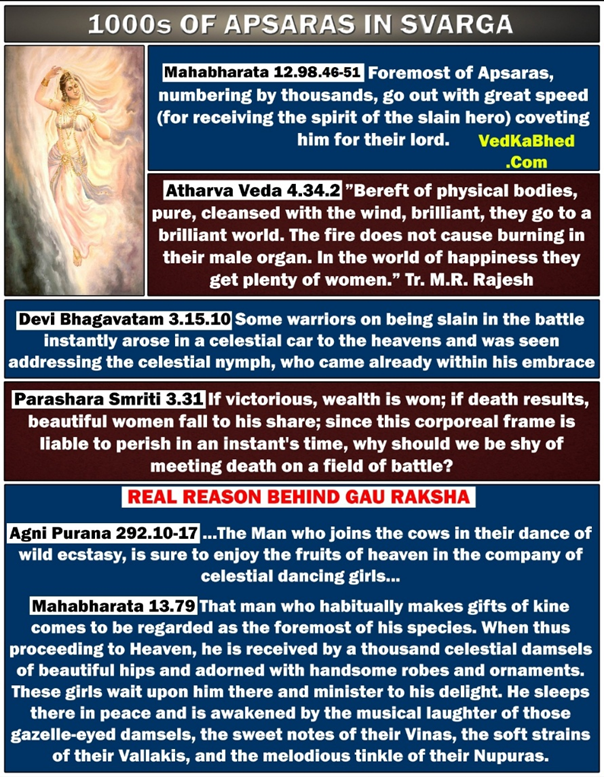
In Hindu belief, it is said that Ishwar has created countless Apsaras, celestial maidens who satisfy the heaven dwellers. Interestingly, while some Hindu extremists ridicule the Islamic concept of Hoors in paradise, they often overlook what their own scriptures describe. They dismiss the idea of heavenly spouses as indulgent, yet revere Krishna, who is said to have had 16,108 wives and numerous concubines. According to Hindu texts, those who die in battle, take holy baths in sacred rivers, serve cows, or perform specific rituals are rewarded with the company of Apsaras in Svarga (heaven).
Who are the Apsaras?
Brahma Vaivarta Purana, Krishna Janma Khanda 32.55 “Some of the ladies becomes the whores and earn their living by selling away their body. I am an apsara of the heaven and am used by the gods in the heaven and am quite respectable.” Tr. Shanti Lal Nagar (source)
Srimad Devi Bhagavatam 9.1.96-143 “…those that are sprung from Tamo Guna are recognised as worst and belonging to the unknown families. They are very scurrilous, cheats, ruining their families, fond of their own free ways, quarrelsome and no seconds are found equal to them. Such women become prostitutes in this world and Apsaras in the Heavens…” Tr. Swami Vijnananda (Source)
Srimad Bhagavatam 8.8.7 “Next there appeared the Apsarās [who are used as prostitutes on the heavenly planets]. They were fully decorated with golden ornaments and lockets and were dressed in fine and attractive clothing. The Apsarās move very slowly in an attractive style that bewilders the inhabitants of the heavenly planets.” Tr. Swami Prabhupada (Source)
Apsaras for those who die after killing
Parashara Smriti 3.28-29 Celestial damsels seize for themselves, and take delight with the hero, whose body is wounded or cut by arrows, clubs, or maces. Thousands of celestial damsels, rush forward in a hurry towards a hero killed in battle, each proclaiming, ‘He is my lord, he is mine’. (source)
Parashara Smriti 3.31 If victorious, wealth is won; if death results, beautiful women fall to his share; since this corporeal frame is liable to perish in an instant’s time, why should we be shy of meeting death on a field of battle? (source)
Mahabharata 12.98.46-51 “Foremost of Apsaras, numbering by thousands, go out with great speed (for receiving the spirit of the slain hero) coveting him for their lord.” Tr. K.M. Ganguli (Source)
Vamana Purana 9.52 “One this occasion the musical instruments of gods and demons began to play, groups of saints and Siddhas stationed in the sky began to witness the brave warriors who were killed in the open battle, fighting each other and whom the best of the Apsarases were conveying to heaven.” Tr. Anand Swarup Gupta (source)
According to Hindu text, a man who is accompanied by his wife in sati (self-immolation on his funeral pyre) would be deprived of enjoying Apsaras in heaven.
Devi Bhagavatam 3.15.10-13 “Some warriors on being slain in the battle instantly arose in a celestial car to the heavens and was seen addressing the celestial nymph, who came already within his embrace, thus “O one of beautiful thighs. Behold! how my beautiful body is lying on the earth below!” Another warrrior thus slain got up in the heavens on a celestial car, came in possession of a celestial nymph and when he was sitting with her in the car, his former wife in the earth made herself a sati and burnt herself up in the funeral pyre, thus got a celestial body, came up to the heavens; and that chaste virtuous woman drew away perforce her own husband away from that celestial nymph. Two warriors, went up, slew each other and lay down dead at the same time. They went up in the heavens at the same time and there began quarrel with each other and fight with their weapons for one and the same celestial nymph. Some hero got in the heavens a nymph more lovely and beautiful than himself and he thus became very much attached and devoted her. He began to describe his own heroic qualities and also to copy dotedly the qualities of his lover so that she might remain faithfully attached to him.” Tr. Swami Vijnananda (Source)
While his fellow warriors enjoyed Apsaras, this man was denied that celestial pleasure. His wife, by immolating herself on his funeral pyre, had accompanied him to the afterlife, thereby forcibly claiming his presence and separating him from the Apsaras.
Apsaras in Svarga
Atharva Veda 4.34.2 “The persons firm in their faith, purified, cleansed with their sacerdotal acts and pure in their conscience attain the state of splendid purity. The all-pervading Divinity does not burn or deprive of their organ of enjoyment and generation and in the state of Svarga they have many women, one for each one as his wife.” Tr Vaidyanath Shastri (Arya Samaj)
Following is the Hindi translation by Ram Sharma Acharya.
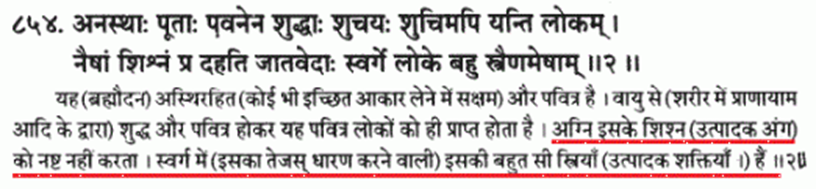
There is no word following Strenaam, yet Vaidyanath Shastri attempts to insert the idea of monogamy in heaven by interpreting the phrase as “one for each one as his wife.” In contrast, Panini, in Ashtadhyayi 4.1.87, defines Strenaam as “a collection of women,” indicating plurality. This suggests that heavenly beings are allotted multiple women, not a single wife as claimed by Shastri. The Hindi translation by Ram Sharma Acharya also supports this reading. Another Hindu scholar, M. R. Rajesh, translates it as follows.
Atharva Veda 4.34.2 “Bereft of physical bodies, pure, cleansed with the wind, brilliant, they go to a brilliant world. The fire does not cause burning in their male organ. In the world of happiness they get plenty of women.” Tr. M.R. Rajesh
Sayana comments on the above verse as follows,
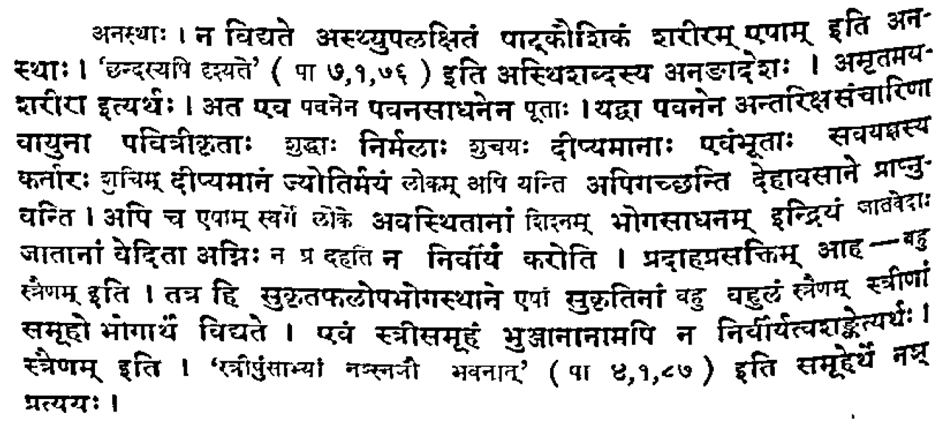 “…Furthermore, for those situated in the heavenly world, Jātavedas (Agni), the knower of all created beings, does not burn the organ which is the instrument of enjoyment, nor does he render them impotent. He states the context of the lack of burning: Bahustraiṇam (Having many women): There, in the place of enjoyment of the fruits of good deeds, a large group (straiṇam) of women (strīṇām) exists for the sake of enjoyment for these righteous ones. Thus, even while they are enjoying the multitude of women, there is no suspicion of impotence; this is the meaning. Straiṇam: According to Panini 4.1.87, the suffix ‘nañ’ is applied in the sense of a ‘group’ (samūha) following the words ‘strī’ and ‘pums’.” Sayana on Atharva Veda 4.34.2
Mahabharata 13.79.27 “That man who habitually makes gifts of kine comes to be regarded as the foremost of his species. When thus proceeding to Heaven, he is received by a thousand celestial damsels of beautiful hips and adorned with handsome robes and ornaments. These girls wait upon him there and minister to his delight. He sleeps there in peace and is awakened by the musical laughter of those gazelle-eyed damsels, the sweet notes of their Vinas, the soft strains of their Vallakis, and the melodious tinkle of their Nupuras.” Tr. K.M. Ganguli (source)
Mahabharata 3.42.23 “…It is through thy grace, O mountain, that Brahmanas and Kshatriyas and Vaisyas attain heaven, and their anxieties gone, sport with the celestials…” ” Tr. K.M. Ganguli (Source)
Mahabharata 13.107.53-55 “…That man who, unafflicted by disease and free from every malady, observes a fast, verily acquires, at every step the merits that attach to Sacrifices. Such a man ascends to Heaven on a car drawn by swans. Endued with puissance, he enjoys every kind of happiness in heaven for a hundred years. A hundred Apsaras of the most beautiful features wait upon and sport with him…” Tr. K.M. Ganguli (Source)
Mahabharata 13.106.35-37 “O king, in six years. There is no doubt in this. Such a man earns the merit that attaches to the performance of the Agnishtoma sacrifice. Endued with merit and freed from every kind of stain, he attains to the region of the Apsaras that echo with the sound of songs and dance, and passes his days in the company of a thousand damsels of great beauty.” Tr. K.M. Ganguli (Source)
Padma Purana VII.9.99b-104 “I shall tell you about the abode of him whose dead body is seen on the sandy bank of Ganga heated by the rays of the sun: with his entire body smeared with divine fragrant substances and sandal he always sports with divine damsels in heaven.” Tr. N.A. Deshpande (Source)
Shiva Purana, Vidyeshwara Samhita 1, chapter 24, verses 66-70 “He who wears Tripundra raises a thousand predecessors and a thousand successors in his family. In this life he will enjoy all wordly pleasures… He will assume then a divine auspicious body endowed with eight accomplishments. He will travel by a divine aerial chariot attended by celestial gods… finally reach Brahma’s region where he will sport with a hundred virgins.” Tr. Board of Scholars, Edited by Jagdish Lal Shastri (source)
Skanda Purana V.iii.198.115-117 “The man who has become pure (by taking bath) and who has observed fast shall keep awake in the night on the fourteenth lunar day in the dark half. He shall then worship Siva. Dispelling the delusion caused by sins, he goes to Rudraloka. He will acquire the form of Rudra with three eyes and four arms. He will sport about with celestial girls as long as the moon, sun and stars shine.” Tr. Ganesh Vasudeo Tagare (source)
Skanda Purana VI.i.232.26 “If any one always makes arrangement for dance and music programmes in the abode (shrine) of Visnu, the celestial damsels will dance before him when he goes to heaven.” Tr. G.V. Tagare (source)
Brahma Purana 65.4-5 “Brahma said:- O sages, listen all of you, even as I speak about that highest region which is wished for by the devotees. It is blessed, holy land and destructive of the world. It is most excellent of all the worlds. it is named (Visnu-loka) after the name of Visnu. It is a sacred abode full of mysteries. It is honoured and worshipped by the three worlds. [18-29] In that city of Visnu, worshipped by all, people walk about in divine aerial chariots…They are adorned by the celestial maidens…The people sport about with the various young women of Gandharvas and the group of celestial clans. The young women look very splendid with their faces as charming as the moon. Their breasts are plump and lifted up. Their waists are beautiful and elegant. Some are dark in complexion and some fair. Their gait is like that of elephants in their rut…As long as the heaven stands alongwith the moon and stars, they dally with the celestial nymphs. They resemble heated gold. They are devoid of old age and death.” Tr. Board of Scholars, Edited by J.L. Shastri (source)
Brahma Purana 59.3-8 “O brahmins, by taking the holy dip perfectly in the ocean thus, in that excellent holy centre, by duly worshipping Narayana…He goes to the world of Visnu on an aerial chariot with the lustre and colour of the sun…For the period of a hundred Manvantaras or more he will enjoy excellent pleasures and carry on dalliance with the celestial damsels. He will be devoid of old age and death.” Tr. Board of Scholars, Edited by J.L. Shastri (source)
Brahma Purana 107.7-56 “Those who offer with great devotion to the brahmins well consecrated cooked rice, particularly to the brahmins well versed in the Vedas, go to the city of Dharmaraja by means of well adorned aerial chariots. They are assiduously served by excellent young women…Those who with devotion and pure mind, give the worthy brahmins water, sweetened with treacle as well as cooked rice, go to the abode of Yama, on golden vehicles of various kinds. In accordance with their desire they are again and again served by excellent women…Those men who grow wonderful parks with flowers and fruits thereby helping men go (along that great path) (after duly resting) in beautiful and cool shades of trees. They are well bedecked and attended upon by excellent women to the accompaniment of songs and instrumental music…Those who give an embellished virgin as gift, as worthy of being given to a brahmin, go to the abode of Yama in aerial chariots and surrounded by celestial virgins…He who meets death in a battle ensuing upon his at¬ tempt to resist the abduction of a woman or capture of cows goes along shining like the sun and attended upon by celestial girls.” Tr. Board of Scholars, Edited by J.L. Shastri (source)
Brahma Purana 38.132-137 “After death he will go to heaven where he will be surrounded by thousands of beautiful women.” Tr. Board of Scholars, Edited by J.L. Shastri (source)
Brahma Purana 67.1-11 “He goes to the great abode where Visnu the lord of Yogins is ever present. Accompanied by celestial women he enjoys pleasures of various sorts.” Tr. Board of Scholars, Edited by J.L. Shastri (source)
Brahma Purana 67.70-74 “The man redeems twenty-one generations of his family. He then goes to the city of Visnu seated in a highly refulgent aerial chariot that has the lustre and colour of the sun, that is richly furnished with all desirable things, that can go as one desires it to go and that has a row of tinkling bells. He shall be surrounded by the celestial ladies. Gandharvas will be singing in praise of him. He will enjoy excellent pleasures there. He will be rid of old age and death. Assuming a divine form the glorious devotee will enjoy pleasures until the dissolution of all living beings.” Tr. Board of Scholars, Edited by J.L. Shastri (source)
Devi Bhagavatam 4.6.56-58 “The Apsaras said :– Of the five senses; sound, etc., the pleasures attained through the sensation of touch are excellent, and are reckoned as the source of Bliss; no other pleasures stand equal to it…If you like to go to Heaven, be pleased to know that there is no Superior Heaven to Gandhamadan (the mountain like intoxicating happiness of the senses). Dost thou enjoy the highest bliss, the pleasant sexual intercourse with us, the heavenly damsels in this very beautiful and lovely place.” Tr. Swami Vijnananda (source)
Skanda Purana III.i.1.77 “If one takes the holy bath for the sake of sexual pleasure with celestial damsels in heaven, he attains the same.” Tr. G.V. Tagare (source)
Agni Purana 292.13b-14a “One who mutters the gomati vidya (a sacred formula) would reach the excellent world of cows. Therein he will enjoy music, dance and the company of nymphs in the celestial car.” Tr. N. Gangadharan (source)
Matsya Purana 78.10 “He also goes to the all the seven lokas, in each kalpa, where he enjoys in the company of the nymphs and get bliss…” Tr. Taluqdar of Oudh, Edited by B.D. Basu (source)
Matsya Purana 107.4-5 “One who resides on the banks of the Ganges, with or without any object in view, and dies there, goes to heaven and remains far away out of the sight of hell. Such a man sits in a vimana, adorned by decent birds, like swans and flamingoes, where celestial nymphs sing lovely songs. Thus he enjoys long life in heaven.” Tr. Taluqdar of Oudh, Edited by B.D. Basu (Source)
Brahma Vaivarta Purana, Krishna Janma Khanda 59.77-103 “…Virtuous men, after having performed sacred deeds in India, go to heaven and there attended by celestial damsels enjoy celestial bliss for a long time…Fair one, this Heaven is not a field of action; it is a place of enjoyment. And of all enjoyments, association with an excellent woman is the best…” Tr. Rajendra Nath Sen, Edited by B.D. Basu (Source)
Varaha Purana 149.24-25 “In Dvaraka which gives delight to the Vaisnavas, there is the great place called Pancasara which is a little within the shore. He who bathes there foregoing siz meals, delights himself with the Apsarases in heaven.” Tr. Venkitasubramonia Iyer, J.L. Shastri (source)
Narada Purana, Uttarabhaga 63.153b-156a “Willingly or unwillingly he who dies in Ganga, attains the abode of Sakra. He never goes to hell. He rides in an aerial chariot to which swans and Sarasa birds are yoked. He sleeps in the midst of Apsaras and is wakened by them…” Tr. G.V. Tagare (source)
Narada Purana 62.43 “It was resorted to by Devas moving about in aerial chariots. It was surrounded by the (river) Viraji, O Narada, as this world shines so too the other worlds (by its reflection). The tanks there, are bedecked in diverse ways by means of gold and jewels; the steps are studded with corals: They (tanks) are fully covered with blue lotuses; they are agitated by the sports of celestial women.” Tr. G.V. Tagare (source)
Narada Purana 31.21-22a “Thanks to the gift of a cow, a man goes there Endowed with all means of happiness on the way; a giver of plots or houses goes riding in an aerial chariot filled with all riches and luxuries. He sports about in the aerial chariot filled with groups of celestial damsels and goes to the abode of Dharma (god of Death).” Tr. G.V. Tagare (source)
Narada Purana 45.52 “If liberation means dissociation with pleasure-giving persons or objects like celestial damsels, or association with objects of destructible nature like life in heaven, what is the motivation for men to perform religious action or why after beginning the performance of an action, should men continue for attaining the desired goal?” Tr. G.V. Tagare (source)
Shiva Purana, Umasamhita 5, chapter 7, verses 45-46 “Yama tells them ‘You are noble souls duly blessed, since you have performed what is ordained in the Vedas. Good deeds that are conducive to divine happiness have been performed by you. Ascend the celestial aerial chariot and go to heaven to enjoy the pleasures in the company of celestial damsels and fulfil your cherished desires.” Tr. J.L. Shastri (source)
Swami Prabhupada writes.
“People in general are not very intelligent, and due to their ignorance they are most attached to the fruitive activities recommended in the karma-kāṇḍa portions of the Vedas. They do not want anything more than sense gratificatory proposals for enjoying life in heaven, where wine and women are available and material opulence is very common…They are generally sensual, and they do not want anything other than the heavenly pleasures of life. It is understood that there are gardens called nandana-kānana in which there is good opportunity for association with angelic, beautiful women and having a profuse supply of somarasa wine. Such bodily happiness is certainly sensual; therefore there are those who are purely attached to material, temporary happiness, as lords of the material world.” Swami Prabhupada on Gita 2.42-43 (Source)
Devas sending Apsaras to seduce Rishis
The gods often feared the power of sages, believing that through intense penance, these ascetics might attain godhood, or even surpass them. To prevent this, certain deities, particularly Indra, would send Apsaras to tempt the sages and disrupt their meditation.
Sage Kandu
A sage named Kandu was seduced by an Apsara named Pramlocha. And both of them enjoyed each other for hundreds of years.
Vishnu Purana 1.15.11-15 “…There was formerly (said Soma) a sage named Kandu, eminent in holy wisdom, who practised pious austerities on the lovely borders of the Gomati river. The king of the gods sent the nymph Pramlocha to disturb his penance, and the sweet-smiling damsel diverted the sage from his devotions. They lived together, in the valley of Mandara, for a hundred and fifty years; during which, the mind of the Muni was wholly given up to enjoyment…” Tr. H.H. Wilson (source)
This is also mentioned in Srimad Bhagavatam 4.30.13.
Rishi Devadutta
A sage named Devadatta was engaged in deep penance, and Indra grew fearful that the sage might take his place among the gods. To prevent this from happening, Indra sent an Apsara to distract and disrupt the sage’s meditation, hoping to break his spiritual concentration.
Varaha Purana 146.29-35 “Hearing that music beautiful with the Pancama svara the mind of the sage became perturbed. Kamadeva tirelessly shot his arrows again on him…Hit by the arrows of Kamadeva, the great sage appraoched her with a smile. She too looked at him amorously but with shyness. Attracting the mind of the sage with her irresistible charms, she continued to play the ball unmindful of flowers falling from her dishevelling hair. At that time the Malaya wind blew off her garment freeing it from its knot and the girdle holding it…[40-1] The he held that smiling damsel by the right hand. He embraced her and gave her delight. Day and night he enjoyed with her every pleasure helped by the power he had acquired by his penence.” Tr. Venkitasubramonia Iyer, edited by J.L. Shastri (source)
Vishwamitra
Vishwamitra had been performing penance for a long time, and Indra, fearing that Vishwamitra might replace him as the king of the gods, ordered Menaka to seduce him and disrupt his meditation. Indra also commanded the Maruts (winds) to assist Menaka in carrying out this task. Menaka succeeded in tempting Vishwamitra, and their union resulted in the birth of a daughter named Shakuntala. The child was later abandoned and raised by Sage Kanwa, which is why she came to be known as his daughter.
Mahabharata, Adi Parva 1, Section 71, verses 20-26 “Viswamitra, of old, having been engaged in the austerest penances alarmed Indra, the chief of the celestials, who thought that the mighty ascetic of blazing energy would, by his penances, hurl him down from his high seat in heaven.’ Indra, thus alarmed, summoned Menaka and told her, ‘Thou, O Menaka, art the first of celestial Apsaras. Therefore, O amiable one, do me this service. Hear what I say. This great ascetic Viswamitra like unto the Sun in splendour, is engaged in the most severe of penances. My heart is trembling with fear. Indeed, O slender-waisted Menaka, this is thy business. Thou must see that Viswamitra of soul rapt in contemplation and engaged in the austerest penances, who might hurl me down from my seat. Go and tempt him and frustrating his continued austerities accomplish my good. Win him away from his penances, O beautiful one, by tempting him with thy beauty, youth, agreeableness, arts, smiles and speech.” Tr. Kisari Mohan Ganguli (source)
Mahabharata, Adi Parva 1, section 72, verses 1-10 “Kanwa continued, ‘And Sakra, thus addressed by her, then commanded him who could approach every place (viz., the god of the wind) to be present with Menaka at the time she would be before the Rishi. And the timid and beautiful Menaka then entered the retreat and saw there Viswamitra who had burnt, by his penances, all his sins, and was engaged still in ascetic penances. And saluting the Rishi, she then began to sport before him. And just at that time Marut robbed her of her garments that were white as the Moon. And she thereupon ran, as if in great bashfulness, to catch hold of her attire, and as if she was exceedingly annoyed with Marut. And she did all this before the very eyes of Viswamitra who was endued with energy like that of fire. And Viswamitra saw her in that attitude. And beholding her divested of her robes, he saw that she was of faultless feature. And that best of Munis saw that she was exceedingly handsome, with no marks of age on her person. And beholding her beauty and accomplishments that bull amongst Rishis was possessed with lust and made a sign that he desired her companionship. And he invited her accordingly, and she also of faultless features expressed her acceptance of the invitation. And they then passed a long time there in each other’s company. And sporting with each other, just as they pleased, for a long time as if it were only a single day, the Rishi begat on Menaka a daughter named Sakuntala. And Menaka (as her conception advanced) went to the banks of the river Malini coursing along a valley of the charming mountains of Himavat. And there she gave birth to that daughter. And she left the new-born infant on the bank of that river and went away.” Tr. Kisari Mohan Ganguli (Source)
Rishi Dadhicha and Apsara Alambusa
Mahabharata, Shalya Parva 9, section 51, verses 5-10 “Vaishampayana continued, “In days of yore, O monarch, there was an intelligent sage of great ascetic merit. He was celebrated by the name of Dadhica. Possessing a complete control over his senses, he led the life of a brahmacari. In consequence of his excessive ascetic austerities Shakra was afflicted with a great fear. The sage could not be turned (away from his penance) by the offer of even diverse kinds of rewards. At last the chastiser of Paka, for tempting the sage, despatched unto him the exceedingly beautiful and celestial apsara, by name Alambusa. Thither where on the banks of the Sarasvati the high-souled sage was engaged in the act of gratifying the gods, the celestial damsel named above, O monarch, made her appearance. Beholding that damsel of beautiful limbs, the vital seed of that ascetic of cleansed soul came out. It fell into the Sarasvati, and the latter held it with care. Indeed, O bull among men, the River, beholding that seed, held it in her womb. In time the seed developed into a foetus and the great river held it so that it might be inspired with life as a child. When the time came, the foremost of rivers brought forth that child and then went, O lord, taking it with her, to that rishi.” Tr. Kisari Mohan Ganguli (Source)
The Skanda Purana Brahma Khanda, Book 3, Dharmaranya Khanda, Sections 2, Chapters 4–5 recounts the story of Indra sending the Apsara Vardhini to distract Dharmaraja, a form of Yama, from his penance and she succeeded in her task.
Gods and Rishis Lusting After Women
The gods and rishis of Hindu mythology were frequently consumed by lust, often for women who were not their wives. Even in old age, they were depicted as being easily aroused at the sight of young women. This list would be incomplete without mentioning Indra, who was notorious for his repeated attempts to seduce and rape the wives of sages and other men. These are not merely my assertions, but recorded accusations made by the sages themselves within the very texts that venerate these deities.
Indra
Mahabharata 13.40.13-18 “…The Creator himself is incapable of restraining them within the limits that are proper: what need then be said of men? This, O chief of men, I heard in former days, viz., how Vipula had succeeded in protecting his preceptor’s spouse in ancient times. There was in days of yore a highly blessed Rishi of the name of Devasarman of great celebrity. He had a wife, Ruchi by name, who was unequalled on earth for beauty. Her loveliness intoxicated every beholder among the deities and Gandharvas and Danavas. The chastiser of Paka, viz., Indra, the slayer of Vritra, O monarch, was in particular enamoured of her and coveted her person. The great ascetic Devasarman was fully cognisant of the disposition of women. He, therefore, to the best of his power and energy, protected her (from every kind of evil influence). The Rishi knew that Indra was restrained by no scruples in the matter of seeking the companionship of other people’s wives. It was for this reason that he used to protect his spouse, putting forth all his power…” Tr. K.M. Ganguli (Source)
This effectively absolves me of any accusation of using inappropriate language against Indra, as my statements are a direct reflection of the Rishi’s own account.
In his old age, Indra developed a lustful desire for a woman named Sukala and attempted to make sexual advances toward her, but she, enraged by his behavior, rebuked and insulted him.
Padma Purana II.58.25-28a “Sukala said:- Well being to you. I am protected by the magnanimous sons of my husband, and by companions; so I am not at all alone. From whom (then) do I have fear? I am protected by brave men everywhere. I do not have much time to talk. I am engaged in my duty towards him. O you very intelligent one, why do you not feel ashamed of dallying with me while your eyes are trickling (i.e. while you are old). Who are you that you have come here, and are not afraid even of death?” Tr. N.A. Deshpande (Source)
Indra addressed Ahalya the wife of Sage Gautama in the following way.
Brahma Vaivarta Purana, Krishna Janma Khanda 61.22-41 “…What an indescribable asceticism the great devotee Gautama had practiced by virtue of which he luckily secured the possession of a very beautiful wife! By the worship of the eternal goddess of Nature, (Parvati) who is the emblem of the spell of Visnu and by the adoration of Kamala, he was undoubtedly secured a wife like Kamala having looks of a lotus, who is a woman of the first four classes (Padmini), of slender waist, huge buttocks, hard breast; of the colour of heated gold, of fine teeth and soft and pure complexion, the touch of whose body is agreeably warm in winter and delightfully cool in summer. Fair one, Cupid versed in sexual science or the lustful moon-god alone knows how to cohabit with a damsel like you. How can Gautama resourceful only in meditations know that? In sexual science I am a past-master, and on this score I am always eulogised by the above named clever individuals and by the celestial whores Urvasi etc. O nymph possessing an excellent face, I shall make Sachi your maid-servant…” Tr. Rajendra Nath Sen (Source)
The Rig Veda narrates the story of Apala, the daughter of the sage Atri, who suffered from a skin disease. Though married, she had been abandoned by her husband. Indra, attracted to her, asked her to chew the Soma plant, which he then drank directly from her mouth. To heal her, Indra is said to have pulled her through the wide opening of his chariot, the narrower opening of the cart, and finally the small hole of the yoke. As a result, Apala shed three layers of skin, the first turning into a hedgehog, the second into an alligator, and the third into a chameleon.
Rig Veda 8.80.1-7 “A young woman going to the water found Soma in the path; as she carried it home she said, I will press thee for Indra, I will press thee for Sakra. Thou who goest from house to house a hero bright in thy splendour, drink this Soma pressed by my teeth, together with fried grains of barley, the karambha, cakes, and hymns…May (Indra) repeatedly make us powerful, may he do abundantly for us, may he repeatedly make us very rich; often hated by our husband and forced to leave him, may we be united to Indra. These three places, do thou cause them all to grow, my father’s (bald) head, his (barren) field, and my body. This field which is our (father’s), and this my body, and the head of my father, do thou make all these bear a crop. Thrice, Satakratu, didst thou purify Apala, in the hole of the chariot, in the hole of the cart, and in the hole of the yoke, and thou didst make her with a skin resplendent like the sun.” Tr. H.H. Wilson (Source)
Shaunaka elaborated upon these verses in his Brhaddevata.
Brhaddevata VI.99-106 “There was once a girl Apala, daughter of Atri, who suffered from skin-disease. With her Indra fell in love, having seen her in the lonely hermitage of her father. Now by penance she became aware of all Indra’s intentions. Taking a water-pot she went to fetch water. Seeing Soma at the edge of the water, she praised him with a stanza in the forest. This matter is related in the (stanza) ‘A maiden to the water’ (kanya vah: viii.91.1). She pressed Soma in her mouth: and having pressed it she invoked Indra with the (stanza), ‘Thou that goest’ (asau ya esi: viii.91.2); and Indra drank it from her mouth, after he had eaten cakes and meal from her house. And she praised him with stanzas, but with a triplet (viii.91.4-6) she addressed him (saying), ‘Make me, O Sakraa, to have abundant hair, (and) to be faultless-limbed, (and) fair-skinned.’ Indra passing (praksipya) her through the carriage aperture (between the body of the car and the yoke, drew her forth three times. Then she became fair-skinned. Her first skin which was cast off became a porcupine (salyaka), but the next became an alligator (godha), and the last a chameleon (krkalasa).” Tr. Arthu Anthony Macdonnel (Source)
Vishnu
Vishnu and Courtesans
Narada Purana, Uttarabhaga 28.35-37 “Visnu whom people meditate upon and truly remember, who is called Yogamurti (Embodiment of Yoga) and who is eternal, was enamoured of courtesans…” Tr. G.V. Tagare (Source)
Vishnu and Padmavati the daughter of King Akasa
Skanda Purana 2.1.4.40–54 recounts how Vishnu was overcome with lust upon seeing Padmavati, the daughter of King Akasa.
Skanda Purana, Book 2 Vaisṇava khanda, Section 1 Venkatacala mahatmya, chapter 4, verses, 40-54 “The girls replied to him: “Nothing was seen by us. Why have you come to our park wielding an excellent bow. O leader of hunters, none of the animals living here should be killed. Go away quickly from this park which is in the protective jurisdiction of King Âkasa.” On hearing the words of those maidens he got down from the horse. “Who are you all? Who is this lotus-like maiden? She has excellent magnificence. All her limbs are fascinating. Her breasts are plump and protruding. Tell me. After hearing the same I shall go back to my abode in the mountain.” On hearing these words of his the friend and attendant of Padmavati urged by the daughter of Dharani said to the hunter, a resident of the mountain: “This is the daughter of King Akasa. She was born out of the bowels of the earth. O hero, she is our leader and her name is Padmini. Tell us, O youth of handsome features, what is your name? Whose son are you? What is your caste? Where is your residence? Why have you come here?” On being asked thus he replied to them with a smile on his lotus-like face: “Those conversant with ancient traditions say that our family is that of the Sun. Our names are innumerable. They sanctify learned men. By colour and name the ascetics say that I am Krsna. My discus instills fear in the minds of the enemies of Suras and those who hate Brahmanas. On hearing the sound of my conch enemies become confounded. Even among the immortal beings there is no bow equal to mine. They call me the lord of heroes, residing in Venkatadri. It was from the ridge of that mountain that I surrounded (i.e. accompanied) by my Nisada followers have come for hunting, riding on a horse, to your park. A certain animal moving rapidly like the wind has been pursued by me. It went away somewhere. Unable to see it I have now seen this maiden of exalted magnificence. I have come here with love. Can this maiden be obtained by me?” On hearing these words of Krsna they became infuriated and said: “If King Akasa sees you, he will bind you with fetters and take you away. Before this happens go quickly to your own abode.” Threatened by them thus, he mounted the swift horse. Accompanied by all his followers, he went back to the mountain quickly.” Tr. G.V. Tagare (source)
Shiva
Bhikshatana, Gangaikonda Cholapuram Temple (1025 AD) – Wikipedia
Shiva shamelessly went to the Pine Forest and seduced the wives of the sages. He assumed the form of Bhikshatana, a nude ascetic with a snake tied around his waist.
Shiva Purana, Kotirudra Samhita 4, chapter 12, verses 8-13 “Once the leading Brahmin devotees of Siva engrossed in the meditation of Siva went into the forest for bringing sacrificial twigs. In the meantime Siva himself assuming a very hideous form came there in order to test their devotion. He was very brilliant but stark naked. He had smeared ashes all over his body as the sole ornament. Standing there and holding his penis he began to show all sorts of vicious tricks. It was with a mind to do something pleasing to the forest-dwellers that Siva, favourite of the devotees, came to the forest at his will. The wives of the sages were extremely frightened at this sight. The other women excited and surprised approached the lord. Some embraced him. Others held his hands. The women were engrossed in struggling with one another.” Tr. Board of Scholars, Edited by J.L. Shastri (source)
Skanda Purana V.iii.38.23-38 “…One lady who was over proud of her beauty and youthful form forgot to breast-feed her son lying on her lap. On seeing Mahadeva, another lady became struck by the arrows of Kama. She pressed down her protruding breasts with her arms…” Tr. Ganesh Vasudeo Tagare (Source)
Previous verses of the Shiva Purana claim that Shiva went to the forest to test the sages. However, in my opinion, his true intention was to pursue the sages’ wives under the pretext of this test, an act comparable to when Krishna stole the Gopis’ clothes to see them naked and later provided a feeble justification. This interpretation is supported by the Skanda Purana I.i.34.116-129, where Parvati, Shiva’s wife, states that he went to the Daruvanam forest nude for the specific purpose of seducing the sages’ wives under the guise of begging for alms. The passage further explains that Parvati had previously stripped Shiva in front of the gods and their servants after he lost a bet in a game of dice.
Skanda Purana, Part 1, Mahesvarakhanda book 1, Kedarkhanda section 1, chapter 34, verses 11-129 “After saying thus, Parvati, the goddess, beloved of Sankara, became furious. She held Sankara by the hand. The lady of slender limbs took away the serpent Vasuki from his neck. Similarly she removed many other ornaments also. The infuriated lady hurriedly took away the ornaments of Sambhu. His crescent moon and his excellent elephant hide removed. The serpents Kambala and Asvatara tha thad been worn by Mahesa as ornaments were removed by the great goddess laughingly with tricky words. Even his loincloth was taken away laughingly with the utterance of tricky words. At that time the Ganas and the friends (of Parvati) felt embarrassed and ashamed. (The friends and others) turned their faces away. Bhrngi of great oenance, Candi, Munda, Mahaloman, Mahodara and many other Ganas became miserable. On seeing them in that plight, Mahesa became ashamed. Sankara who became angry spoke these words to Parvati: ‘All these sages are laughing satirically. Similarly Brahma, Visnu and these Devas, Indra and others all of them laughing (at me)…On being told thus by Sambhu, the Yogin, Parvati, the chaste lady of charming face, laughed and spoke these words: ‘What have you to do with a loincloth? You are a sage of sanctified soul. (Some time back) you wandered through Daruvana with the cardinal points alone for your garment (i.e. you were naked). Under the pretext of begging for alms, the wives of the sages were enchanted. While you were going, you were greatly adored by them. Your loincloth fell down (penis?) there…” Tr. G.V. Tagare (Source)
It is proved that Shiva’s purpose in going to the Pine Forest in a nude state was to sexually pursue the sages’ wives. Even if we entertain the argument that his motive was to test them, a fundamental question remains, is it befitting for a god to appear fully naked, holding his erect penis, before chaste women? If someone behaved this way toward your mother, sister, or daughter, you would likely respond with physical force, and this is exactly what the sages did. Yes, you read that correctly, the Rishis not only severely beat Shiva but also cut off his penis.
Kurma Purana II.38.52 “The sages said: A certain highly brilliant person has entered the holy Daruvana along with his wife, who was very beautiful in all her limbs. But he was naked. The lordly person fascinated our entire women and daughters, with his charming personality. While his beloved defiled our sons. We heaped various imprecations and curses on him but they were defied and set at nought. He was beaten soundly by us. His Linga was struck down.” Tr. G.V. Tagare (source)
This story of Shiva being beaten up is supported by Brahmanda Purana.
Brahmanda Purana I.2.27.45 “He was scolded and beaten. His Linga (?penis) was taken out. It is to alleviate his anger that we have sought refuge in you.” Tr. G.V. Tagare (source)
For a more detailed account of this episode involving the Linga, I recommend the article “What is Shivling?” As per Mahabharata 13.14.157, Shiva had sex with women of Rishis. Shiva’s behavior fully warranted the physical punishment he received from the sages for this vulgar act. However, this was not an isolated incident. He repeated this transgression and was once again beaten up as a consequence.
Skanda Purana V.i.26.71-72 “After the Manvantara came to a close and Vaivasvata Manvantara arrived again, Mahesvara entered the sacrificial hall of Brahma with the same guise of and insance person with erected penis. [75-77b] Other asked him whether it was one of his Vratas and if so by whom was it demonstrated. They continued: “There are women here. How is it that this has been committed by you…You are worthy of being killed by us today.” On being hit and hurt by the Brahmanas, thus, Sankara, the great holy Lord, smiled and told all those Brahmanas: “Why do you hit me-a lunatic who has lost his senses? Tr. G.V. Tagare (Source)
Shiva lusted after goddess Girija as per Skanda Purana 1.1.35.12-20.
Skanda Purana Book 1 Mahesvara khanda, Section 1 Kedara khanḍa, chapter 35, verses 12-20 “After saying thus, the goddess Girija, the (cause) of all auspiciousness, became desirous of going to Mähesvara after assuming the form of a female Sahara huntress…She had to bend down slightly on account of the weight of the heavy breasts. Her smooth glossy tresses had grown abundantly. She was very slender and thin in her waist. The buttocks were large. Gaur’s thighs were like the golden plantain stem…(From a distance) she saw Girija. The lady of beautiful face thus went along, served and accompanied by many friends and attendants. Through the loud humming sound of the bees, she made the three worlds reverberate. Girija (appeared) to revive Manmatha again and again. The royal swans became at that instant filled with love and desire. Bees and peacocks all of them were lovelorn and so had heart-burn. She went to the place where Mahesvara was seated engaged in trance and meditation. He was seen by the goddess extremely fascinated by the sound of bees. Mahädeva woke up from his trance. On seeing the Sabari, Mahesa immediately became afflicted with love. He went near Girijä and was about to seize her by the hand, when the chaste lady suddenly vanished from his presence. Immediately after seeing it, the lord had his wrong notion dispelled. Sambhu wandered around but did not see the dark-eyed lady.” Tr. G.V. Tagare (source)
Vishwakarma
Vishwakarma was enamoured of an Apsara named Ghirtachi who was on her way for pilgrimage. He invited her for having sex, but she refused. He even tried to rape her, but she resisted the rape just by warning him about the consequences.
Brahma Vaivarta Purana, Brahma Khanda, 10.24-31 Sauti answered, ‘O best of saints, once upon a time the celestial nymph Ghritachi, being extremely excited with passion put on a lovely dress and proceeded in the direction of Puskara for pilgrimage in the mean time, Viswakarma cheefully arrived there from the solar region and suddenly observed the sportive damsel. As soon as he saw her, he was pierced with the darts of Cupid. Having lost all control over his will he demanded carnal intercourse from that nymph…” Tr. Rajendra Nath Sen (Souce)
Ashvinkumaras
The Ashwin Kumars lusted after Sukanya, the wife of the aged Rishi Chyavana. After failing to seduce her, they made her a final offer, they would restore her husband’s youth in exchange for her agreement to marry one of them. Following a consultation with her husband, Sukanya consented. The Ashwins then instructed Chyavana to enter a body of water, which he did. However, this was a trick, the Ashwin brothers also entered the water. When all three emerged, they possessed identical, youthful appearances. While Chyavana had indeed been rejuvenated, the Ashwins had created this likeness with the explicit intention of deceiving and violating Sukanya. This story of Rishi Chyavana’s restoration is also mentioned in Rig Veda 1.116.10, Nirukta 4.19, Pancavimsa Brahmana 14.6.10. All of these are mentioned in the article Polygamy in Hindu Dharma.
Mahabharata 3.123.1-9 “Lomasa said, ‘Once on a time, O king, those celestials, namely the twin Aswins, happened to behold Sukanya, when she had (just) bathed, and when her person was bare. And seeing that one of excellent limbs, and like unto the daughter of the lord of celestials, the nose-born Aswins neared her, and addressed her, saying, ‘O thou of shapely thighs, whose daughter art thou? And what doest thou in this wood? O auspicious one, O thou of excellent grace, we desire to know this, do thou therefore tell us.’ Thereupon she replied bashfully unto those foremost of celestials. ‘Know me as Sarayati’s daughter, and Chyavana’s wife…O thou of luminous smiles? O divinely beautiful damsel, do thou, forsaking Chyavana accept one of us for husband. It behoveth thee not to spend thy youth fruitlessly…” Tr. K.M. Ganguli (Source)
Vayu
Vayu desired the daughter of Kushanabha.
Valmiki Ramayana 1.32.15-26 “Seeing those lovely and virtuous princesses, Vayu the wind god thus addressed them: ‘I entreat you all to be wedded to me; give up your mortal form, I will render you immortal. Remember youth is passing and youth among mortals passes even more swiftly; wedded to me, you will be beautiful for ever.’ “The damsels listened to the improper speech of the wind god and replied mockingly: ‘O Deity of the Wind, you knowest all that is passing in the hearts of men, but we know what is passing in your heart. Why dost you insult us, O Wind? O Vayu, who art renowned for your wisdom, we virgins by the power of our devotion and self-control can effect your downfall, but because the merits of the righteous come to nought when they cause harm to others, we shall preserve our sacred vows inviolate. O Stupid One, heaven forfend that we choose husbands for ourselves without first seeking the approval of our honoured sire. He is as a god to us and our master, and we shall wed the husbands he chooses for us.’ “The wind god was enraged and entering their bodies, twisted and distorted them. Thus afflicted, the princesses in tears, approached their father for assistance. “The king was grieved to see his daughters in this condition and said: ‘O speak, what has occurred? Who, disregarding justice, has deformed you? Tell me all.’ The monarch was deeply moved by this event and his heart became heavy.” Tr. Hari Prasad Shastri (source)
Several Gods lusting after Urja the daughter of moon god
Brahma Purana 110.13-15 “When the holy god Moon did not see his daughter Urja, he was upset. Where she may have gone? He thought to himself. The Soma came to know the facts. He knew that manes were after her, that they were sexually inclined to her and had accepted by the virtue of their penance. The moon was overcome with anger.” Tr. Board of Scholars, Edited by J.L. Shastri (Source)
RISHIS
Chyavana
A sage named Chyavana was attracted to a Princess named Sukanya.
Mahabharata 3.122.1-11 “Lomasa said, ‘A son was born to the great saint Bhrigu, Chyavana by name…Now after the lapse of a long space of time, that ruler of earth, Saryati by name, for amusement visited this pleasant and excellent lake. With him were four thousand females, espoused by him, O son of Bharata’s race! there was also his only daughter endued with beautiful brows, named Sukanya. She surrounded by her maids, and decked out with jewels fit for the celestials, while walking about, approached the anthill where Bhrigu’s son was seated. And surrounded by her maids, she began to amuse herself there, viewing the beautiful scenery, and looking at the lofty trees of the wood. And she was handsome and in the prime of her youth; and she was amorous and bent on frolicking. And she began to break the twigs of the forest trees bearing blossoms. And Bhrigu’s son endued with intelligence beheld her wandering like lightning, without her maids, and wearing a single piece of cloth and decked with ornaments. And seeing her in the lone forest, that ascetic of exceeding effulgence was inspired with desire. And that regenerate Rishi possessing ascetic energy, who had a low voice, called the auspicious one, –but she heard him not.” Tr. K.M. Ganguli (Source)
This is also mentioned in Srimad Bhagavatam book 9, canto 3. The princess named Sukanya accidentally harmed Rishi Chyavana, who had assumed the form of an earthworm. Enraged, the sage prepared to curse her, but the king, who was Sukanya’s father, urged Chyavana not to curse his daughter. Chyavana then agreed on one condition: that the king give his daughter to him in marriage, as he had become sexually aroused upon seeing her.
Pippalada
There is also the story of another sage named Pippalada, who, despite his old age, became lustful upon seeing the king’s beautiful daughter. Unlike Chyavana, he had not been harmed by the princess in any way, yet he threatened to curse the king if his demand for her hand in marriage was not fulfilled. He was driven purely by lust upon seeing the king’s beautiful daughter, even in his old, stricken age.
Shiva Purana, Satarudra Samhita 3, chapter 25, verses 2-14 “Once while going to the river Pushpabhadra for his ablution, the great sage saw the beautiful youthful maiden Padma, a part of Siva herself. Desirious of getting her, the sage traversing the world and an expert in following the established conventions went to the abode of king Anaranya, her father…The sage repeated the request, saying ”Give me your daughter devoutly. Otherwise I will reduce everything to ashes along with you.”…Then the king was much frightened and he lamented again and again. He gave his daughter Padma, fully bedecked in ornaments to the old sage. After marrying her Padma, the daughter of the king and part of Siva, the sage Pippalada joyously took her to his hermitage… Then the excellent sage Pippalada, a part of Siva, became a young man by means of his divine sport and sported with that young lady. Ten noble sons, all of them great sons, were born to the sage.” Tr. Board of Scholars, Edited by J.L. Shastri (Source)
Suci
Sage named Suci was attracted to the wife of a Rakshasa.
Skanda Purana III.i.11.44-56 “There was a sage named Suci in that forest. He was engaged in penance and meditation. He was devoted to the study of the Vedas. That lady of excellent complexion went to his hermitage. On seeing her the sage became afflicted with erotic passion and he lost all his steadiness and composure. Approaching the beautiful lady, the excellent sage spoke thus: Suci said:- O young lady, welcome to you. O lady of bright smiles, whose wife are you? What is the task for which you have come to this extremely dreadful forest? You are excessively tired. Stay within this hut of mine. On being told thus, that lady of beautiful buttocks replied to the sage: ”O sage, I am the wife of a Raksasa named Trivakra. I am Susila by name. I have come to this forest with a desire to gather some flowers. I have no son, O sage. My husband eagerly wishers for a son and hence I have been urged by him, ‘Propititate sage Suci and get a son from him.’ On being directed by my husband thus, I have approached you. Beget a son of me, O sage. Take pity on me.” On being told thus sage Suci spoke to her thus: O Susila, I am highly delighted now on seeing you. Fulfil the ocean of the wishes of mine. After saying thus the sage sported with her for three days. Then the delighted sage said to Susila of beautiful features: ”You will have in your womb a very powerful son named Kapalabharana.” Tr. G.V. Tagare ( Source )
Saubhari
To suggest that these rishis were only aroused by the sight of beautiful women would be an understatement. Consider the old sage Saubhari, he became sexually aroused merely from witnessing fish mating in the water.
Srimad Bhagavatam 9.6.39-43 “Saubhari Ṛṣi was engaged in austerity, deep in the water of the river Yamuna, when he saw a pair of fish engaged in sexual affairs. Thus he perceived the pleasure of sex life, and induced by this desire he went to King Mandhata and begged for one of the King’s daughters. In response to this request, the King said, “O brahmaṇa, any of my daughters may accept any husband according to her personal selection.” Saubhari Muni thought: I am now feeble because of old age. My hair has become grey, my skin is slack, and my head always trembles. Besides, I am a yogi. Therefore women do not like me. Since the King has thus rejected me, I shall reform my body in such a way as to be desirable even to celestial women, what to speak of the daughters of worldly kings. Thereafter, when Saubhari Muni became quite a young and beautiful person, the messenger of the palace took him inside the residential quarters of the princesses, which were extremely opulent. All fifty princesses then accepted him as their husband, although he was only one man.” Tr. Swami Prabhupada (Source)
Brahmins
If sages possessing mystic powers could commit such acts, what should stop an ordinary Brahmin from following their example? Ultimately, these stories were crafted by Brahmins themselves to legitimize their own behavior.
Brahma Purana 120.120-122. “The Siddha roamed over the earth as he pleased. The excellent lady Urvasi went to Varanasi and took her bath in the waters of Matsyodari assuming her divine form. This foolish Brahman too had gone to the river Matsyodari. On seeing Urvasi bathing there he was overwhelmed by passionate love that agitated him too much.” Tr. Board of Scholars, Edited by J.L. Shastri ( Source )
An aged Brahmin was so aroused that he ordered his sons to get a woman to satisfy him.
Padma Purana II.1.28-30 “Having ordered the glorious one, devoted to this father, the brahmana (i.e. Sivasarman), thinking of the second son, called (him viz.) Vedasarman (and said to him): “Go by my order; being stuperfied by passion of love (i.e. sex) I cannot stand without a woman (by my side).” He presented, by means of his magical power, a woman full of all charm (before Vedasarman). (He told him:0 ”O boy, determined for me, bring this woman to me.” Tr. N.A. Deshpande (Source)
Ruru
A sage named Ruru lusted after a youthful girl.
Devi Bhagavatam 2.8.24-49 “…the chief Apsara Menaka held sexual intercourse with Visvavasu Gandharva on the banks of a river and became pregnant. She went out from that place to the hermitage of Sthulakes’a on the river bank and gave birth to a very beautiful daughter. Seeing this girl quite an orphan and very beautiful, the Muni Sthulakes’a began to rear up her and named her Pramadvara. This all-auspicious girl Pramadvara attained youth in due course when the Muni Ruru saw her and became smitten with passion.” Tr. Swami Vijnananda (Source)
Bizarre Birth
India’s Prime Minister Narendra Modi claimed that a plastic surgeon must have attached an elephant’s head to Ganesha, thus pioneering plastic surgery. Well, Hindu gods and sages employed many more such ‘scientific’ techniques for procreation. While we are familiar with test-tube babies and surrogacy today, ancient India supposedly had a variety of methods, most notably, the creation of babies in pots.
Srimad Bhagavatam 3.20.23 “Lord Brahmā then gave birth to the demons from his buttocks, and they were very fond of sex. Because they were too lustful, they approached him for copulation.” Tr. Swami Prabhupada (Source)
Srimad Bhagavatam 3.12.26 “Lust and desire became manifested from the heart of Brahma, anger from between his eyebrows, greed from between his lips, the power of speaking from his mouth, the ocean from his penis, and low and abominable activities from his anus, the source of all sins.” Tr. Swami Prabhupada (source)
Forget buttocks, men can give birth through their genitals.
Shiva Purana, Rudra Samhita 2, Yudha Khanda 5, Ch 14, verse 43 “It is by repeating this mantra that Sukra came out of the belly of Siva through the penis, like the powerful semen.” Tr. Board of Scholars, Edited by J.L. Shastri (Source)
Brahmanda Purana I.2.8.25 “Since the lord [Brahma] created the Asuras at night from his loins through the vital breaths, and as they were born during the night, they are invincible during the night.” Tr. G.V. Tagare (source)
Brahma Vaivarta Purana, Brahma Khanda 5.56-66 “…Thereafter, from the private parts of Krisna, a mighty being of tawny colour with his companions came out and inasmuch as they emanated from his private parts they are known by the name of Guhyas, but the best and the mightiest of them is called Kuvera…” Tr. Rajendra Nath Sen (Source)
Drinking semen can also lead to pregnancy.
Mahabharata 1.3 “…The Rishi thus addressed, answered Janamejaya, ‘O Janamejaya, this my son, deep in ascetic devotions, accomplished in the study of the Vedas, and endued with the full force of my asceticism, is born of (the womb of) a she-snake that had drunk my vital fluid…” Tr. K.M. Ganguli (Source)
Varaha Purana 95.20-21 “Finding the water fragrant (with it), Mahismati told her friends that she would drink it. She then drank the water containing the emission of the sage. As a result she conceived and in due time brought forth, a son named Mahisa, intelligent and valiant.” Tr. Venkitaasubramonia Iyer, edited by J.L. Shastri (Source)
Skanda Purana V.iii.5.27-37 ”…O excellent king, Paramesthin Rudra sported about with Uma in the vast expanse of sea-like water. A splendid girl was born out of the sweat of Uma due to her delight. When Sarva’s chest pressed against the breasts of Uma, a great girl of lotus-like eyes issued forth from the sweat…” Tr. G.V. Tagare (Source)
Vishnu Purana 4.2.13-17 “Yuvanaswa had no son, at which he was deeply grieved. Whilst residing in the vicinage of the holy Munis, he inspired them with pity for his childless condition, and they instituted a religious rite to procure him progeny. One night during its performance the sages having placed a vessel of consecrated water upon the altar had retired to repose. It was past midnight, when the king awoke, exceedingly thirsty; and unwilling to disturb any of the holy inmates of the dwelling, he looked about for something to drink. In his search he came to the water in the jar, which had been sanctified and endowed with prolific efficacy by sacred texts, and he drank it. When the Munis rose, and found that the water had been drunk, they inquired who had taken it, and said, “The queen that has drunk this water shall give birth to a mighty and valiant son.” “It was I,” exclaimed the Raja, “who unwittingly drank the water!” and accordingly in the belly of Yuvanaswa was conceived a child, and it grew, and in due time it ripped open the right side of the Raja, and was born, and the Raja, did not die…” Tr. H.H. Wilson (Source)
Skanda Purana III.iii.19.64-67 “The semen virile of the royal sage Yūpaketu fell into water. It is said that a harlot drank that water together with the semen and became pregnant. After drinking the semen of Sage Vibhāṇḍaka together with water, a female deer became pregnant and gave birth to Ṛṣyaśṛṅga. A female deer touched the hand of the king of Surāṣṭra, became pregnant instantly and gave birth to an ascetic. Similarly, the woman Satyavatī was born of the womb of the glittering fish called Śapharī. The demon Mahiṣa was born of the womb of a buffalo.” Tr. G.V. Tagare (Source)
Gods and Rishis Ejaculating
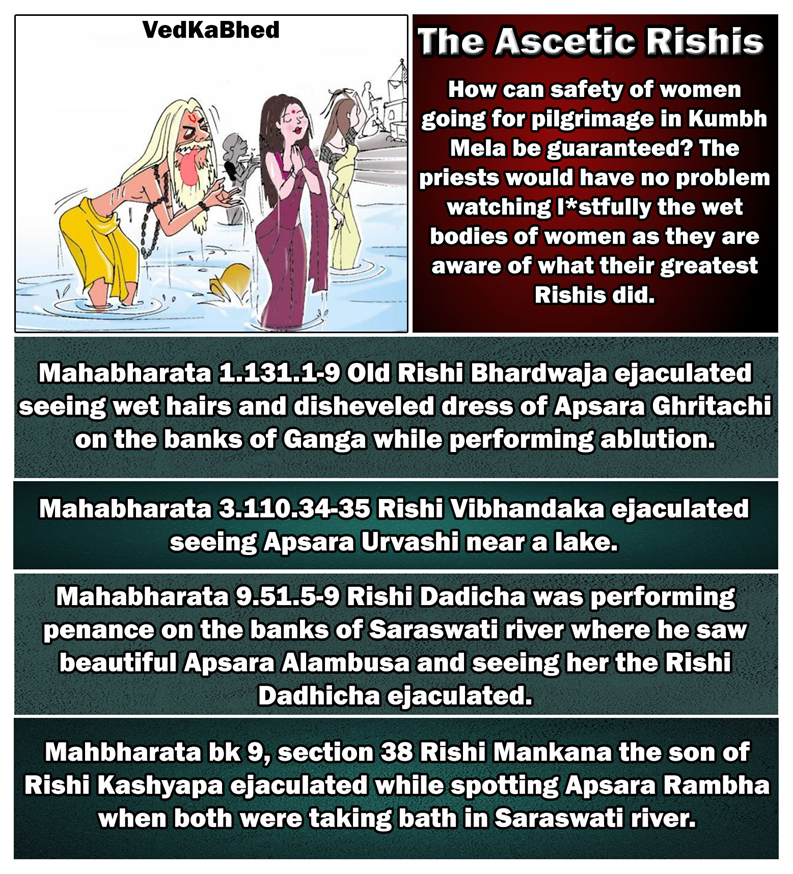
We often hear from Hindus about how pious the Rishis were, that they practiced strict celibacy and lived unmarried lives. However, this is far from true. The gods themselves had multiple wives, and almost all Rishis were married and had children. In fact, some sages, even in their frail old age, were so overcome by desire that merely seeing a beautiful woman caused them to emit semen. Among these were renowned figures such as Bharadvaja, Kratu, Vasistha, Gautama, and others. I will begin by recounting the stories of the gods, followed by those of the Rishis.
Shiva
Srimad Bhagavatam 8.12.32-33 “Just as a maddened bull elephant follows a female elephant who is able to conceive pregnancy, Lord Siva followed the beautiful woman and discharged semen, even though his discharge of semen never goes in vain. O King, where so ever on the surface of the globe fell the semen of the great personality of Lord Siva, mines of gold and silver later appeared.” Tr. Swami Prabhupada (Source)
Shiva is often regarded as the great ascetic, but what kind of asceticism is this? It is said that from Shiva’s emission of semen, the monkey-god Hanuman was born, as explained in the Adultery section. So intense was Shiva’s desire for Mohini (Vishnu) that he pursued her completely nude and eventually ejaculated. This incident reportedly took place in the presence of his wife, Parvati, who lowered her head in shame as her husband lusted after another woman before her eyes. This episode from the Srimad Bhagavatam is further discussed in the LGBT section.
Krishna
Krishna dropped his semen after looking at Rati (Goddess of Love).
Brahma Viavarta Purana Brahma Khanda 4.23-25 “Thereafter because of the arrows of love, the semen of Lord Krsna also fell but he placed the same in the water that assembly. After a thousand years it emerged in the form of an egg. From that egg a gigantic universal form came out, which happens to be the base of the entire Universe. His single hair-pit could accommodate a complete universe. It is harder than the hardest and nothing else is bigger than it.” Tr. Shanti Lal Nagar (source)
Brahma
The Puranas recount stories of Brahma ejaculating upon seeing Sati, the wife of Shiva. Several Puranas narrate this incident with slight variations, but the following verse from the Shiva Purana specifically states that Brahma ejaculated merely upon beholding the face of Shiva’s wife.
Shiva Purana, Rudra Samhita 2, Sati Khanda 2, chapter 19, verses 26-28 “Then, O sage, afflicted by the cupid and delighted in the heart of hearts, I [Brahma] lifted her veil and stared into the face of Sati. I looked at the face of Sati many a time. I was helpless in curbing the onset of a sensuous organism. Four drops of my semen virile got displaced and fell on the ground like drops of dew as a result of staring into her face.”, Tr. Board of Scholars, Edited by J.L. Shastri (source)
This story is also supported by the Brahma Purana Gautami-Mahatmya 3.15. As we know, Brahma is depicted as an old man, often considered the grandfather of creation. Yet, this same grandfather could not control his lust. Upon seeing the face of Sati, Shiva’s wife, he discharged his semen. When Shiva discovered this, he was so enraged that he nearly killed Brahma. Brahma eventually repented and begged for forgiveness, which Shiva granted.
Isn’t it ironic that Shiva was furious with Brahma for ejaculating at the sight of his wife, yet he had no qualms about commanding Vishnu to rape the chaste woman Vrinda (Tulsi)? As we have read, Shiva himself ejaculated upon seeing Mohini (Vishnu), attempted to seduce the wives of sages while naked, and, according to the Mahabharata, had sex with the wives and daughters of rishis in the Daruvanam forest. If Shiva could repeatedly commit these shameless acts, why was he so enraged when someone else did the same to his wife? The Hindu gods perpetrated these deeds again and again, demonstrating that they did not consider such actions to be wrong.
Brahma ejaculated on seeing the toe of Parvati.
Brahma Purana 4.3.17-22 “During the course of touching the slab, Siva urged by Visnu, touched the toe of the right foot of the goddess with his hand. Performing the sacrifice there near Siva, I saw her. My semen got ejaculated due to my evil mind on seeing the toe. In the entire three worlds, who is not deceived by Cupid? Defiled and ashamed, I scattered the ejaculated semen in small droplets. From the minute particles of my semen the Valakhi- lyas” were born. Then there was a great commotion caused by Devas. Overwhelmed by shame, I stood up from my seat and started. Even as Devas watched silently, O Nárada, I went ahead. On seeing me go, Mahâdeva spoke to Nandin: Siva said: Call Brahma here. I shall make him free from sin.” (source)
Shiva Purana, Rudra Samhita 2, Parvati Khaṇḍa 3, chapter 49, verses 3-11 “Then according to the worldly convention, Pārvatī and Śiva performed the circumambulation round the fire, O dear. The husband of Pārvatī exhibited a wonderful feat. O celestial sage, listen to that. I shall mention it out of love for you. On that occasion, deluded by Śiva’s power of illusion I stared at the feet of the goddess as well as the crescentshaped nails. On seeing them, O celestial sage, I became overwhelmed by passion. My mind was greatly disturbed. Deluded by the cupid I stared at her limbs frequently. Then, immediately after staring at them, my semen dropped on the ground. I, the grandfather, was ashamed by the emission of my semen. O sage, I pressed the penis secretly with my feet. O Nārada, on coming to know of it, the great God Śiva became furious. He wanted to kill me immediately because I was overwhelmed by lust. O Nārada, there was great hue and cry everywhere. All the people trembled. Even Viṣṇu, the sustainer of the universe, was terrified. O sage, then Viṣṇu and other gods eulogised Śiva who was blazing furiously and who attempted to kill me.” Tr. J.L. Shastri (source)
Brahma ejaculated on seeing Rati.
Brahma Vaivarta Purana Brahma Khanda 4.10-13 “Both of them bowed in reverence to lord Krishna and thereafter they took their seats over the gem-studded thrones. Kamadeva carried a bow of flowers and the arrows which were known as Marana, Stambhana, Jrmbhana, Soçana and Unmadana. In order to test the effectiveness of his arrows, Kamadeva shot all the five arrows at the same time. As a result of this all the people became passionate. Finding Rati there, the Semen of Brahmä fell but Brahma, the best of the vogis, concealed the same with his costumes out of shame.” Tr. Shanti Lal Nagar (source)
Brahma Vaivarta Purana, Brahma Khanda 4.11-20 “This Khma who wields the following arrows, namely, killing. stupifying, soporific, emaciating and maddening, experimentally discharged the arrows on all and, at the desire of the Supreme Being every one was excited with lust. To crown all, the great anchorite, Brahma looked with wistful eyes at Rati and immediately his semen was discharged…” Tr. Rajendra Nath Sen (Source)
Brahma is said to have ejaculated on seeing the wives of gods, Apsaras, and other women.
Vayu Purana, Part 2, 4.29-31 “The brilliantly shining goddess Earth, the quarters, the intermediate quarters, the Lords of quarters, the celestial virgins, the wives of Devas, the mothers and Ayu all these were present there in embodied form in front of the Lord (Brahma) who was performing the Yajna assuming the form of Varuna. On seeing the ladies, the semen virile of Svayambhu fell on the ground…” Tr. G.V. Tagare (source)
Brahma is said to have ejaculated seeing Amogha the wife of sage Santanu.
Padma Purana Section 1 Sṛṣṭi-khaṇḍa, Chapter 55, verses 16b-18a. “The grandsire of all the worlds, after seeing Amoghā, ejaculated. From that is said to be the rise of Lauhitya. It purifies all people. It is full of all sacred places; resorting to which a man goes to the healthy world of Brahmā.” Tr. N.A. Deshpande (source)
This story is further elaborated in the Niyoga section. Brahma had again ejaculated on seeing a nymph.
Brahma Vaivarta Purana, Krishna Janma Khanda 131.12-22 Subsequently at that place nymphs who had sprung out of the body of Visnu and who were the digits of Visnu began to dance and chant Visnu’s hymns in a melodious tone. The paternal grandfather Brahma, observing their hard buttocks, thick spherical breasts and smiling lotus faces, was excited with passion. He could not control his heart; his semen was discharged; and out of shame he concealed it on the ground with his cloth. O Saunaka, after the music was over, he threw the semen along with the cloth rendered hot by lust into the sea of milk.” Tr. Rajendra Nath Sen (Source)
Is it truly befitting for gods to watch semi naked and fully naked girls dancing? This gathering was also attended by Agni and he is also said to have discharged his semen attempting to conceal it afterward in the same manner.
Agni
Brahma Vaivarta Purana, Krishna Janma Khanda 131.34-38 Once upon a time, all the gods having assembled in the council of the gods, the celestial whores busied themselves with dancing and singing. On that occasion, the fire-god (having seen Rambha with graceful buttocks), was excited with passion and discharged his semen…” Tr. Rajendra Nath Sen (Source)
Rambha was an Apsara (Nymph), she was also the concubine of the so-called King of Gods Indra.
Mitra and Varuna
Mitra and Varuna are said to have ejaculated upon seeing Apsara Urvashi.
Rig Veda 7.33.11 “Verily, Vasiṣṭha you are the son of Mitra and Varuṇa, born, Brahmā, of the will of Urvaśī, after the seminal effusion; all the gods have sustained you, (endowed) with celestial and Vedic vigour in the lake.” Tr. H.H. Wilson (Source)
Following is the Hindi translation by Pandit Ram Govind Trivedi.
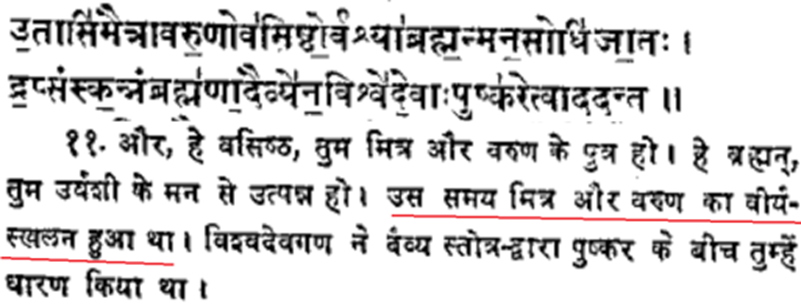
Yaska Acharya comments on this verse.
Nirukta 5.13 “Urvashi is (the name of) a naiad, (so called because) she pervades wide regions (uru + as- to pervade ‘), or she pervades by means of thighs…On seeing her, the seminal fluid of Mitra and Varuna fell down. Tr. Lakshman Swarup (source)
Brihad Devata 5.149-150 “Of these two Adityas, when they saw the nymph Urvasi at a sacrificial session, the semen was effused. It fell into a jar containing water that stood overnight. Now at the same moment two vigorous ascetics, the seers Agastya and Vasistha, there came into being.” Tr. Arthur Anthony Macdonnel (source)
Srimad Bhagavatam 6.18.6 “Upon seeing Urvasi, the celestial society girl, both Mitra and Varuṇa discharged semen, which they preserved in an earthen pot. The two sons Agastya and Vasiṣṭha later appeared from that pot, and they are therefore the common sons of Mitra and Varuṇa. Mitra begot three sons in the womb of his wife, whose name was Revatī. Their names were Utsarga, Ariṣṭa and Pippala.” Tr. Swami Prabhupada (Source)
Shrimad Bhagavatam 9.13.6 “After saying this, Mahārāja Nimi, who was expert in the science of spiritual knowledge, gave up his body. Vasiṣṭha, the great-grandfather, gave up his body also, but through the semen discharged by Mitra and Varuṇa when they saw Urvaśī, he was born again.” Tr. Swami Prabhupada (source)
Shiva Purana 5.4.23-24 “Formerly the two gods Mitra and Varuna, while performing a severe penance, were fascinated and deluded by Siva’s Mayã. On seeing the youthful maiden Ürvasi, both of them had the emission of their semen. Mitra deposited his semen in a pot and Varuna in water.” Tr. J.L. Shastri (source)
Devi Bhagavatam 6.14.53-69 “Urvaśī became attached to them; and, under their control, began to stay in the house of Mitrā Varuṇa. When Urvaśī began to remain there, strongly attached to them, the semen of Mitrā Varuṇa dropped in an uncovered jar. And the two beautiful sons of the Ṛṣis were born out of that; Agasti was the first child and Vaśiṣṭha the second.” Tr. Swami Vijnananda (Source)
RISHIS
Bhardvaja
Bharadwaja is said to have ejaculated upon seeing an Apsara named Ghritachi. The aged sage had gone to the Ganga River to perform his ablutions, and the nymph had also arrived there to take a holy dip as part of her rituals. Seeing her wet body and dishevelled attire, the sage became aroused, and overcome by desire, his semen was discharged.
Mahabharata 1.131.1-9 “Vaisampayana said, ‘There dwelt at the source of the Ganga, a great sage named Bharadwaja, ceaselessly observing the most rigid vows. One day, of old, intending to celebrate the Agnihotra sacrifice he went along with many great Rishis to the Ganga to perform his ablutions. Arrived at the bank of the stream, he saw Ghritachi herself, that Apsara endued with youth and beauty, who had gone there a little before. With an expression of pride in her countenance, mixed with a voluptuous languor of attitude, the damsel rose from the water after her ablutions were over. And as she was gently treading on the bank, her attire which was loose became disordered. Seeing her attire disordered, the sage was smitten with burning desire. The next moment his vital fluid came out, in consequence of the violence of his emotion. The Rishi immediately held it in a vessel called a Drona. Then, O king, Drona sprang from the fluid thus preserved in that vessel by the wise Bharadwaja. And the child thus born studied all the Vedas and their branches.” Tr. K.M. Ganguli (source)
This story is also repeated in Mahabharata 1.168.
Vyasa
Another Rishi named Vyasa had ejaculated upon seeing Ghritachi but this didn’t occur at the Ganges river.
Srimad Devi Bhagavatam 1.14.1-70 “…The Muni Vyasa Deva tried his best and exerted his power of patience to its utmost, but failed to control his restless mind to enjoy the woman. Though he was very energetic, and he tried repeatedly to control his heart, enchanted with the beautiful form of Ghritachi, yet he could not, as due to a state of things pre-ordained by God, control his mind. At this state, when he was rubbing the fire sticks to get the sacred fire, the two pieces of wood used in kindling the fire, his seed (semen) fell upon the Arani (the two pieces of wood used in kindling the sacred fire). But he did not take any notice of that, and he went on rubbing the firesticks when arose from that Arana the wonderfully beautiful form of S’uka deva, looking like a second Vyasa. This boy, born of Arana fuel, looked there brilliant like the blazing fire of the sacrificial place, whereon oblations of ghee are poured…” Tr. Swami Vijnananda (source)
The story is also mentioned in Mahabharata 12.325. Narada Purana II.58.18-25 states that Ved Vyasa was attracted to Ghritachi even after she had assumed the form of a parrot. This is mentioned in Bestiality category.
Vibhandaka
The sage Vibhandaka is said to have involuntarily released his semen upon seeing Apsara Urvashi near a lake.
Mahabharata 3.110.34-35 “And that son of Kasyapa, Vibhandaka, having proceeded to a big lake, devoted himself to the practice of penances. And that same saint, comparable to a god, laboured for a long period. And once while he was washing his mouth in the waters, he beheld the celestial nymph Urvasi–whereupon came out his seminal fluid.” Tr. K.M. Ganguli (source)
Mankana son of Kashyap
There is also a story of another sage named Mankana, the son of Kashyapa. He ejaculated upon seeing the Apsara Rambha while both were bathing.
Vamana Purana, Satomahatmya 17.2-5 “Lomaharsana said: – The sage Mankana was the mind-born son of Kasyapa. He was ready to bathe with his valkala in his hand. There came Rambha taking good, bright and charming other Apsarases and began to take their bath by his side. At this due to excitement of passion his semen dropped in the water. The great sage collected that semen in a jar. That semen in the jar became differentiated into seven portions. Out of them were born seven Rsis who are known as the Marut hosts.” Tr. Anand Swarup Gupta (source)
This suggests that women who travel to Banaras (Varanasi) for pilgrimage may not be safe from the lustful gaze of certain Hindu priests. These priests, after all, would hardly hesitate to ogle at women’s wet bodies, being well aware of the conduct of their own revered Rishis. There is another version of this story mentioned in Mahabharata.
Mahabharata 9.38 “Listen now to a great feat of Mankanaka, who had from his youth led the life of a brahmacari. While employed in performing his ablutions in the river, he beheld (one day), O Bharata, a woman of faultless limbs and fair brows, bathing in the river at will, her person uncovered. At this sight, O monarch, the vital seed of the Rishi fell unto the Sarasvati. The great ascetic took it up and placed it within his earthen pot. Kept within that vessel, the fluid became divided into seven parts. From those seven portions were born seven Rishis from whom sprang the (nine and forty) Maruts.” Tr. K.M. Ganguli (source)
Dadhica
Dadhica had emitted his semen into the river Sarasvati upon seeing Apsara Alambusa.
Mahabharata 9.51.5-9 “In days of yore, O monarch, there was an intelligent sage of great ascetic merit. He was celebrated by the name of Dadhica. Possessing a complete control over his senses, he led the life of a brahmacari…At last the chastiser of Paka, for tempting the sage, despatched unto him the exceedingly beautiful and celestial apsara, by name Alambusa. Thither where on the banks of the Sarasvati the high souled sage was engaged in the act of gratifying the gods, the celestial damsel named above, O monarch, made her appearance. Beholding that damsel of beautiful limbs, the vital seed of that ascetic of cleansed soul came out.” Tr. K.M. Ganguli (source)
Satananda and his son Satyadharti
There is a story mentioned about a father and his son who were archers, they were descendants of Rishi.
Matsya Purana 50.10 “At the sight of a nymph, Satyadhriti cast his seed in a pool of water, out of which, one son and a daughter were born.” Tr. Taluqdar of Oudh, Edited by B.D. Basu (source)
Vayu Purana 2.37.198 “On seeing an Apsaras (celestial damsel) in front, the semen virile of Satyadhrti was emitted in the bush of Sara-grasa and twins were born.” Tr. G.V. Tagare, G.P. Bhatt & J.L. Shastri (source)
Like Father like Son.
Srimad Bhagavatam 9.21.35 “The son of Satananda was Satyadhṛti, who was expert in archery, and the son of Satyadhṛti was Saradvan. When Saradvan met Urvasi, he discharged semen, which fell on a clump of sara grass. From this semen were born two all-auspicious babies, one male and the other female.” Tr. Swami Prabhupada (source)
This is also mentioned in Vayu Purana.
Vayu Purana 1.37.196-8 “…Ahalya bore Satananda the excellent sage to Saradvata. His son was Satyadhrti of great fame. He was a master of the science of archery. On seeing an Apsaras (celestial damsel) in front, the semen virile of Satyadhrti was emitted in the bush of Sara grass and twins were born.” Tr. G.V. Tagare, G.P. Bhatt & J.L. Shastri (source)
Kratus
Kratus ejaculated upon seeing Rati.
Shiva Purana, Rudra Samhita 2, Sati Khanda 2, Ch 3, verse 51-55 “From the drops of sweat that fell from Daksa’s body, a splendid woman endowed with good qualities was born. She was of slender body with symmetrical hips. Her waist was well shaped; small curly hairs embellished it. She was soft in body with fine teeth. She had a shining golden complexion. In her body, she was perfect. Her face shone like the full moon and full blown lotus. Her name was Rati. She was capable of captivating even the sages. Excepting Kratu, Vasistha, Pulastya and Angiras the six viz. Marici and others successfully curbed their senses and their activities. O excellent sage, the semen virile of the four Kratu and others fell on the ground from which other types of manes were born.” Tr. Board of Scholars, Edited by J.L. Shastri (Source)
Suparsva
A sage named Suparsva had emitted his semen after he spotted a Rakshasi girl.
Varaha Purana 95.18-20 “There a young and beautiful Raksasa girl by name Indumati, bathing naked, was seen by this sage. Then he had an emission which he dropped in a stony crevice at the river (and it got mixed with water).” Tr. Venitasubramonia Iyer, edited by J.L. Shastri (source)
Kashyapa
A Shudra woman named Kalavati, the wife of Drumila, went to the sage Kashyapa to contract Niyoga. However, Kashyapa refused, fearing that he might lose his status if he engaged in sexual intercourse with a Shudra woman. Yet, as an Apsara happened to pass by, Kashyapa ejaculated upon seeing her.
Brahma Vaivarta Purana, Brahma Kanda 20.33-46 “…At that time, Menaka was passing by that way, At the sight of her thigh and breast the semen of the saint was discharged. Thereupon the woman Kalavati drank it cheerfully, went to her husband, bowed to him and told him everything about, her pregnancy…” Tr. Rajendra Nath Sen (Source)
Brahma Vaivarta Purana, Brahma Khanda 20.12-20 “Santi replied, At Kanauj one Drumila had a barren wife named Kalavati devoted to her husband. She was barren through the faults of her husband. By the command of her husband she once upon a time went to Kasyapa Muni who dwelt in a forest…. [21-32] The Muni addressed her thus ‘Who are you in this solitary forest? Whose wife are you? Why have you come here… ”O best of the twice born aint I he daughter of a cow herd, the wife of Drumila. By the command of my husband. I have come to you as I desire to have a son. Kindly impregnate me. You should not slight a woman who has come to you voluntarily…” Tr. Rajendra Nath Sen (Source)
Devarata
Rishi Devarata was seated on the bank of a river in the Kamyaka forest. Upon seeing the naked Apsara Menaka, the sage ejaculated.
Skanda Purana VI.i.29.36-47 “In the meanwhile, at the advent of spring season, Meanaka, the excellent Apsara (celestial woman), happened to come to the mortal world. In course of her wandering, she reached the excellent forest named Kamyaka…It was there
that the tiger among sages, remembered as Devarata, stayed…Once he was sitting on the bank of the river. The celestial damsel of excellent complexion was distressed due to the heat of the sun. Even as the sage was watching she disrobed herself revealing her exquisitely divine features and entered the water. On seeing the lady of excellent limbs diving into the water expanse, instantly the leading sage involuntarily discharged his semen. In the meantime an extremely thirsty doe came there. The water of the river with which the semen of the sage had got mixed was completely drunk up by her. By the power of the sage whose semen could never be futile, the doe conceived a human foetus…” Tr. Ganesh Vasudeo Tagare (source)
Vedasiras
The sage Vedasiras ejaculated upon seeing the celestial nymph Suci, who should not be confused with the sage of the same name.
Skanda Purana IV.ii.59.19-21 “Formerly there was a sage of great penance named Vedasiras, born in the family of Bhrgu. It was as though he was another embodied form of the Vedas. While that sage was performing the penance, Suci, the most excellent one of the celestial damsels, endowed with beauty and well-shaped limbs came into his view. Merely at her sight the mind of the sage became extremely agitated. He had an emission of semen immediately. The excellent celestial damsel became frightened.” Tr. G.V. Tagare (Source)
The sage told her that his semen should not go waste hence she must swallow it. She complied and became pregnant with a baby girl and the sage named her Dhutapapa.
Adultery/Fornication with Women
Hindu mythology contains numerous accounts of gods and sages engaging in illicit relationships with women. These divine figures appeared to have little hesitation in committing acts of adultery with multiple partners. Indra, for instance, proudly refers to himself as a “master in sexual science,” while deities such as Shiva and Krishna are also portrayed as overtly lustful. Whereas adultery is generally regarded as a source of shame among religious leaders and devout followers, it was often depicted as a matter of pride and pleasure for these gods and Rishis. Among them, Krishna is particularly well known, frequently described by his critics as a womanizer. Moreover, figures like Rishi Durvasa, several Apsaras, and even certain gods are shown to openly endorse such behavior. In a startling doctrinal stance, the Brahma Vaivarta Purana encourages adultery by threatening hell for any man who, citing virtue, refuses the sexual advances of a woman who approaches him.
Brahma Vaivarta Purana, Krishna Janma Khanda, chapter 24, verses 27-28 “I accept your command and also your daughter because refuse the company of a damsel, who is offered to a person drives him the kalasutra hell. Even if a passionate loose women approaches a person who has controlled his senses and in case he disregards her only keeping in view his dharm but by thus conducting himself he has to go to the hell.” Tr. Shanti Lal Nagar (Source)
Brahma Vaivarta Purana, Krishna Janma Khanda, chapter 30, verses 77 “Such of the self-controlled person who does not enjoy the company of the damsel who appears before him in a secluded place, he falls into the kumbhipaka hell and has to remain there till the number of years equivalent to the number of hairs on one’s body.” Tr. Shanti Lal Nagar (Source)
The Devi Bhagavatam Purana describes even revered Hindu gods and sages as succumbing to lust, deceit, and immoral behaviour, portraying them as engaged in illicit relationships and overcome by vice.
Srimad Devi Bhagavatam 4.13.11-13. “O Giver of honour! When all the Devas, Vas’istha, Vâmadeva, Vis’vamitrâ, Brihaspatî and other ascetic Munis get themselves overpowered by lust and anger, when their intelligence gets destroyed by covetousness and avarice, when they are addicted to vices and are expert in fraud, pre-text and trickery, then what fate, alas! can you expect of Dharma and what help is there of any religious persons! Alas! lndra, Agni, Moon, and Brahmâ when these get overpowered by the strong influence of lust, are in illicit love with others’ wives, where is the goodness and virtuous behavior in this Trilokî?” Tr. Swami Vijnananda
Vishnu
Shiva Purana, Satarudra Samhita 3, chapter 22, verses 45-46 “In the meantime Visnu saw those damsels born of nectar sprays who were haughty due to their divine beauty and whose faces resembled the full moon. Fascinated by the cupid’s arrow Visnu attained highest pleasure only there. He began to indulge in sexual dalliance with those women of exquisite beauty…” Tr. Board of Scholars, Edited by J.L. Shastri (source)
Krishna
Krishna and Gopis
There is considerable misinformation surrounding Krishna’s 16,108 wives and the Gopis. Some people assume that all 16,100 of his wives were Gopis, while others claim that he married 16,108 women solely to liberate them. Another common assertion is that Krishna never had sexual relations with them, as a god is believed to be beyond such acts. Krishna had a total number of 16108 wives, among which 8 were considered major wives and 16100 were considered minor wives, he also had numerous concubines like his aunt Radha, Gopis who were married to other men with children.
Krishna is said to have had numerous concubines and girlfriends, most of whom were Gopis, the milkmaids. His favorite was Radha, who was also his maternal aunt. It remains uncertain whether Krishna ever married her, as many major sources make no mention of such a marriage. Several verses from the Puranas suggest that these Gopis, his girlfriends or concubines, were in fact married women and even had children.
Vishnu Purana 5.13.55-61 “The Gopis repeatedly exclaimed, “Bravo, Krishna!” to his song. When leading, they followed him; when returning, they encountered him; and, whether he went forwards or backwards, they ever attended on his steps. Whilst frolicking thus with the Gopis, they considered every instant without him a myriad of years; and, prohibited in vain by husbands, fathers, brothers, they went forth at night to sport with Krishnna, the object of their affection…” Tr. H.H. Wilson (source)
The Gopis address Balarama, the elder brother of Krishna, after Krishna abandons them.
Srimad Bhagavatam 10.65.11-12 “For Kṛṣṇa’s sake, O descendant of Dāśārha, we abandoned our mothers, fathers, brothers, husbands, children and sisters, even though these family relations are difficult to give up. But now, O Lord, that same Kṛṣṇa has suddenly abandoned us and gone away, breaking off all affectionate ties with us. And yet how could any woman fail to trust His promises?” Tr. Swami Prabhupada (Source)
Brahma Purana 81.39-40 “At that time Krsna sported himself together with the cowherd lasses. Even when he was away from them for a moment they felt that period of time equal to a crore of years. Though prevented by their fathers, husbands and brothers the cowherdesses who were fond of sexual intercourse delighted Krsna during the nights.” Tr. Board of Scholars, edited by J.L. Shastri (source)
The Brahma Vaivarta Purana portrays Krishna engaging in sexually charged interactions with the Gopis, depicting scenes where they solicit intimate favours and even strip him naked. This narrative openly glorifies behaviour that is both indecent and inappropriate.
Brahma Vairvarta Purana, Krishna Janma Khanda 29.1-10 “…Some passionate milk-maid said to Krishna, the lord of her life, “Krisna, wrap me in your yellow dress.” Someone said to Krisna, the Lord of the universe, “Lord, apply vermillion to my forehead.” Someone arrived there soon and said, “Lord, arrange the lock of my hair and bind my chignon.” Some milk-maid bent on her toilet deputed Krisna to fetch sandal foliage for her ear-rings. Someone by mysterious signs explained to him what was passing in her heart and with a face beaming with smiles looked at him soliciting sexual intercourse. Some milk-maids dragged him by force, snatched from his flute, took away his yellow dress, made him naked and smiled. Some dignified girl said to the conqueror of Madhu, “Lord, paint the nails of my feet with lac-dye.” Someone said affectionately to him, “O Lord of my life, paint my cheek and breast with lines of cosmetics of various colours.” Tr. Rajendra Nath Sen (Source)
Srimad Bhagavatam 10.33.16-17 “In this way Lord Kṛṣṇa, the original Lord Nārāyaṇa, master of the goddess of fortune, took pleasure in the company of the young women of Vraja by embracing them, caressing them and glancing lovingly at them as He smiled His broad, playful smiles. It was just as if a child were playing with his own reflection.— Their senses overwhelmed by the joy of having His physical association, disheveled. Their garlands and ornaments scattered, O hero of the Kuru dynasty.” Tr. Swami Prabhupada (source)
Srimad Bhagavatam 10.29.45-46 “Sri Kṛṣṇa went with the gopis to the bank of the Yamuna, where the sand was cooling and the wind, enlivened by the river’s waves, bore the fragrance of lotuses. There Kṛṣṇa threw His arms around the gopīs and embraced them. He aroused Cupid in the beautiful young ladies of Vraja by touching their hands, hair, thighs, belts and breasts, by playfully scratching them with His fingernails, and also by joking with them, glancing at them and laughing with them. In this way the Lord enjoyed His pastimes.” Tr. Swami Prabhupada (source)
Skanda Purana II.iii.4.17 “With the tip of his nail with which he had pierced the neck of hyena, he pinched the breasts of the cowherd lasses. He has been sportingly given many form by young women. Let this Sesa (?) be for (i.e. bring about) calmness and peace.” Tr. G.V. Tagare (source)
Srimad Bhagavatam 3.3.21 “The Lord enjoyed His pastimes, both in this world and in other worlds [higher planets], specifically in the association of the Yadu dynasty. At leisure hours offered by night, He enjoyed the friendship of conjugal love with women.” Tr. Swami Prabhupada (Source)
Srimad Bhagavatam 10.30.33-34 Certainly Kṛṣṇa sat down here with His girlfriend to arrange Her hair. The lusty boy must have made a crown for that lusty girl out of the flowers He had collected. — [Śukadeva Gosvāmī continued:] Lord Kṛṣṇa enjoyed with that gopī, although He enjoys only within, being self-satisfied and complete in Himself. Thus by contrast He showed the wretchedness of ordinary lusty men and hardhearted women.” Tr. Swami Prabhupada (Source)
Kurma Purana 1.26.14-16 “A certain fawn eyed damsel, fascinated by passionate love, approached Krsna and kissed his lotus like face. Catching hold of the hand of Govinda, the first cause of the worlds, a certain girl who was deluded by his Maya, took him to her own house. Assuming multifarious forms sportively, the lotus-eyed Lord Krsna fulfilled their desires.” Tr. G.V. Tagare (Source)
This account clearly suggests that the Gopis were already married and even had children. It implies that, apart from his 16,108 wives, Krishna was also involved in illicit relationships with the Gopis. One cannot help but question what kind of married women would abandon their husbands and children to become concubines. It is plausible that they were compelled or coerced into such relationships by Krishna himself.
Krishna and Kubja
His liaisons were not confined to the Gopis alone, he is also described as having had sexual relations with other women, including a hunchbacked woman named Kubja, with whom he reportedly slept in her own house. Brahma Vaivarta Purana states that Kubja was an old woman and she was Surpanakha the sister of Ravana in her previous life. Krishna turned her into a 12 years old girl and had sexual intercourse with her after which she died. The age of Krishna is not mentioned but other texts suggest Krishna was roughly the same age as Kubja after her rejuvenation.
Brahma Vaivarta Purana, Krishna Janma Khanda, chapter 72, verses 21-68 “Thereafter at the sight of lord Krsna, the old woman was filled with grace achieving youthfulness…Sanctified by fire and was adorned with several types of gem studded ornaments having a youthful age of twelve years…Instead of waking all the attendants of Kubja, lord woke her up alone and spoke to the chaste lady. Lord Krsna said…”wake up and let me enjoy the love sport with you because in earlier birth you happened to be Surpanakha, the sister of Ravana. O damsel, during my incarnation as Rama you had performed the tapas for me…Thus speaking lord Krsna embraced her and unrobing her, enjoyed her passionate advances…The lord took her in his lap like Laksmi… the lord was well versed in the art of making love and both of them did not rest during the physical union and they enjoyed the love sport in various ways. Lord Krsna scratched her breasts and the pelvic region with the nails and also sucked her nectar like lips. At the end of the night the lord implanted the semen in her womb after which the beautiful damsel fainted…Thereafter the plane from Goloka arrived and she attaining the divine form went to Goloka…She was having the complexion of molten gold becoming eternal and devoid of birth and death.” Tr. Shanti Lal Nagar (source)
Srimad Bhagavatam 10.48.6-7 “Calling forward His beloved, who was anxious and shy at the prospect of this new contact, the Lord pulled her by her bangled hands onto the bed. Thus He enjoyed with that beautiful girl, whose only trace of piety was her having offered ointment to the Lord. — Simply by smelling the fragrance of Kṛṣṇa’s lotus feet, Trivakra cleansed away the burning lust Cupid had aroused in her breasts, chest and eyes. With her two arms she embraced between her breasts her lover, Śrī Kṛṣṇa, the personification of bliss, and thus she gave up her long-standing distress.” Tr. Swami Prabhupada (Source)
Krishna and Naradi
He had committed fornication with another woman named Naradi.
Narada Purana, Uttarabhaga 80.31-32 “When the messengers returned, Naradi was called by the lover of cowherdesses. After bowing down to the lord, she went near him bashfully. The man of taste (Lord Krsna) embraced her, had the sportful dalliance with her and then dismissed her. Gradually she came once again to the lake Puspasaras.” Tr. G.V. Tagare (Source)
Krishna and his aunt Radha
Brahma Vaivarta Purana, Krishna Janma Khanda 29.22-32 “He put on her forehead a beautiful mark of vermillion and painted lines of cosmetics on her breast. He also painted the members of her lotus feet with lac dye and then with his nails constructed an artificial lotus on her loins and breast. Then Krisna got up and along with Radha went to the local lovely pond fall of water…” Tr. Rajendra Nath Sen (Source)
Brahma Vaivarta Purana, Krishna Janma Khanda 127.1-21 “…Lord Krisna dragged her to his beast and kissed her lips (upper and lower), the chin and both the sides of her cheek. Radha also kissed the handsome lunar face of Krisna and with both her hands pressed Krisna, the Lord of her life, to her bosom. Lord Krisna committed the desired act of sexual intercourse in sixteen ways as prescribed by the sexual science and calculated to please both man and wife. He lacerated the whole constitution of Radha with marks of nail and bit her lips whereby there was a thrill of raptures in his body and he experienced a feeling of lassitude…” Tr. Rajendra Nath Sen (Source)
Brahma Vaivarta Purana, Krishna Janma Khanda 46.61-71 “…On the other hand Siva was also engaged in the sexual act.” Saint Narayana said, ‘Lord Krishna having said so to the glancing, smiling Radha went along with her to the sandal forest…O saint, Radha and the Lord of the sphere became paralysed through the pleasure of sexual intercourse and being intimately associated with one another, they spent their time there…” Tr. Rajendra Nath Sen (Source)
Brahma Vaivarta Purana, Krishna Janma Khanda 69.1-11 “…Lord Krisna who was anxious to enjoy the taste of the Rasa copulated with the clever Radha according to the measure supplied by sixty-four practical arts in the sphere of the Rasa.’ At that time the loins and the spherical breast of Radha were lacerated with the injuries inflicted by the nails of Krisna; the vermillion-mark on the partings of her hairs on the head was obliterated; and her chignon was relaxed. Later on, the naked Radha thrilling with raptures and fainting with the excess of pleasure was harboured by the goddess of sleep.” Tr. Rajendra Nath Sen (Source)
Brahma Vaivarta Purana, Krishna Janma Khanda 52.20-28 “…There Krisna assumed several forms at once and the same time and indulged with the cow-herdesses in the sport which enchants licentious people. He held in his embrace the passionate Radha and went up to the temple of lust constructed by the Viswa-Karma. Afterwards at that place he slept with Radha on a bed redolent of the Champaka and annointed her with sandal, aloe, musk and saffron. The lustful Krisna versed in sexual science sported with the licentious Radha in several ways.” Tr. Rajendra Nath Sen (Source)
Krishna’s grandson Pradumyna
Shiva Purana, Rudra Samhita 2, Yuddha Khanda section 5, Ch 52, verses 50-53 “Then taking leave of her friend, and knowing him to be the grandson of Ksna, Citralekha got ready to go to Dvaraka with the velocity of the mind…Then in the park of the harem the son of Pradyumna was seen by her playing with women and drinking wine. He was dark complexioned but beautiful in every limb, smiling in the prime of youth.” Tr. J.L. Shastri
Shiva
Shiva and Women of Rishis
In the Mahabharata, Shiva is said to have fornicated with wives and daughters of Rishis.
Mahabharata 13.14.157 “He sports with the daughters and the spouses of the Rishis. His hair is long and stands erect. He is perfectly naked, for he has the horizon for his garments. He is endued with terrible eyes…” Tr. Manmatha Nath Dutt (Source)
Shiva and a Prostitute
According to a story from the Shiva Purana, Shiva is said to have assumed the form of a merchant to test a prostitute. However, he ended up fornicating with the woman, whose name was Mahananda. One cannot help but wonder whether this was truly a test or merely an excuse for indulgence disguised as one.
Shiva Purana, Satarudra Samhita 3, Chapter 26, verses 1-31 “O dear sage, listen to me. I shall tell you about Vaiśyanātha, the incarnation of Śiva, the supreme soul that yields great bliss. Formerly, in Nandigrāma there was a prostitute known as Mahānandā. She was very beautiful and a devotee of Śiva. Once Śiva assumed the form of a merchant and visited her house to test her. He had assumed the auspicious form of a devotee…The beautiful prostitute worshipped and welcomed the visitor with great joy. She made him sit with great respect…During the night she had her sexual union with the merchant who behaved like a libertine. She then went to sleep on the couch brilliant with a soft bed.” Tr. J.L. Shastri (Source)
Shiva and wife of Sudarshana
In order “to test” the devotion of a couple, Shiva visited their home disguised as a Brahmin guest. The husband, Sudarshana, had earlier instructed his wife to treat guests with utmost respect, as guests are regarded as embodiments of Shiva himself. Taking advantage of Sudarshana’s absence, Shiva had sexual intercourse with his wife. When Sudarshana unexpectedly returned, Shiva brazenly and shamelessly informed him that he was sleeping with his wife. Instead of condemning Shiva’s act, Sudarshana was reportedly “delighted” and quietly left.
Linga Purana, Section I, chapter 29, verses 46-64 “Formerly, a householder known as Sudarsana, vowed to conquer the God of Death. He said to his chaste wife. ‘O lady of good holy rites, fine eye-brows and good fortune, listine to what I say, assiduously. Never should you dishonour the guests who visit your gouse. Since everyone of the guests is the Pinaka bearing lord, you should dedicate even yourself to the guest and adore him…O excellent brahmins, in order to test their devotion, Dharma himself assumed the form of a brahmin and came to the house of the sage…Dharma disguised as a brahmin said ‘O gentle lady where has your noble husband Sudarsana gone? O noble lady, enough of this cooked rice and other eatable! I say, you should dedicate yourself (to me)‘ Remembering what had been previously mentioned by her husband that chaste lady full of bashfulness and with closed eyes, began to move (towards him)…all the same, she made up her mind to dedicate herself to Dharma there itself at the behest of her own husband. In the meantime, Sudarsana, the husband of that lady, came to the threshold and called to her ‘Come, come, O gentle lady? Where have you been?’ It was the guest himself who replied to him. ‘O Sudarsana, O highly blessed one, I am now engaged in sexual intercourse with this wife of yours. What should be done here may kindly be mentioned. O leading brahmin, the sexual intercourse is concluded. O excellent brahmin, I am satisfied.’ Sudarsana the noble brahmin then said in great delight:- ‘O excellent brahmin, enjoy her as you please. I shall go away now.” Tr. Board of Scholars, edied by J.L. Shastri (Source)
Shiva with a group of Gandharis, Kinnaras and Women
According to Padma Purana I.56.1–10, Shiva once saw some beautiful Gandharis, Kinnaras, and human women and desired to have sexual relations with them. He cast a spell that drew them up into the sky, where he engaged with them. Meanwhile, Parvati witnessed the entire scene and became enraged. She assumed a fierce form and attacked those women, disfiguring their faces. She then cursed them, as a result of which they were transformed into Chandalas.
Padma Purana, Sṛṣṭi-khaṇḍa 1, chapter 56, verses 1-10 “Formerly, Śarva (i.e. Śaṅkara), having seen youthful and beautiful women of Gandharvas, Kinnaras and human beings, and with his mind set on them, pretended to be intent on practising penance, and with a spell dragged them far away into the sky. Then the great lord, the conqueror of the god of love, having fashioned a very delightful cottage, sported (there) with them. In the meanwhile, Gaurī’s mind became excited. By means of meditation she saw the lord of the world, sporting with women. Knowing his intention she became angry. Then taking the form of Kṣemaṅkarī[1], she entered (the sky), and saw, far away in a lonely region of the sky, Hara (i.e. Śiva), whose lustre was like that of the god of love, who was in the midst of beautiful women, who, the best man, was bright, who, having again and again embraced the women, was sporting with them, who was kissing them excessively, and who was tormented by the passion of love. Seeing this, Kṣemaṅkarī, came down… Dragging them (by seizing) their hair, she angrily kicked them by her foot. All the women reached (i.e. fell on) the ground, and suddenly their faces were disfigured. With their bodies scorched by Umā’s, curse they came under the sway of Mlecchas. Those women, widows or with their husbands alive are known as Cāṇḍāla. Even now they would experience the curse given by Umā.” Tr. N.A. Deshpande (source)
Kartikkeya
Kartikeya, the son of Shiva, was once advised by his mother Parvati to enjoy life as he pleased. Taking advantage of this, he began committing adultery with the wives of various gods. Although many inhabitants of heaven tried to stop him, he refused to desist, prompting them to appeal to Parvati for help. Responding to their pleas, Parvati transformed the appearances of the women Kartikeya approached, making them look like herself. This finally brought an end to Kartikeya’s acts of adultery.
Brahma Purana: Gautami Mahatmya 11.2-5 “When the asura Taraka was killed and the three worlds became quiet and normal, Parvati spoke to her eldest son Karttikeya with great pleasure: ‘By my consent and the grace of your father, be delighted in your mind. Enjoy as you please the worldly pleasures in the three worlds, which are dear to your mind.’ Thus addressed by his mother, Visakha (Karttikeya) the beloved of gods, sported about as be pleased with the wives of gods. The wives of gods also sported about. While the wives of gods were being enjoyed, O Narada, the heaven-dwellers were not able to prevent Karrtikeya.” Tr. Board of Scholars, edited by J.L. Shastri (Source)
Indra
Devi Bhagavatam 9.40.13-25 “Nârâyana said: – In ancient days, Indra the Lord of the three worlds, intoxicated with wine and becoming lustful and shameless, began to enjoy Rambhâ in a lonely grove. After having enjoyed her, he became attracted to her; his mind being wholly drawn to her, he remained there in that forest, his mind becoming very passionate.” Tr. Swami Vijnananda (Source)
Hanuman born through Niyoga by Vayu
Hanuman’s mother, Anjani, was married to Kesari but had an illicit relationship with Vayu, also known as Pavan. As a result, she conceived Hanuman and gave birth to him in a cave. There are two versions regarding the birth of the monkey god: one claims that his biological father was the wind god Vayu, while another asserts that he was an incarnation of Shiva, born from Shiva’s semen.
Brahmanda Purana 2.3.7.223-227 “…Kesari married the daughter of Kunjara named Anjana. That lady of great purity and good fortune went to a park named Pumsavana. Vayu (the wind-god) made advances to the lady who was proud of her youth. Hanuman was born of her union with Vayu the (source of) life into the entire universe…” Tr. G.V. Tagare (Source)
This is also mentioned in Valmiki Ramayana.
Valmiki Ramayana Kishkindha Kanda 4, Sarga 66, Verses 17-18 “On listening the words of Anjana the Air-god spoke this in reply, ‘oh, high-hipped one, I don’t dishonour you, hence let there be no fear in your heart, for I am the all-permeating Air-god. By which reason I embraced you and impregnate myself within you, by that reason you are impregnated in a supersensory manner, thereby you will beget a valiant son endowed with intellect.” Tr. K.M.K. Murthy (Source)
According to the Shiva Purana, after Shiva emitted his semen, it was collected on a leaf and later poured into Anjani’s ear by the sages. Subsequently, Hanuman was born as a reincarnation of Shiva.
Shiva Purana, Sataruda Samhita 3, chapter 20, verses 3-7 “Once lord Siva of wonderful sports saw Visnu in the form of an enchantress with glittering qualities. As if hit by the arrows of Cupid, Siva let fall his semen dislodged from its seat, for Rama’s work. Eagerly urged by him mentally for Rama’s work the seven celestial sages retained that semen in a leaf. For Rama’s work that semen was poured through the ears of Anjani, the daughter of Gautama, by those sages. In due course Siva was born of it in the form of a monkey named Hanumat. He had great strength and exploit.” Tr. Board of Scholars, Edited by J.L. Shastri (Source)
Lakshmi and Dattatreya
Purana obscurely states that Dattatreya had sex with Lakshmi.
Markandeya Purana 18.23-32 “Thus exhorted the gods then went to Dattatreya’s hermitage, and they beheld the high-souled Muni, attended by Lakshmi, hymned by Gandharvas and engrossed in quaffing spirituous liquor…Daddatreya addressed the prostrate gods, ‘What desire ye of me, that ye do me this obeisance…I am drinking strong drink, I have remnants of food in my mouth, nor I subdued my senses. How is it, O gods, ye seek for victory over your enemies even from me?’ The gods spoke. Thou art sinless, O lord of the world; no stain hast thou, into whose heart, purified by the ablution of learning, has entered the light of knowledge. True is this, o gods! all learning have I, who am impartial in view: but by reason of association with this woman I am now impure after eating. For commerce with women when continually pursued tends to depravity. Thus addressed, the gods then spoke again. This woman, O sinless brahman! is the mother of the world; she is not depraved…” (Source)
Lakshmi was present there, and he informed the gods that he had engaged in sexual intercourse with her. The Padma Purana indicates that Dattatreya had relations with Lakshmi, and although her name is not explicitly mentioned in the text, the preceding verse confirms this interpretation.
Padma Purana II.103.110-113 “Atri’s son Dattatreya, the high-souled brahmana, the great sage, with his eyes red due to (having drunk) spirituous liquor, was sporting with a woman. The virtuous one, intoxicated by wine, having seated a young, auspicious woman, best of all women, on his lap, sang, danced and heavily drank liquor…” Tr. N.A. Deshpande (Source)
Sarasvati and King Puruavas
Brahma Purana, Gautami Mahatmya 31.2-9 “King Pururavas went to the abode of Brahma. There, by chance he saw the divine river Sarasvati laughing by the side of Brahma. On Seeing her richly endowed with beauty the king asked Urvasi: The King said: Who is this beautiful saintly lady near Brahma…Urvasi said to the king: This is the splendid divine river Sarasvati, the daughter of Brahma. She comes here daily and goes back…Then out of pleasure the king sent Urvasi there. Urvasi then went and repeated the words of the king. Sarasvati agreed to what was mentioned by Urvasi. She promised saying ‘So be it’ and went to the place where Pururavas was staying. He indulged in sexual dalliance on the banks of Sarasvati for many years. Sarasvan was born as (her) son…” Tr. J.L. Shastri (Source)
Mitra
Vishnu created Urvashi and made her head of all Apsaras, Mitra had sexual relationship with her. This story seems to be another version of Mitra-Varuna ejaculating upon seeing Urvashi.
Matsya Purana 61.25-26 “This is the nymph Urvasi, O Devas! and I have created her to become the head of all Apsaras. Then the God Mitra called her, and asked her to enjoy with Him, which she accepted.” Tr. Taluqdar of Oudh, edited by B.D. Basu (Source)
OTHERS
The Devi Bhagavatam describes the gods as living with many women and freely taking part in lustful activities, showing their desire for pleasure rather than spiritual purity.
Devi Bhagavatam 8.5.1-31 “Here the Devas live always with numerous hordes of women and have their free amorous, dealings with them, to their heart’s contents and they hear the sweet songs sung by the Gandharbas and Kinnaras, the Upa Devatâs about their own glorious deeds.” Tr. Swami Vijnananda (Source)
Aniruddha the grandson of Krishna
Aniruddha the grandson of Krishna had fornicated with Uma the daughter of Bana,
Srimad Bhagavatam 10.62.22 “When Usa beheld Him, the most beautiful of men, her face lit up with joy. She took the son of Pradyumna to her private quarters, which men were forbidden even to see, and there enjoyed with Him.” Swami Prabhupada (Source)
RISHIS
Rishi Chuli and Somada
An Apsara named Somada served the sage Chuli, who, pleased with her service, offered to grant her a wish. She expressed her desire for a son but stated that she was unmarried and did not wish to marry. She then requested the sage to bless her with a child, and Chuli, through his so-called power of the mind, impregnated her.
Valmiki Ramayana, Bala Kanda 1, Sarga 33, verses 13-18 “Even she is obedient in his respect, and dedicating herself in ministering to him she stayed there righteously. After some time that sage Chuli has become satisfied with her service…Perceiving that the sage is contented that female celestial Somada who is aware of making good sentences is highly delighted and spoke with her melodious voice to that pedantic sage. I am unmarried and nobody’s wife, safe you be, and as I took shelter under your kindness it will be apt of you to endow me a son with your faculty of asceticism.’ So said Somada to sage Cuulii. That Brahma-sage Cuuli benignantly bestowed her with a unique and Brahma-like son who is renowned as Brahmadatta, as well as his own brainchild.” Tr. Desiraju Hanumanta Rao (Source)
Ved Vyasa
Shiva Purana Uma Samhita 5, chapter, 4, verse 20 “The wind-god, the vital air of the universe was deluded by Siva’s Mãya due to his arrogance. Overwhelmed by Kama, Vyãsa too, had sexual intercourse with other men’s wives.” Tr. J.L. Shastri (source)
Rishi Gautama
The sage Gautama, who cursed Indra for violating his wife, engaged in sexual intercourse with Saradvati and collected his semen in a bowl.
Shiva Purana, UmaSamhita 5, chapter 4, verses 32-33 “The sage Gautama had his mind deluded by Siva’s Maya. On seeing Saradvati in the nude he was excited and he indulged in sexual intercourse with her. He collected the semen emitted in a wooden bowl.” Tr. Board of Scholars, Edited by J.L. Shastri (source)
Rishi Vishwamitra
Shiva Purana, UmaSamhita 5, chapter 4, verse 35. O Vyāsa, Viśvāmitra became deluded by śiva’s Māyā and lustfully indulged in sexual dalliance with Menakā.” Tr. Board of Scholars, Edited by J.L. Shastri (Source)
This story is described in detail in Mahabharata 1.72.1–9, which I have discussed in the section titled “Stealing Garments of Women.”
Parasara
Shiva Purana Uma Samhita 5, Chapter 4, verse 34 “The great yogin Parasara, deluded by Siva’s Maya, indulged in sexual intercourse with Matsyodari the virgin daughter of a fisherman.” Tr. J.L. Shastri (source)
Rishi Medhavin
Rishi Medhavin is said to have committed adultery with Apsara Manjugosha in the forest.
Padma Purana VI.46.9-24 “A celestial nymph known as Manjughosa started to infatuate an excellent sage named Medhavin, best among sages, who was a celibate and lived there…Having seen the best sage staying there, that Manjugosha was overpowered by Cupid (i.e. passion of love) and she sang gently. That best sage, having seen her singing like that, with her bracelets jingling and her anklets and girdle tinkling, was forcibly deluded by Cupid with his army. That beautiful woman Manjughosa, seeing that sage like that, approached him and deluded him with feminine conquettish gestures; and keeping her lute down (on the ground) she embraced that lord of sages, as a creeper would encircle a tree shaking due to the velocity of the wind. That best sage, Medhavin, too rejoiced with her. Seeing in that (forest) only her excellent body, his auspicious nature left him, and he was influenced by the nature of Cupid. The lover did not know (i.e. care for) night or day, while rejoicing with her.” Tr. N.A Deshpande (Source)
Kandu
Brahma Purana 69.58-87 “On hearing her words the sage lost his courage. He was dubed. Taking that damsel by her hand he entered his hermitage. O excellent brahmins, then Cupid, Spring, Breeze became satisfied. They returned to heaven…It was the physical form of a blooming youth of sixteen years…It was lovely and capable of enjoying all pleasures. On seeing his vim and vigour she was excessively surprised saying—“Wonderful, indeed, is the power of penance.’’ She rejoiced much. O excellent sages, eschewing his rites of holy bath, prayer during dusk and dawn, repetitione of holy names, sacrifices, study of the Vedas, worship of deities, observances of holy rites, fasts, and meditation he sported with her day and night with great joy…With his mind drawn to sexual pleasures he was not aware of the passing time. Twilights, nights, days, fortnights, months, seasons and years sped on. O brahmins, clever in secret amorons dalliance, that lady of fine buttocks, skilled in engaging conversation diverted his mind with various lustful emotions. The sage Kandu engaged himself in vulgar sexual intercourse with her. Many hundreds of years he stayed with her in the valley of the Mandara mountain….“O timid lady, even as I was engaged in dalliance with you, what period of time did pass by?” Pramloca said : “Nine hundred, seven years, six months and three days have passed off till date.” Tr. G.P. Bhatt (source)
Apart from committing adultery, the gods were also fond of stealing the garments of women. The following section also includes Gods and Rishis committing adultery.
Stealing Garments of Women
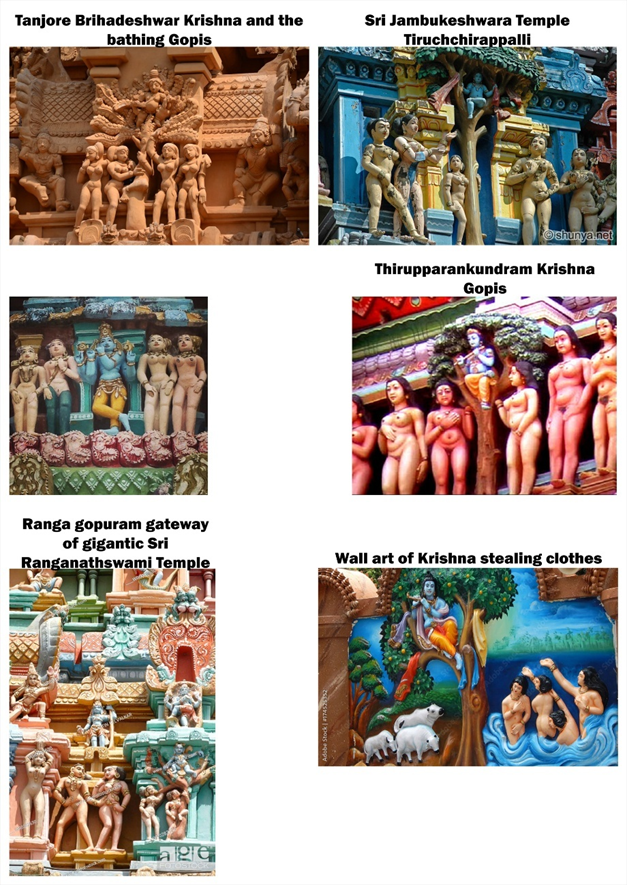
Hindu gods were also fond of stealing the garments of women in order to gaze upon their naked bodies. Remarkably, such episodes are even commemorated in temple art, where idols and paintings portray these scenes as sacred expressions of divinity. The image of Krishna taking the clothes of the Gopis as they emerged unclothed from the water is widely displayed, celebrated rather than condemned. Yet Krishna was not alone in such behavior, other deities are also described as partaking in similar acts within the same tradition.
Rishi Vishvamitra
Mahabharata 1.72.1-9 “Kanwa continued, ‘And Sakra, thus addressed by her, then commanded him who could approach every place (viz., the god of the wind) to be present with Menaka at the time she would be before the Rishi. And the timid and beautiful Menaka then entered the retreat and saw there Viswamitra who had burnt, by his penances, all his sins, and was engaged still in ascetic penances. And saluting the Rishi, she then began to sport before him. And just at that time Marut robbed her of her garments that were white as the Moon. And she thereupon ran, as if in great bashfulness, to catch hold of her attire, and as if she was exceedingly annoyed with Marut. And she did all this before the very eyes of Viswamitra who was endued with energy like that of fire. And Viswamitra saw her in that attitude. And beholding her divested of her robes, he saw that she was of faultless feature. And that best of Munis saw that she was exceedingly handsome, with no marks of age on her person. And beholding her beauty and accomplishments that bull amongst Rishis was possessed with lust and made a sign that he desired her companionship. And he invited her accordingly, and she also of faultless features expressed her acceptance of the invitation. And they then passed a long time there in each other’s company. And sporting with each other, just as they pleased, for a long time as if it were only a single day, the Rishi begat on Menaka a daughter named Sakuntala.” Tr. K.M. Ganguli (Source)
Krishna
Krishna stole the garments of the Gopis to take pleasure in watching their naked bodies and later offered a weak justification for his actions.
Srimad Bhagavatam 10.22.16-17 “The Supreme Personality of Godhead said: If you girls are actually My maidservants, and if you will really do what I say, then come here with your innocent smiles and let each girl pick out her clothes. If you don’t do what I say, I won’t give them back to you. And even if the king becomes angry, what can he do? Then, shivering from the painful cold, all the young girls rose up out of the water, covering their pubic area with their hands.” Tr. Swami Prabhupada (Source)
Krishna had done a similar act to his aunt Radha in front of all the Gopis.
Brahma Vaivarta Purana, Krishna Janma Khanda 28.117-132 …Hari snatched away the cloth of Radha and thus denuded her. Then he tore her wreath and loosened her chignon…Hari embraced the naked Radha, sank into the water and after having played therein got up again along with her. Then Krishna after having displayed the abashed, naked Radha to the cowherdesses threw her again at a distance into the water….Then Radha dragged Hari and gave him a push whereupon the Lord of the universe was immersed in deep water at a distance. But shortly afterwards he emerged from the liquid with a smile, kissed and embraced the naked Radha, again and again…After the play was over, the naked Lord and Radha both came to the coast and demanded their clothes from one another….” Tr. Rajendra Nath Sen (Source)
Indra
For fun, Indra blew the garments of girls taking bath.
Matysa Purana 27.3-5 “…Accepting the request of the Devas, the Maghavan, along with them, set out on his mission and, in the way, he came across a group of women in the forest. He saw those damsels bathing and enjoying themselves, as they do in they do in the pleasure-garden of Kuvera. Then Indra, in the form of a gust of wind, blew away and mixed up their garments. At that, all the maidens, hastily coming out of water, dressed themselves with the clothes as they found them.” Tr. Taluqdar of Oudh, Edited by B.D. Basu (Source)
Dancing Girls
The gods, as depicted in various Hindu scriptures, were scarcely different from the lustful men of today. They frequently engaged in sexual relations with women, drank liquor, and found pleasure in what can only be described as Mujra, performances of dancing women arranged for their entertainment. Earlier, we encountered accounts of divine gatherings where Apsaras performed such dances to amuse the gods.
According to Valmiki Ramayana Uttarakanda 7, Sarga 42, Verses 18–23, Rama revered as Maryada Purushottama (so-called ideal man), is portrayed as making his wife Sita drink wine before delighting in the spectacle of dancing women. I have mentioned this in Intoxicant Consumption in Hinduism article.
Shiva
Skanda Purana I.iii (P).12.81-83 “Surrounded and accompanied by sages and Devas and in accompaniment to the songs of the music party of Tumbura interspersed with the continuous dances of the celestial damsels, the Bull-emblemed Lord was seen there seated on his bull. Siva, the receptacle of sympathy, the enemy of the god of Love and great on account of his fortitude, gracefully approached Siva who was standing with the head bent low. Dispelling her bashfulness he placed her on his lap and became delighted. Accompanied by Lalita, his beloved, and surrounded by the assembly of Suras and leading sages, he witnessed the graceful dances of the celestial damsels to the accompaniment of music He repeatedly witnessed this with great eagerness.” Tr. G.V. Tagare (Source)
Skanda Purana III.iii.2.98a “Rambha, Ghrtaci, Menaa, Purvacittti, Tilottama, Urvasi and other celestial damsels dance before Sambhu.” Tr. G.V. Tagare (Source)
Krishna
Srimad Bhagavatam 10.33.2-22 “There on the Yamuna’s banks Lord Govinda then began the pastime of the rasa dance in the company of those jewels among women, the faithful gopis, who joyfully linked their arms together…As the gopis sang in praise of Krishna, their feet danced, their hands gestured, and their eyebrows moved with playful smiles. With their braids and belts tied tight, their waists bending, their faces perspiring, the garments on their breasts moving this way and that, and their earrings swinging on their cheeks, Lord Krishna’s young consorts shone like streaks of lightning in a mass of clouds. Eager to enjoy conjugal love, their throats colored with various pigments, the gopis sang loudly and danced…Next to Krishna’s cheek one gopi put her own, beautified by the effulgence of her earrings, which glittered as she danced. Krishna then carefully gave her the betel nut He was chewing. Their senses overwhelmed by the joy of having His physical association, the gopis could not prevent their hair, their dresses and the cloths covering their breasts from becoming disheveled. Their garlands and ornaments scattered, O hero of the Kuru dynasty. The wives of the demigods, observing Krishna’s playful activities from their airplanes, were entranced and became agitated with lust. Indeed, even the moon and his entourage, the stars, became astonished… Lord Krishna’s garland had been crushed during His conjugal dalliance with the gopis and colored vermilion by the kunkuma powder on their breasts…” Tr. Swami Prabhupada (Source)
Brahma
Brahma Vaivarta Purana, Brahma Khanda 13.1-10 “…Having tasted the pleasures of a kingdom for some time in the company of his wives, once upon a time, singing the eulogies of Hari, he suddenly came to Brahma at the shrine of the Puskara. At that time Brahma was witnessing the dance of a celestial nymph called Rambha along with other gods. Suddenly he (Upavarhana) became impatient at the sight of her thigh (beautiful like plantain) and hard, spehrical rising breast exposed by the wind. His semen was discharged…” Tr. Rajendra Nath Sen (Source)
Brahmanda Purana 2.3.31.22-23 “There he saw Brahma of unmeasured prowess, seated on a beautiful throne set with gems and jewels. He was adorned with ornaments set with gems and jewels. He was surrounded by leading Siddhas and sages engaged in meditation. He was gaily and smilingly watching the dance of Vidyadhara damsels.” Tr. G.V. Tagare (Source)
Indra
Skanda Purana III.i.28.72-76 “Once, accompanied by all the immortal ones, the Slayer of Bala and Vrtra (i.e. Indra) was engaged in witnessing the dance of the celestial damsels in his court. King Puruavas too had come then to the court of Devas in order to witness the dance of the womenfol of Suras, the heaven-dwellers…” Tr. G.V. Tagare (Source)
Group of Sages and Devas
Skanda Purana V.iii.172.1-2 “Sri Markandeya said: Then all the sages and Devas with Indra at their head came to the meritorious hermitage of Mandavya on the banks of Narmada. The courtesans began to dance to the tunes of the songs of the celestial damsels. Lights shone and conchs and Dundubhi drums were sounded.” Tr. G.V. Tagare (Source)
Sex Life
The sexual lives of many gods, particularly Krishna, are extensively glorified in Hindu scriptures. The following passages describe how they engaged in relations with their wives.
Krishna
According to Srimad Bhagavatam 10.59.42, Krishna is said to have assumed a separate form for each of the 16,100 princesses and married them all simultaneously. These 16,100 are regarded as his minor wives, while he also had eight principal wives, whom he married on different occasions as described in Srimad Bhagavatam 10.58.55 and Devi Bhagavatam 4.24.41–42. Krishna’s violent conduct toward his prospective in-laws is also well-documented. In Srimad Bhagavatam 10.54.32–33, he is said to have beaten Rukmi, the brother of his chief wife Rukmini, and in Srimad Bhagavatam 10.83.12, he is described as assaulting the brother of Mitravinda, who was also his cousin. Furthermore, before marrying Jambavati, Krishna reportedly fought her father for twenty-one days and only ceased when the latter realized Krishna’s supposed divinity, as recorded in Srimad Bhagavatam 10.83.10.
Krishna took 16100 wives for his own pleasure and enjoyed their company
Linga Purana section 1.69.82 “The excessively strong one, of unequalled exploit, Krsna took up sixteen thousand one hundred girls for his own pleasure.” Tr. Board of Scholars, edited by J.L. Shastri (source)
Brahma Viavarta Purana Krishna Janma Khanda 54.15-16 “Thus he married also Kalindi, Laksmanä, Saivya, Satya, Sati, Jambavati, Mitravinda and Nägnajiti. Thereafter lord Krsna killed Narakäsura in the battle-field and abducted the sixteen thousand damsels kept by him in captivity and marrying them he enjoyed their company.” Tr. Shanti Lal Nagar (source)
Srimad Bhagavatam 10.90.10-11 “Under the drenched clothing of the queens, their thighs and breasts would become visible. The flowers tied in their large braids would scatter as they sprayed water on their consort, and on the plea of trying to take away His syringe, they would embrace Him. By His touch their lusty feelings would increase, causing their faces to beam with smiles. Thus Lord Kṛṣṇa’s queens shone with resplendent beauty. Lord Kṛṣṇa’s flower garland would become smeared with kuṅkuma from their breasts, and His abundant locks of hair would become disheveled as a result of His absorption in the game. As the Lord repeatedly sprayed His young consorts and they sprayed Him in turn, He enjoyed Himself like the king of elephants enjoying in the company of his bevy of she-elephants.” Tr. Swami Prabhupada (Source)
Brahma Vaivarta Purana, Krishna Janma Khanda 112.34-46 “O Narada, later on, Lord Krisna in due order by turns committed sexual intercourse on the auspicious day prescribed by the Vedas with seven women, viz., Kalindi, Satyabhama, Satya, NagnaJiti, sati, Jambavati and Laksmana. In course of time, each of these seven women bore ten sons and one daughter…” Tr. Rajendra Nath Sen (Source)
Shiva
Shiva Purana, Rudra Samhitra 2, Sati Khanda 2, chapter 21, verses 19-24 “Sometimes Siva would become invisible through his Maya and suddenly embrace her when she would become terrified and agitated. Sometime with musk he would make marks like bees on her breasts that resembled the buds of a golden lotus. Sometimes he would take the necklace off her breasts and press them with his hands…Even as she was looking on, sometimes he would come to her lofty breasts saying with laughter, this dark spot “Kalika” on your breasts is your companion of the same colour as it contains the same letter as are found in your name ‘Kalika’.” Tr. Board of Scholars, Edited by J.L. Shastri (source)
Brahma Vaivarta Purana, Krishna Janma Khanda 46.30-44 ”At that time, Parvati (who is the direct emblem of energy) and the powerful Sankara were not in the least exhausted by the above act…At that time they slept on a bed covered with flowers and with their heart animated with joy and with their bodies thrilling with raptures, they were pierced with the darts of Cupid, fainted and thus passed their days. Both of them who were expert in sexual science were rendered stark-naked through excess of pleasure; and their bodies were marked with the injuries inflicted by teeth and nails. The sandal-paste, aloe-paste and musk of their bodies and the vermillion on the forehead of Parvati disappeared; the garland of both were torn and the chignon of Gauri was relaxed. O fair one, at the time of intercourse her anklet, bracelet, anklet and earrings continued to resound…The earth being overloaded with the energy of Siva, the supporter of the world, was about to be rent asunder and quaked along with mountains, forests and oceans…” Tr. Rajendra Nath Sen (Source)
Srimad Bhagavatam 6.17.7 “Lord Śiva, whose hair is matted on his head, has certainly undergone great austerities and penances. Indeed, he is the president in the assembly of strict followers of Vedic principles. Nonetheless, he is seated with his wife on his lap in the midst of saintly persons and is embracing her as if he were a shameless, ordinary human being.” Tr. Swami Prabhupada (source)
Shiva Purana, Rudra Samhita 2, Kumara Khanda 4, chapter 1, verse 24 “For a thousand years according to the calculation of the gods, Siva the Yogin has been engaged in sexual dalliance. He does not desist from it.” Tr. Board of Scholars, Edited by J.L. Shastri (Source)
Skanda Purana I.iii(P).13.11-12 “On hearing these words of the Goddess, Sambhu, the Lord of Sonacala, the bestower of boons, granted everything desired by her as a boon. He was desirous of having sexual intercourse with her. Out of eagerness Siva asked her to applied the fascinated musk (to herself).” Tr. G.V. Tagare (Source)
Once, Shiva became so aroused that he kept sending Nandi to bring Parvati, even telling him that she should dress herself well. His impatience grew so strong that he could not wait for her to finish adorning herself. Witnessing this, some girls, especially Uma, the daughter of Bana, thought it would be a good idea to take Parvati’s form and sleep with Shiva. Uma longed for this, as she had previously witnessed Shiva and Parvati in an intimate act. When she tried to disguise herself as Parvati and approach Shiva, Parvati found out and stopped her. Parvati then told Uma that a man would come in her dream, violate her, and later become her husband. That man was Aniruddha, the grandson of Krishna. Some versions differ slightly, saying it is unclear whether Parvati said this after Uma saw the couple together or when she tried to take Parvati’s form while Shiva was aroused.
Shiva Purana, Rudra Samhita 2, Yudha Khanda 5, chapter 51, verses 35-43 “Then being glanced at by Kama who was not vanquished, the crescent-crested lord Siva highly indulgent in sports spoke to Nandin. Go and quickly from this forest and tell the dark complexioned Parvati everything and bring her here from Kailasa after she has bedecked herself… O excellent sage, then, at his importunity, Parvati, devoted to her husband, began to bedeck herself ardently…Siva who was extremely agitated told Nandin again. “Dear, go again and fetch Parvati from there”. “Yes, sir”, said he. He went to Parvati of sweet appearance and said: “Your lord wishes to see you beautifully and gorgeously dressed. O goddess, Siva is eagerly waiting for various sports. O daughter of the mountain, please go since the lord is distressed with passion.” [61-62] Then the goddess Parvati bedecked herself zealously and went to Siva. She then sported with him. O sage, at the end of the dalliance Lord Siva vanished from the place accompanied by his wife, the Ganas and the gods.” Tr. Board of Scholars, Edited by J.L. Shastri (source)
Vishnu
Devi Bhagavatam 9.14.4-23 “…Ganga Devi was very much overpowered with enjoyment in her first intercourse with Narayana; so much so that She remained motionless…” Tr. Swami Vijnananda (source)
RISHIS
Agastya
Mahabharata 3.97.14-15 “…After a considerable time, O king, the illustrious Rishi one day beheld Lopamudra, blazing in ascetic splendour come up after the bath in her season. And pleased with the girl, for her services, her purity, and self control, as also with her grace and beauty, he summoned her for marital intercourse…” Tr. K.M. Ganguli (Source)
Kardama Muni
The Indian government spends crores of rupees on subsidies for Hindu pilgrims traveling to Mansarovar. However, this so-called sacred site appears more like a honeymoon retreat, frequently described in Hindu texts as a place where gods and sages indulged in sexual pleasure.
Srimad Bhagavatam 3.23.39-40 “In that aerial mansion he travelled to the pleasure valleys of Mount Meru, which were rendered all the more beautiful by cool, gentle, fragrant breezes that stimulated passion. In these valleys, the treasurer of the gods, Kuvera, surrounded by beautiful women and praised by the Siddhas, generally enjoys pleasure. Kardama Muni also, surrounded by the beautiful damsels and his wife, went there and enjoyed for many, many years. Satisfied by his wife, he enjoyed in that aerial mansion not only on Mount Meru but in different gardens known as Vaiśrambhaka, Surasana, Nandana, Puṣpabhadraka and Caitrarathya, and by the Mānasa-sarovara Lake.” Tr. Swami Prabhupada (Source)
OTHERS
Bhima
Mahabharata 1.157.22-31 “…Hidimva sported with the Pandava and studied to make him happy. So also, in inaccessible regions of forests, and on mountain-breasts overgrown with blossoming trees on lakes resplendent with lotuses and lilies, islands of rivers and their pebbly banks, on sylvan streams with beautiful banks and mountain-currents, in picturesque woods with blossoming trees and creepers in Himalayan bowers, and various caves, on crystal pools smiling with lotuses, on sea-shores shining with gold and pearls, in beautiful towns and fine gardens, in woods sacred to the gods and on hill-sides, in the regions of Guhyakasand ascetics, on the banks of Manasarovara abounding with fruits and flowers of every season Hidimva, assuming the handsomest form, sported with Bhima and studied to make him happy. Endued with the speed of the mind, she sported with Bhima in all these regions, till in time, she conceived and brought forth a mighty son begotten upon her by the Pandava…” Tr. K.M. Ganguli (Source)
Sex Slaves
Indra and Demoness (non-Hindu) Women
The Matsya Purana contains a story describing how the Devas captured the women of non-Hindus (referred to as demons in the text) and forced them into prostitution. Can Hindus truly confront these verses and share them openly so that others may understand what their scriptures actually depict? The verses are explicit and self-explanatory, so there is no need for further interpretation or summary.
Matsya Purana 71.26-30 “Once upon a time thousands and thousands of the demons (Danavas, Asuras, Daityas and Raksasas) were killed in the war between the Devas and the demons. Indra told their numberless widows and those women who were forcibly seized and enjoyed, to lead the life of prostitutes and remain devoted to the kings and the Devas. Indra continued, ‘You should look upon, with equal eye, the kings your masters and on Sudra. All of you will attain prosperity, according to your fate. You should satisfy those who would come to you with adequate sum of money to enjoy your company, even if they be poor.” Tr. Taluqdar of Oudh, Edited by B.D. Basu (source)
Indra told the widows of Demons (Non-Hindus) how they should lead their prostitution life.
Matsya Purana 71.44-45 “That Brahmana should be well fed and be devoutly looked upon as cupid, for the sake of sexual enjoyment. Each and every desire of that Brahmana should be satisfied by the woman devote. She should, with all heart and soul and with a smile on her face, yield herself up to him.” Tr. Taluqdar of Oudh, Edited by B.D. Basu (source)
Matsya Purana 71.56-59 “Henceforth, any Brahmana coming to them for the sake of sexual enjoyment on a Sunday, should be respected and honoured. If with the consent of that Brahmana, another handsome person come to them, these women should, with love and affection and to the best of their ability, perform all the fiftyeight kinds of observances of Love, favourite of man and gods, which would lead to pregnancy and which is not harmful to their soul’s welfare.” Tr. Taluqdar of Oudh, Edited by B.D. Basu (source)
Hinduism sanctions slavery, readers can go through the article Slavery in Hinduism. As discussed in this article in the Rape category under the sub-category Rape and Abduction are legitimized, Hinduism permits Rakshasa form of marriage for the Kshatriya caste , Mahabharata 13.44 says that bridegroom may forcibly take away the girl he likes to marry even after killing or beheading the girl’s kinsmen and Manu Smriti 3.33 says that sometimes the girl forcibly taken away may cry and weep and this is permitted in Mahabharata 1.73.
Several Hindu scriptures contain references to female slaves and to men engaging in sexual relations with them. Certain texts permit sexual intercourse with female slaves.
Narada Smriti 12.78 “Intercourse is permitted with a wanton woman, who belongs to another than the Brahman caste, or a prostitute, or a female slave, or a female not restrained by her master (nishakasini), if these women belong to a lower caste than oneself; but with a woman of superior caste, intercourse is prohibited.” Tr. Julius Jolly (Source)
Yajnavalkya Smriti 2.290-2 “A man [having intercourse] with an Avaruddha (protected female slave) and Bhujishya [another’s mistress] shall be required to pay a fine of fifty panas, even though intercourse with them be [in other respects] permissible, For forcible connexion with a Dasi, the fine is declared to be ten panas; when several [have a forcible connexion] with an unwilling Dasi, the fine for each is twenty-four panas, A prostitute who has received her wages, shall, if unwilling, be made to pay twice as much Similarly if the man [after payment of the wages] be unwilling, he shall forfeit [his advance].” Tr. Vishwanath Narayan Mandlik (Source)
The translator Vishwanath Narayan Mandlik writes in the introduction explaining the verses.
“A man [having intercourse] with an avaruddha (protected female slave) and Bhujishya (another’s mistress), shall be required to pay a fine of fifty panas, even though intercourse with them be [in other respects] permissible.’ Avaruddhah [means] female slaves forbidden by their master to have intercourse with other men. Narada ‘An unchaste [married] woman [who is] not [of the] Brahmana [class], or a professional prostitute, a female slave, who has left the family [protection], may be carnally known by a man of the same or a higher class; [but] not by a man of a lower class. But if such women be the kept mistresses [of some persons], the offence [of approaching the] would be that [of approaching] another man’s lawful wife.” (Source)
Kautilya Arthashastra book 3, chapter 13 “…When a child is begotten on a female slave by her master, both the child and its mother shall at once be recognised as free. If for the sake of subsistence, the mother has to remain in her bondage, her brother and sister shall be liberated…” Tr. R. Shamasastry (Source)
Katyayana Smriti verse 723 “When a master has sexual intercourse with his female slave and the latter then gives birth to a son, the master looking to the seed (which was his own) should make the female slave free from slavery together with her progeny.” Tr. P.V. Kane
In the Aitareya Brahmana, Adhyaya 3, ii.19 (viii.1) and Kausitaki Brahmana xii.3 Kavasa Ailusa is mentioned as a son of a slave woman (Daasi Putr). Kavasa Ailusa was initially rejected by the Brahmins because he was the son of a female slave. The Brahmins banished him to a desert during a sacrifice when they saw him sitting among the sages, not considering him qualified to participate due to his birth. However, later Kavasa composed the hymn known as the Aponaptriya hymn (Rigveda 10.30.1-15) while in the desert, invoking the goddess of waters, Ap. As a result, the river Sarasvati miraculously flowed around him, quenching his thirst and making the desert fertile. This miracle caused the Brahmins to realize their mistake. They apologized to Kavasa and accepted him back into their fold, inviting him to participate in sacrifices as an honored priest.
Gifting of Female Slaves
Agni Purana 211.37-43 “…By making the gift of a female slave to one of the foremost of the Brahmanas, a man becomes an inmate of the region of the Apasaras (nymphs)…” Tr. Manmath Nath Dutt (Source)
Hinduism also levies custom duties on importing female slaves.
Agni Purana 223.23-29 “…Duties payable on importing female slaves into the country should be determined with a due regard to the country imported from and the time of the import. The duties payable on animals and gold shall be a fifth and sixth part of the original value, while a sixth part of their value should be paid as the kings dues on importing articles of perfumery, cereals, flowers, roots…” Tr. M.N. Dutt (Source)
Krishna also gave many females slaves.
Mahabharata 4.72.19-26 “…And Krishna gave unto each of the illustrious sons of Pandu numerous female slaves, and gems and robes…” Tr. K.M. Ganguli (Source)
Krishna’s father Vasudeva also had thousands of concubines.
Mahabharata 16.7.37-38 “The Brahmanas and Kshatriyas, and Vaisyas, and wealthy Sudras, set out, keeping before them the 16,000 women that had formed Vasudeva’s harem, and Vajra, the grandson of the intelligent Krishna.” Tr. K.M. Ganguli (Source)
King Dasharatha, the father of Rama, is said to have had several concubines. The passage below describes the Ashvamedha Yajna he performed.
Valmiki Ramayan, Bala Kanda 1.14.35 “Thus, the officiating priests of the ritual, namely hota, adhwaryu and udgaata have received in their hand the Crowned Queen, the neglected wife, and a concubine of the king, next as a symbolic donation in the ritual by the performer, the king.” Tr. Desiraju Hanumanth Rao (Source)
Apastamba Srauta Sutra 18.3.4; Katyayana Srauta Sutra 14.2.30 “At the time of giving the Daksinas he (sacrificer) gives seventeen chariots, seventeen carts, seventeen horses, seventeen elephants, seventeen gold-plates (niska), seventeen female slaves, seventeen (she) goats, seventeen ewes, seventeen cloths and seventeen hundred cows.” Tr. G.U. Thite (Source)
Kausitaki Brahmana, Adhyaya IV, viii.22 (xxxix.8) “With this great anointing of Indra Udayama Atreya anointed Anga. Therefore Anga went round the earth completely, conquering on every side, and offered the horse in sacrifice. He whose limbs were not defective said ‘Ten thousands of elephants, ten thousands of female slaves, I offer to thee. O Brahman; invite me to the sacrifice…” Tr. Arthur Berriedale Keith (Source)
Hindu scriptures on concubines of Kings.
Natya Shastra 34.26-29 I shall now describe the classes and function of women who live in the harem and have dealings with the king. They are the chief queen (maha-devi), other queens (devi), his high born wives (sramini), ordinary wives (sthayini), concubines (bhogini) craft women (silpakarini), acresses (natakiya), dancers (nartaki), maids in constant attenance (ancarika), maids of special work (paricarka), maids in constant movement (sancarika), maids for running errands (presana-carika), Mahattaris (matron), old dames (sthavira). Ayuktikas and (overseer), Pratiharis (usher), maidens (kumari).
Natya Shastra 34.40 Concubines (bhogini) to a king are known as well-behaved, gentle [in manners], not very hanghty, and they are indifferent [to rivals], modest, affectionate but not held in high honor.
The Vedas mention the gifting of females.
Rig Veda 6.27.8 “The opulent supreme sovereign Abhyāvartin, the son of Cāyamāna, presents, Agni, to me two damsels riding in cars, and twenty cows; this donation of the descendant of Pṛthu cannot be destroyed.” Tr. H.H. Wilson
Following is the Hindi translation by Ram Sharma Acharya.

Following is the Hindi translation by Ram Govind Trivedi.
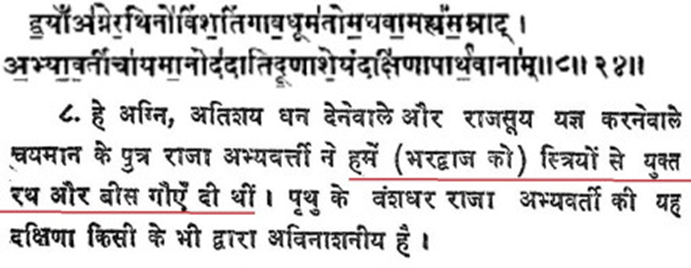
Sayana writes in his commentary on the above verse.
अधुना भरद्वाजः स्वस्मा अभ्यावर्तिना दत्तं धनजातमग्नये प्रकथयति । हे “अग्ने “मघवा धनवान् प्रभूतदानो वा “सम्राट् राजसूययाजी “चायमानः चयमानस्य पुत्रः अभ्यावर्ती एतदाह्वयो राजा “रथिनः रथसहितान् “वधूमतः स्त्रीयुक्तान् “द्वयान् मिथुनभूतान् “विंशतिं विंशतिसंख्याकान् “गाः पशून् “मह्यं “ददाति प्रायच्छत् । “पार्थवानां पृथोर्वंशजस्याभ्यावर्तिनो राज्ञः संबन्धिनी । पूजार्थं बहुवचनम् । “इयं “दक्षिणा “दुर्नशा केनापि नाशयितुमशक्या भवति
“Now, Bharadvāja is describing to the god Agni the wealth that was given to him by King Abhyāvartin. He says, “O Agni! The great patron and Emperor, Abhyāvartin Cāyamāna—who is the son of Cayamāna and has performed the Rājasūya sacrifice—has given me twenty [sets] of gifts. These gifts, [consisting of] cattle, are given in pairs and come complete with chariots and women.” This sacrificial gift, which is associated with King Abhyāvartin, a descendant of Pṛthu (Pārthava), is referred to in the plural form as a sign of respect. This gift is “indestructible,” meaning it cannot be destroyed by anyone.”
Women have been gifted here like a commodity, just as women are traded in slavery. There are more references to gifting of female slaves though those will be better addressed in a separate article.
Types of Slaves
Manu on types of Slaves.
Manu Smriti 8.415 “A captive of war, a slave for maintenance, the son of a female slave, one purchased for money, a slave obtained as a present, a hereditary one, and one condemned to slavery for any offence, these are the seven kinds of slave (lit., sources of slavery)” Tr. M.N. Dutt (Source)
It’s mentioned in Vamana Purana.
Vamana Purana 35.43 “A son born of a virgin girl is called ‘Kanina’, and that born of pregnant before marriage is called ‘Sahodhaka’. One purchased by price is called ‘Krita’, ‘Punarbhava’ is two-fold.” Tr. Anand Swarup Gupta (Source)
You may also like to read Manu Smriti 9.48; 9.50 and 9.55 on this issue. Narada Smriti 5.24-26 also mentions different types of slaves.
Bride Selling
There are eight forms of marriages in Hinduism, one of them is Asura marriage also known as Manusha marriage though it is considered inferior than Brahma and Gandharva forms of marriages. Some Dharm Shastras allows this marriage while there are few that prohibits it. Those who allow this form of marriage permits it for certain castes like Vaishyas and Shudras. Bride selling still exists in the Hindu society, the study conducted in Haryana’s Jind and Kurukshetra districts, which are most notorious for female foeticide, reveals that 66 per cent of the families practising bride trafficking are Jats, followed by 15 per cent Sainis, though the custom is prevalent among almost all other castes, reports The Hindu.
When the bridegroom was crippled, mentally unstable or lacked qualification, he would obtain the bride from her father by paying a large sum of money.
Rig Veda 1.109.2 “For I have heard that ye give wealth more freely than worthless son-in-law or spouse’s brother…” Tr. Ralph T.H. Griffith
Nirukta 6.9 “I have heard that you are more liberal indeed than a would be son-in-law, i.e. one whose son-in-lawship is not quite complete. It is well known that the people in the south apply the term vijamata to the husband of a purchased maiden. By this is meant a bridegroom, whose relationship is not complete as it were…” Tr. Lakshman Sarup (Source)
As Sayana mentioned in his commentary, this could also refer to an unworthy groom who in order to please his in laws or to marry a girl offers presents to her family. Several Dharm Shastras permit this form of marriage.
Vasistha Dharma Shastra 1.35-36 “If, after making a bargain (with the father, a suitor) marries (a damsel) purchased for money, that (is called) the Manusha-rite. The purchase (of a wife) is mentioned in the following passage of the Veda, ‘Therefore one hundred (cows) besides a chariot should be given to the father of the bride.” Tr. Georg Buhler (Source)
Gautama Dharma Shastra 4.11-15 “If those who have (authority over) a female are propitiated by money, (that is) an Asura wedding…The first four (rites) are lawful; Some say, (the first) six.” Tr. George Buhler (Source)
Mahabharata 1.73.8-11 “…There are, in all, eight kinds of marriages. These are Brahma, Daiva, Arsha, Prajapatya, Asura, Gandharva, Rakshasa, and Paisacha, the eighth. Manu, the son of the self-create, hath spoken of the appropriateness of all these forms according to their order. Know, O faultless one, that the first four of these are fit for Brahmanas, and the first six for Kshatriyas. As regards kings, even the Rakshasa form is permissible. The Asura form is permitted to Vaisyas and Sudras. Of the first five the three are proper, the other two being improper. The Paisacha and the Asura forms should never be practised. These are the institutes of religion, and one should act according to them. The Gandharva and the Rakshasa form are consistent with the practices of Kshatriyas…” Tr. K.M. Ganguli (Source)
Mahabharata Adi Parva 1, Section 102 “The wise have directed that when an accomplished person has been invited, a maiden may be bestowed on him, decked with ornaments and along with many valuable presents. Others again may bestow their daughters by accepting a couple of kine. Some again bestow their daughters by taking a fixed sum, and some take away maidens by force. Some wed with the consent of the maidens…But the sages have said that, that wife is dearly to be prized who is taken away by force, after the slaughter of opponents, from amidst the concourse of princes and kings invited to a self-choice ceremony. Bhishma cut off, with his arrows, on the field of battle, bows, and flagstaffs, and coats of mail, and human heads by hundreds and thousands…Then that foremost of all wielders of weapons having vanquished in battle all those monarchs, pursued his way towards the capital of the Bharatas, taking those maidens with him.” Tr. K.M. Ganguli (Source)
Garuda Purana permits Asura marriage for the Vaishyas.
Garuda Purana I.95.10-11 “In the Asura form of marriage, money is taken…The first four types of marriage are recommended for brahmins; the Gandharva and the Raksasa type for kings; the Asura type for vaisyas and the despicable last type for the sudras.” Tr. J.L. Shastri
Narada Purana 1.26.15–18 likewise states that if a Brahmin fails to obtain a bride through the acceptable forms of marriage, he may adopt any of the eight forms.
Narada Purana 1.26.15-18 “15. O excellent sage, it should be known that marriages are of eight types such as the Brāhma, etc. The previous one should be understood to be better than the latter one; if the preceding form of marriage is not possible the latter one may be adopted. The eight types of marriages are: the Brāhma, Daiva, Ārṣa, Prājāpatya, Āsura, Gāndharva, Rākṣasa and Paiśāca which is considered the eighth one. O Brāhmaṇa, an excellent Brāhmaṇa should be united in wedlock by means of the Brāhma form of marriage or by means of Daiva type. Some recommend the Ārṣa type also. O Brāhmaṇa, the five types of marriage beginning with the Prājāpatya are censurable. If the earlier types are not possible, (then only) a wise person should adopt the latter ones.” Tr. G.V. Tagare (Source)
Baudhayana Dharma Shastra Prasna I, Adhyaya 11, Kandika 20 (I, II, 20), Verses 7-8 “(If the bridegroom receives the maiden) after gladdening (the parents) by money, (that is) the rite of the Asuras (asura). (If the maiden is wedded) after being forcibly abducted, (that is) the rite of the Rakshasas (rakshasa). [12] Among these the sixth and the seventh agree with the law of Kshatriyas. For power is their attribute.” Tr. George Buhler (Source)
Baudhayana permits the Asura (Manusha) form of marriage for Kshatriyas, yet he condemns it in the very next chapter. In contrast, the Manu Smriti prohibits this form of marriage for Kshatriyas but allows it for Vaishyas and Shudras, and in some instances even for Brahmanas.
Manu Smriti 3.20-24 “Now listen to (the) brief (description of) the following eight marriage-rites used by the four castes (varna) which partly secure benefits and partly produce evil both in this life and after death. (They are) the rite of Brahman (Brahma), that of the gods (Daiva), that of the Rishis (Arsha), that of Pragapati (Pragapatya), that of the Asuras (Asura), that of the Gandharvas (Gandharva), that of the Rhashasas (Rakshasa), and that of the Pisakas (Paisaka). Which is lawful for each caste (varna) and which are the virtues or faults of each (rite), all this I will declare to you, as well as their good and evil results with respect to the offspring. One may know that the first six according to the order (followed above) are lawful for a Brahmana, the four last for a Kshatriya, and the same four, excepting the Rakshasa rite, for a Vaisya and a Sudra. The sages state that the first four are approved (in the case) of a Brahmana, one, the Rakshasa (rite in the case) of a Kshatriya, and the Asura (marriage in that) of a Vaisya and of a Sudra.” Tr. George Buhler (Source)
One may get confused upon reading the 25th verse of this chapter, but according to Medhatithi, that law applies only to the Kshatriyas. He also states that although several forms of marriage are permitted, certain forms are considered superior. In cases where one is unable to find a bride to perform marriage in the superior form, he may resort to other available options or forms of marriage. Medhatithi further mentions that the Asura form of marriage, where the bride is purchased for money from her father, is specifically allowed for the Vaishya and Shudra castes and may also be adopted by a Brahmana as an alternative.
Acharya Medhatithi writes in his commentary on Manu Smriti 3.24-25, “…For the Vaishya and the Shudra, it is the ‘Asura’ alone. Among those that have been sanctioned (before) and prohibited now, there is to be option; so that one may have recourse to the optional forms only when those that have been sanctioned absolutely in all cases are not possible…[25] The law laid down in this verse pertains to the Ksattriya and the rest, not to the Brahmana…The conclusion on this point is as follows :- For the Brahmana there are six forms of marriage; of these the ‘Brahma’ is the best of all; inferior to that are the ‘Daira’ and the ‘Prajapatya;’ inferior to these is the Arsa, then the ‘Gandharva,’ then the Asura…As regards the ‘Asura’ form, since it has been specifically prescribed for the Vaishya and the Shudra, it implies the exclusion of the Brahmana and the Ksattriya from it. And yet we have the distinct injunction of six forms as permitted for the Brahmana (in 23 above). From all which it follows that there is option; but it is an option with the restriction that one is to recourse to the second option only in the event of the first option being impossible…” Tr. Ganganath Jha (Source)
The translator Ganganath Jha adds views of Hindu lawgivers in footnotes.
Madanapārijāta (p. 159), adds the following note:—The Brāhma, Daiva, Ārṣa and Prājāpatya forms have been declared to be commended for the Brāhmaṇa; for the Kṣatriya, the Rākṣasa alone has been commended; and for the Vaiśya and Śūdra, the Āsura only. For the Brāhmaṇa the first four, ending with the Prājāpatya are the primary forms, and the Rākṣasa must be a secondary substitute for him, because it is lawful for the next lower caste, Kṣatriya. For the Kṣatriya, the Rākṣasa, is the primary form; and as according to the preceding verse, the Āsura, Gāndharva, Rākṣasa and Paiśāca are commended for him, the three, besides the Rākṣasa, must be regarded as secondary substitutes. According to others, however, the phrase ‘last four’ (of verse 23) stands for the four beginning with ‘Prājāpatya and according to this, the Rākṣasa being directly mentioned in the present verse as specially commended for the Kṣatriya, the secondary substitutes for him would be the Prājāpatya, the Gāndharva and the Āsura. For the Vaiśya and the Śūdra, the Āsura is the primary, and the Gāndharva and the Paiśāca,—or the Gāndharva and the Prājāpatya—secondary substitutes.
Smṛtitattva (II, p. 140) quotes this verse and explains that even though this text mentions among the ‘commended’ forms, the Āsura, where the bride’s father receives wealth from the bridegroom, yet it must be understood to sanction the payment of only so much of wealth as may be required for the decking of the bride.—It is quoted in Hemādri (Dana, p. 683);—in Saṃskāramayūkha (p. 100), which adds that for the Kṣatriya, the Rākṣasa is the principal form, and for the Vaiśya and the Śūdra, the Āsura.
Aparārka (p. 91) quotes this verse and adds that for the Brāhmaṇa, the Brāhma, Daiva, Ārṣa and Prājāpatya are commended; the Āsura and Gāndharva are neither commended nor forbidden;—for the Kṣatriya, the Rākṣasa alone is commended; the Āsura and the Gāndharva are neither commended nor forbidden;—for the Vaiśya and Śūdra, the Āsura alone is commended; the Gāndharva is neither commended nor forbidden;—the Paiśāca is forbidden for all castes.
It is quoted in Smṛticandrikā (Saṃskāra, pp. 190 and 231), which adds that though the first four are ‘commended,’ it does not mean that the next two are forbidden; all that is meant is that these two are not commended. (Source)
Asvalayana Grihya Sutra 1.6.6 “He may marry her after gladdening (her father) by money : this (is the wedding called) Asura.” Tr. Hermann Oldenberg (Source)
Commentators Devasvamin and Narayana writes on this verse.
कन्यामलङ्कृत्य उदकपर्वो दद्यात्।एष विवाहौ ब्राह्मौ भवति। तस्यां कन्यायां जातो द्वाादशवरानुत्पद्यमानाद् द्वादश परान् पुनाति उभयतः। मातुः पितृभ्यश्च। एवमसुत्रचापि नेयम्। वितते कर्मणौ इति वैतानिके कर्मणीयर्थः।मिथः समयकरणं नाम त्वं मम भार्या भव अहं तव पुरुषौ भवामीत्येवरूपौ विवाहौ गान्धर्वसंज्ञः। कन्यापित्रे धनदानेन यो विवाहः स आसुरसंज्ञः। सुप्तेभ्यः प्रमत्तेभ्योऽथवा नेध्यानेभ्यः कन्यामपहृत्य यो विवाहः स पैशाचसंज्ञः। युद्धं कृत्वा कन्यामपहृय यो विवाहः स राक्षससंज्ञः। एवमेतेऽष्ठौ विवाहाः। तत्र पूर्वेषु चतुर्षु पूर्वं पूर्वं प्रशस्तः। उत्तरेषु चतुर्षु उत्तरोत्तरः पापीयान्। तत्र पूर्वा ब्राह्मणास्य। इतरयोः प्रतिग्रहाभावात् आार्त्विज्यभावाच्च। गान्धर्वः क्षत्रियस्य पुराणे दृष्ट्वात्। राक्षस तस्यैव युद्धसंयोगत्। आसुरस्तु वैश्यस्य धनसंयोगत्। इतरे त्रयोऽनियताः॥ (Source)
“Having adorned the maiden, having given her with water-offering, this marriage is Brāhma.
A son born to that maiden purifies twelve descendants and twelve ancestors, on both sides: on the mother’s side and the father’s side. Thus, the rule should be applied in other cases also.
Because of the performance in the expanded rite (vitata karmaṇi)—or for the sake of the Vaitānika rite.
A marriage that is of the form: “You be my wife, I am your man,” which is the name of mutual agreement (mithaḥ samayākaraṇaṁ) is called Gāndharva.
The marriage which is by the giving of wealth to the maiden’s father is called Āsura.
The marriage where the maiden is carried away having been approached when sleeping, intoxicated, or unguarded (pramatta, unmadana, avadhānapeta), that marriage is called Paiśāca.
The marriage where the maiden is carried away after having performed battle (yuddhaṁ kṛtvā), that marriage is called Rākṣasa.
Thus are these eight marriages. Among them, in the first four, the one following is less praiseworthy (pūrvaṁ pūrvaṁ praśastaḥ).
In the latter four, the one following is increasingly sinful (uttarottaraḥ pāpīyān).
The first four are for the Brāhmaṇa (class). The others (i.e., the first four) are excluded due to the absence of acceptance/gift (pratigraha) and the absence of priestly function (ārtvijya-abhāvāc).
The Gāndharva is for the Kṣatriya because it is seen in the Purāṇas. The Rākṣasa is for him (the Kṣatriya) due to the association with battle (yuddhasaṁyogāt).
The Āsura is for the Vaiśya due to the association with wealth (dhanasaṁyogāt). The other three (forms of marriage) are unregulated/forbidden (aniyataḥ).”
Vishnu Smriti 24.24 and Yajnvalkya Smriti 1.16 also mention Asura marriage but without permitting or prohibiting it.
Proof that Asura marriage was practiced.
Skanda Purana states that Asura form of marriage was prevalent among Kshatriyas and Vaishyas.
Skanda Purana IV.i.38.7 “Generally speaking, the marriages of the types of Gandharva, Asura and Raksasa are in vogue among Ksatriyas and Vaisyas…” Tr. G.V. Tagare
LGBT
LGBT stands for Lesbian, Gay, Bisexual, and Transgender. Several Hindu texts describe gods engaging in same-sex acts, which has led many Hindu scholars to acknowledge LGBT themes within their tradition. One of the most well-known examples is the story of Shiva and Vishnu.
Transgenderism of Indra
Indra and daughter of Vrsanasva in the Vedas
Rig Veda 1.51.13 “You have given, Indra, the youthful Vṛcaya to the aged Kakṣīvat, praising you and offering oblations; you, Śatakratu, were Menā, the daughter of Vṛṣaṇaśva; all these your deeds are to be recited at your worship.” Tr. H.H. Wilson (Source)
Griffith has translated the word Mena as daughter/child but according to Brahmana, Purana and lexicons the word Mena denotes wife, woman, or female of any animal. Griffith writes, “Mena: according to a later legend, Indra became, himself, the daughter of King Vrishanasva.”
Sayana writes in his commentary on Rig Veda 1.51.13, “Vṛcaya was given to Kakṣīvat at a rājasūya ceremony. Indra became Menā, the daughter of Vṛṣaṇaśva and later, also fell in love with her. Menā is a daughter of Pitṛs by Svadhā and the wife of Himavat, king of mountains.” (Source)
Yaska Acharya provides the following interpretation of the term Mena (also spelled Menah).
Nirukta 3.21 “Menah and Gnah are (synonyms) of Women.” Tr. Lakshman Swarup (Source)
The Satapatha Brahmaṇa also records an instance where Indra is described as assuming the role of the wife of Vrsaṇasva.
Baudhayana Srauta Sutra XIX.10 “…Indra, do thou come. Thou with the tawny seeds come, Ram of Medhatithi. Mena of Vrsanasva. Buffalo leaping down. Lover of Ahalya. Brahmana of Kusika’s clan. Thou that callest thyself Gautama…” Tr. C.G. Kashikar (Source)
Maitrayani Samhita 2.5.5 “When Indra became Vrishanasva’s Mena [or wife] he was seized by Nirrti, Calamity. When he chased it away, that Calamity became a castrated animal. Whoever thinks he is seized by Calamity, Darkness, he should sacrifice this castrated animal to Indra.” Tr. Feller.
Indra and Asuri
Atharva Veda 7.38.2 “This Herb wherewith the Asuri drew Indra downward from the Gods, With this same Herb I draw thee close that I may be most dear to thee.” (Source)
Kathaka Samhita 13.5 “Indra desired the Danavi Vilistenga. He went to the Asuras and became a woman among women and a man among men. He thought he was seized by Nirrti (the goddess of Calamity or Misfortune). He saw (as a sacrificial offering) this castrated animal consecrated to Indra and to Nirrti. In that form in which he went about (i.e. castrated), such an animal he offered in sacrifice.” Tr. Danielle Feller
This story is further elaborated in Brhaddevata. According to Shaunaka Rishi, Indra after transforming himself into a woman had sex with a Danavi which can be considered Lesbianism.
Brhaddevata VI.76-76 “In ‘Downward’ (adhah: viii.33.19) a girl addressed Indra (who appeared) with the characteristics of a woman’ for the chastiser of Paka (Indra) made love to that Danava maiden, the eldest sister of Vyamsa, by reason of his (Indra’s youthful desire (yuva-kamya) …” Tr. Arthur Anthony Macdonnel
Arthur Anthony Macdonnel writes in the footnotes,
“That is, this stanza is addressed by a Danavi to Indra who has assumed the form of a woman. According to Sayana on RV. viii.33.19 this stanza is addressed to Asanga Playogi when he was a woman (cp. above, vi.41). And has assumed the disguise of a woman because Vyamsa was his enemy.”
Shiva and Vishnu
Skanda Purana I.iii(U).20.32-33 “Be victorious, O Lord, whose head is adorned with Ganga and the crescent moon, O Lord, who have fascinated the minds of the wives of all sages by means of your handsome features. Be victorious, O Lord, who are possessed of the glory of the god of Love due to the close contact of the daughter of the Mountain. Be victorious, O Lord, who are an expert in the repetition of the (sexual) play over the body of Naranaya adopted by means of Maya (?).” Tr. G.V. Tagare (source)
Narayana and Hari are names synonymous with Vishnu, while Hara, Sankara, and Shambhu refer to Shiva. This verse suggests a sexual interaction between Shiva and Vishnu. According to the Srimad Bhagavatam, Vishnu once assumed the form of the enchanting woman Mohini to deceive and overpower the demons. Later, Shiva requested Vishnu to reveal the form which is pleasing to lusty people, claiming he wished to witness it himself. When Vishnu obliged and manifested as Mohini, Shiva though fully aware of the illusion, became overwhelmed by desire. In the presence of his wife, he pursued Mohini and, unable to restrain himself, emitted semen out of lust. Both Shiva and Mohini were described as unclothed during this encounter, and Shiva forcibly embraced Vishnu in that female form.
Agni Purana 3.17-20 He [Vishnu] was then requested by Hara to show (this form) unto him. The Divine Hari then displayed his female form unto Rudra. Overpowered by his (Vishnu’s) illusory power, Shambhu, renouncing Gouri, longed for that damsel. He became naked and looked like a maniac. He held the woman by the hair and she, releasing her hairs, ran away. He too followed her. Wherever dropped Hara’s seminal fluid there sprang up fields of his phallic emblem and gold. (source)
This episode is narrated in detail in the Srimad Bhagavatam.
Srimad Bhagavatam 8.12.15-32 “The Supreme Personality of Godhead said: When the demons took away the jug of nectar, I assumed the form of a beautiful woman to bewilder them by directly cheating them and thus to act in the interest of the demigods. O best of the demigods, I shall now show you My form that is very much appreciated by those who are lusty. Since you want to see that form, I shall reveal it in your presence. [19] Because the ball was falling down and bouncing up, as She played with it Her breasts trembled, and because of the weight of those breasts and Her heavy flower garlands, Her waist appeared to be all but breaking at every step, as Her two soft feet, which were reddish like coral, moved here and there. [21] As She played with the ball, the sari covering Her body became loose, and Her hair scattered. She tried to bind Her hair with Her beautiful left hand, and at the same time She played with the ball by striking it with Her right hand. This was so attractive that the Supreme Lord [Vishnu], by His internal potency, in this way captivated everyone. [24-26] Thus Lord Śiva saw the woman, every part of whose body was beautifully formed, and the beautiful woman also looked at him. Therefore, thinking that She was attracted to him, Lord Śiva became very much attracted to Her. Lord Śiva, his good sense taken away by the woman because of lusty desires to enjoy with Her, became so mad for Her that even in the presence of Bhavānī [Shiva’s wife] he did not hesitate to approach Her. The beautiful woman was already naked, and when She saw Lord Śiva coming toward Her, She became extremely bashful. Thus She kept smiling, but She hid Herself among the trees and did not stand in one place. [28-32] After following Her with great speed, Lord Śiva caught Her by the braid of Her hair and dragged Her near him. Although She was unwilling, he embraced Her with his arms. Being embraced by Lord Śiva like a female elephant embraced by a male, the woman, whose hair was scattered, swirled like a snake. O King, this woman, who had large, high hips, was a woman of yoga-māyā presented by the Supreme Personality of Godhead. She released Herself somehow or other from the fond embrace of Lord Śiva’s arms and ran away. As if harassed by an enemy in the form of lusty desires, Lord Śiva followed the path of Lord Viṣṇu, who acts very wonderfully and who had taken the form of Mohinī. Just as a maddened bull elephant follows a female elephant who is able to conceive pregnancy, Lord Śiva followed the beautiful woman and discharged semen, even though his discharge of semen never goes in vain.” Tr. Swami Prabhupada (Source)
As per Brahmanda Purana a son was born to Shiva-Vishnu known as Shasta.
Brahmanda Purana Lalita Mihatmya 6.7-9 “The second form appeared when the churning for the sake of Nectar was being carried out. That form fascinated Sarva (Siva). It cannot be comprehended by the mind or expressed through words. On seeing it, even isa (god Siva) became charmed and enchanted although he is omniscient. When prohibited by her, he left off Parvati all of a sudden and he indulged in sexual intercourse with her (i.e. Mohini). He begot of her (the son) Sasta, the supressor of Asuras.” Tr. G.V. Tagare (Source)
Shasta is popularly known as Ayyappa in south India. He is also known by the name Hari-Hara. As he was born from Hari (Vishnu) and Hara (Shiva).
Apologists often offer weak explanations for this homosexual episode, claiming that Shiva did not have sex (or, more accurately, commit rape) with Vishnu, but rather with Mohini, who they insist was a woman. Even if, for the sake of argument, this interpretation is accepted, it raises a serious question: does this imply that intercourse with a transgender individual is acceptable? After all, Vishnu transformed himself into a woman, a transformation that, in modern terms, would be comparable to gender reassignment through surgery.
Furthermore, Mohini cannot be considered an avatar of Vishnu but merely a form or manifestation. According to the standard definition, an avatar is “a manifestation of a deity or released soul in bodily form on earth; an incarnate divine teacher.” For example, Krishna and Rama are recognized as true avatars of Vishnu because they were born on earth through human parents. Mohini, however, was never born but was a temporary transformation.
Hindu texts frequently describe deities assuming various forms such as beggars or strangers to “test” people. Their followers do not say that “a beggar tested someone,” but rather that “Shiva, in the form of a beggar, tested them.” Likewise, Mohini was not separate from Vishnu; she was Vishnu himself. This is precisely why certain Hindu scholars have justified homosexual behavior by citing the union of Shiva and Vishnu in this narrative.
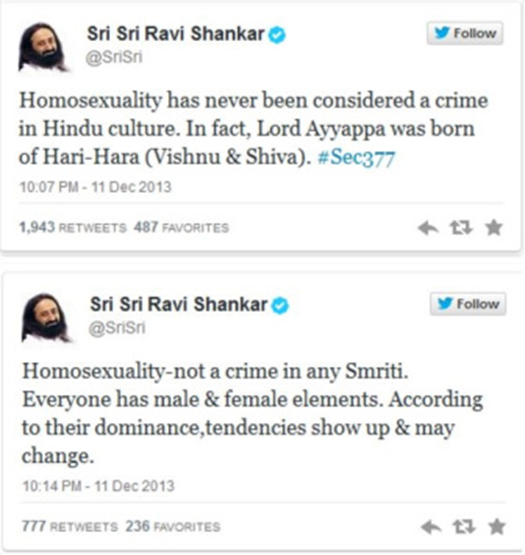
(Source: FirstPost.com)
Shiva and Agni
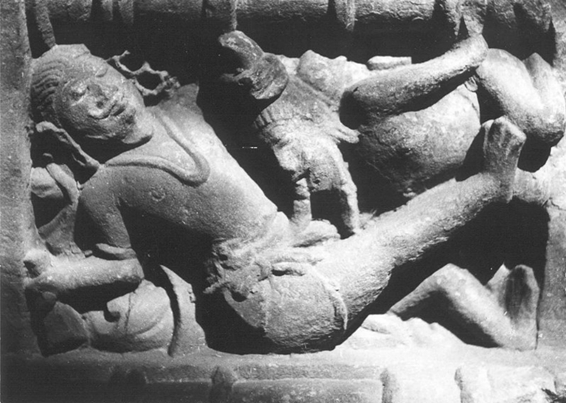
The person seated appears to be Shiva (Source)
Another narrative involving Shiva also contains elements that could be interpreted as reflecting LGBT themes. According to the story, Shiva is said to have released his semen into the mouth of Agni, the fire god, after Agni interrupted his extended sexual union with Parvati. The context of this account is that a demon named Taraka was causing great distress on earth, and only Shiva possessed the strength to defeat him. However, Shiva remained deeply engrossed in his pleasure with Parvati for a long time, and the gods, growing impatient, decided to intervene. They sent Agni to summon Shiva to his duty, and assuming the form of a bird, Agni entered their chamber. Disturbed by the intrusion, Shiva became furious and, in his anger, discharged his semen into Agni’s mouth.
Brahma Purana, Gautami-Mahatmya 58.16-24 “At the instance of Devas the fire-god assumed the form of a parrot and went to the place where the lord of the worlds was sporting with Uma…The lord of Devas called the fire-god moving about in front of him, in the form of a bird and said, “O Agni, you have been recognised through various ways. Do not speak anything. Open your mouth. Take this in and carry it with you.” After saying this lord Sambhu discharged a great deal of semen into the mouth of fire-god. With this semen within him Agni could not at all go. Utterly tired, Agni sat down on the bank of Ganga. He then discharged a greater portion of that semen into Krttikas wherefrom Karttika was born. The remaining portion of the semen of Sambhu that had been within his body, Agni split into two and deposited into his beloved wife Svaha who was particularly eager to have a child.” Tr. Board of Scholars, Edited by J.L. Shastri (source)
This is also mentioned in Mahabharata 9.44.6-11 with a slight variation. Kartikkeya is considered the son of Shiva and Agni as per Vamana Purana as the semen was swallowed by Agni.
Vamana Purana 31.26-28 “O Brahman, in the meantime Brahman said to Agni ‘How old and grown up is your son, Guha now’? Hearing his words, and not knowing his son, Agni said to Brahman, I do not know who is Guha,’ Being pleased, the Lord said, ‘You drank the semen of Sankara in the past, so a child, the lord of the three worlds has been born in the thickest of reeds.” Tr. Anand Swarup Gupta (source)
According to another version, the wives of the sages who were bathing in the river were also impregnated, as Agni had deposited a portion of Shiva’s semen into the water. Later, all of them aborted their pregnancies except Arundhati. Agni acts as an intermediary, meaning that whatever is offered into him reaches the gods. As a result, Shiva’s semen was believed to have entered the stomachs of all the gods, thereby impregnating them.
Shiva Purana, Rudra Samhita 2, Kumara Khanda 4. Ch 2, verse 25 “The gods are wont to partake of the offerings of food etc. consigned to the fire in accordance with the Vedic text. Hence the gods became pregnant.” Tr. Board of Scholars, Edited by J.L. Shastri (Source)
The gods later vomited the semen at the behest of Shiva.
Shiva Purana, Rudra Samhita 2, Kumara Khanda 4. Ch 2, verses 30-38 “We have become pregnant and also scorched by your semen. O Siva, take pity on us. Remove our miserable plight… [Shiva said] At my Behest you shall vomit this semen virile of mine. you will be happy thereby. Accepting this command with bent head Visnu and the other gods immediately vomited it out after duly remembering Siva the imperishable” Tr. Board of Scholars, Edited by J.L. Shastri (Source)
Mohini (Vishnu) and Brahma
In the Brahma Vaivarta Purana, Vishnu’s Mohini form is depicted as a distinct being and identified as an Apsara. She is described as becoming sexually attracted to Brahma and attempting to seduce him, though her efforts ultimately fail.
Brahma Vaivarta Purana, Krishna Janma Khanda, chapter 31, verses 21-31 “…Afterwards Brahma was going home when Mohini who was wandering in a grove of flowers beheld him. She was at once consumed with the flame of passion and became spell-bound. She cast a slanting glance at him, smiled and concealed her face with the hem of her cloth…” Tr. Rajendra Nath Sen (Source)
Brahma Vaivarta Purana, Krishna Janma Khanda 33.1-11 “…Then Mohini ridiculed him saying “O Lord, a being who, allured only by hints from a woman, drags her to his side and enjoys her society is regarded as the best person. Whoever having clearly perceived the intentions of a woman commits sexual intercourse with a woman after he is entreated by her to do so is regarded as the second best. And a wretch who being entreated by a passionate woman fails to commit sexual intercourse with her even in solitude does not deserve to be called a man but a eunuch…” Tr. Rajendra Nath Sen (Source)
Brahma Vaivarata Purana, Krishna Janma Khanda, 33.47-63 “Hari smiled when he heard all this and addressed him with words, delightful, substantial, truthful and beneficial to the world thus: “O Brahma, you are conversant with the Vedas. You are chief of the spiritual guides of the learned; and yet you have performed and act which cannot be committed by a murderer. Why did you subdue your passions? Nay, even in India, if a woman excited with passion accidently appears before a man and desires his company, the latter, even if dispassionate, should not reject her offer. If he rejects her offer, he is defrauded in several ways in this world and goes to hell in the next world…” Tr. Rajendra Nath Sen (Source)
Mohini (Vishnu) enjoyed by the Gods
Brahma Vaivarta Purana, Krishna Janma Khanda, chapter 32, verse 55 “Some of the ladies becomes the whores and earn their living by selling away their body. I am an apsara of the heaven and am used by the gods in the heaven and am quite respectable.” Tr. Shanti Lal Nagar (Source)
Krishna and Arjuna
According to the Padma Purana, Krishna is said to have shared an intimate relationship with Arjuna. Arjuna wished to understand the secrets of Vrindavan, or more specifically, the Ras Leela. He prayed to the goddess Tripura, who granted his wish by transforming him into a woman after he bathed in a sacred lake. In this form, referred to as Arjuni or Arjuniya in the text, Arjuna approached Krishna, and the two are described as engaging in a physical relationship.
Padma Purana Patalakhanda 5, Chapter 74, Verses 61-74a “Then having heard the words, when Arjuna plunged into the water of the lake…The charmingly smiling one got up and on seeing around, was confused. He instantly saw himself (to be turned into) a wonderful, excellent lady, who had a slim, fair, charming body like the rays of pure gold…” Tr. N.A Deshpande (source)
Padma Purana Patalakhanda 5, Chapter 74, Verses 177b-196a “…Arjuniya, having seen in confusion on the left side of the pleasing goddess Radhika, propitiating and offering a tambula to him of a bright smile, was overcome with the passion of love. Then, Srikrsna, who knew everything, knowing her to be like that, seized her hand, and he the lord, the great master of magical art secretly sported with her in the entire pleasure-forest. Then putting his sport-like arm on her should and coming to Sarada, said to her: ‘Bathe quickly this slim-bodied lady of a gentle smile, fatigued due to sport, in this western lake.’ Then that goddess Sarada (took her) to the western lake, (and) said to her, ‘Take bath’. The fatigued one did like that. She who got to the interior of the water, again turned into Arjuna and got up at the place where the lord of gods and the chief of the beautiful Vaikuntha stood. Seeing Arjuna dejected and broken-minded, Krsna kindly touched him with his hand and put him (back) to his nature.” Tr. N.A Deshpande (source)
Arjuna, the greatest devotee of Krishna, is said to have transformed himself into a eunuch.
Mahabharata 4.45.13-14 “…Indeed, thou seemest to me to be Mahadeva, or Indra, or the chief of the Gandharvas, dwelling in the guise only of one of the third sex.’ “Arjuna said, ‘I tell thee truly that I am only observing this vow for a whole year agreeable to the behest of my elder brother. O thou of mighty arms, I am not truly one of the neuter sex, but I have adopted this vow of eunuchism from subservience to another’s will and from desire of religious merit. O prince, know me now to have completed my vow…” Tr. K.M. Ganguli (source)
Krishna and Narada
Krishna also had sex with Narada Muni in the same manner.
Padma Purana, Patalakhanda 5, Chapter 75, Verses 24b-32a “Narada said: This is a great secret, the secret of secrets. Formerly Brahma told me that secret about Vrndavana (when I had said to him): ‘O lord of gods, O father, tell me the secret of Vrndavana.’ Hearing this desire (of mine), he remained silent for a moment. Then he said to me: ‘O child, go to Maha (i.e. great) Visnu, my lord. Undoubtedly I must also go there with you.’ Saying so, and taking me (with him) he went to the abode of Visnu. He told Maha Visnu what I had said to him. Hearing that Maha Visnu himself ordered the self-born one (i.e. Brahma). ‘By my order, you take the sage Narada, and arrange for his bath in the lake called Amrta.’ Having entered the Amrta lake, I took bath there. Just at that moment I was (i.e. I found myself) near women, beyond (i.e. on the other side of) the lake (I was) turned into a woman, endowed with all (good) charachteristics…” Tr. N.A. Deshpande (source)
Padma Purana, Patalakhanda 5, Chapter 75, Verses 39B-53 “With them, (we) went where the eternal Krsna remained. The lord, who was merely of the form of the Good, the Intelligence and the Joy, and o that of a woman, and whose heart was delighted due to the women, again and again said to me: ‘Come along O dear one, O beloved, embrace me devoutly.’ O you best brahmana, there only he enjoyed (with me) for a year. Then that best lover said to that goddess Radhika: ‘This was my natural form there, which had taken the form of Narada. Take her to the Amrta lake, and arrange for her bath.’…After that goddess Radhika took me to the lake, waited there, and went (back) near the feet of the Moon in the form of Krsna. Then immediately after plunging (into the lake) I came (back) as Narada…” Tr. N.A. Deshpande (source)
Krishna’s Transgenderism
According to Tamil versions of the Mahabharata, Krishna, an incarnation of Vishnu, also took the form of Mohini and married Aravan. This was in order to give Aravan the chance to experience love before his death, as he had volunteered to be sacrificed. Krishna remained in mourning in the Mohini form for some time after Aravan’s death. This marriage and death of Aravan are commemorated annually in a rite known as Thali, during which Hijra (Indian “third gender”) take on the role of Krishna-Mohini and “marry” Aravan in a mass-wedding, followed by an 18-day festival. The festival ends with a ritual burial of Aravan, while the Hirjas mourn in Tamil style: by beating their chests in ritual dances, breaking their bangles and changing into white mourning clothes.
Krishna is said to have transformed himself into a girl.
Garga Samhita 2.17.30-31 “Śrī Nārada said: After hearing Rādhā’s words, Lord Kṛṣṇa, who was magically transformed into a young girl, spoke to lotus-eyed Rādhā. The Supreme Personality of Godhead said: O girl whose thighs are graceful as banana trees, I live in Gokula, just north of Nanda’s palace in Nandanagara. My name is Gopadevatā.” (source)
Narada and Taladhvaja
Sage Narada had a relationship with a King named Taladhvaja as per Devi Bhagavatam Purana.
Devi Bhagavatam Book 6, Chapter 28, Verses 37-54 “…O Nârada! Look! Look! How clear crystal-like is the water of this pool like the heart of a saint; see how it smells also fragrantly in contact with the lotuses on it.” When the Bhagavân spoke thus to me; I kept my lute and deer skin aside and gladly went to the edge of the tank. Washing then my hands and feet I tied my hair lock and, taking Kus’a grass, I performed my Âchaman and, purifying myself, began to bathe myself in that tank. While I was bathing, Hari was looking at me; by the time I took a dip, I saw that I quitted my male form and got a beautiful female form. Hari took away, then, my deer skin and lute and mounting on Garuda went away in a moment to His own residence. Getting the female form and decorated with excellent ornaments, my memory of my previous male form vanished at once; I forgot all about my famous lute and forgot also Jagannâtha, the Deva of the Devas. I then came out of the tank in that enchanting woman form, saw the pool of water filled with clear limpid water and adorned with lotuses. Seeing that, I began to think :– “What is this?” and I became very much astonished. While I was thus meditating in my woman form, a king, named Tâladhvaja, came there, all on a sudden, on a chariot, accompanied by numerous elephants and horses. The King looked like a second Cupid…” Tr. Swami Vijnananda (source)
Devi Bhagavatam Book 6, Chapter 29, Verses 13-20. “The King then began to sport with me amorously according to the rules of the Kâma S’âstra in various ways and with great enjoyments and pleasures. He then left all his kingly duties and state affairs and he began to remain day and night with me deeply immersed in amorous sports; so much his mind was merged in me in these plays that he could not notice the long time that passed away in the interval. He used to drink the Vârunî wine and, forsaking all the state affairs, began to enjoy me in nice gardens, beautiful lakes, lovely palaces, beautified houses, excellent mountains and enviable forests and became completely subservient to me. O Dvaipâyana! Being incessantly engaged with the King in amorous sports and remaining obedient to him, my previous body, male ideas, or the birth of Muni, nothing whatsoever came in my memory. I remained always attached to him…” Tr. Swami Vijnananda (source)
Devi Bhagavatam Book 6, Chapter 30, Verses 1-14. Nârada said :– O Best of Munis! The King was greatly astonished to see me dip in the tank in a female figure and get up from the tank in a male figure and thought, “Where is my dearest wife? And how is this Nârada Muni suddenly come here!” The King, not seeing his wife, lamented very much and cried frequently, “O my dear Wife! Where have you gone, leaving me here thus. Without you, O One of spacious hips! My life, palace and kingdom, all, are quite useless…” Tr. Swami Vijnananda (source)
Budha son of Soma with a King
Another instance of LGBT themes is found in the Srimad Bhagavatam. When a group of sages visited Shiva’s abode and saw him engaged in intercourse with Parvati, they quickly departed. To please Parvati, Shiva declared that anyone entering that region would be transformed into a woman. Later, a king accidentally stepped into that area, became a woman, and subsequently had sexual relations with Budha, the son of the moon god Soma.
Vayu Purana, Part 2.23.15-18 “…He who is revered in the three worlds is famous as Sudyumna. He has attained the form of a lady. That noble lady returned to her father after securing the boon. After getting an opportunate moment, she was invited for love making (sexual intercourse) by Budha (the planet mercury). From Budha, the son of Soma, Puruavas, the son of Ila was born. After giving birth to the son born of Budha, she became Suyumna again. Sudyumna had three sons, all extremely virtuous” Tr. G.V. Tagare (source)
Srimad Bhagavatam 9.1.30-35 “When the goddess Ambikā saw the great saintly persons, she was very much ashamed because at that time she was naked. She immediately got up from the lap of her husband and tried to cover her breast. Seeing Lord Śiva and Pārvatī engaged in sexual affairs, all the great saintly persons immediately desisted from going further and departed for the āśrama of Nara-Nārāyaṇa. Thereupon, just to please his wife, Lord Śiva said, “Any male entering this place shall immediately become a female!” Since that time, no male had entered that forest. But now King Sudyumna, having been transformed into a female, began to walk with his associates from one forest to another. Sudyumna had been transformed into the best of beautiful women who excite sexual desire and was surrounded by other women. Upon seeing this beautiful woman loitering near his āśrama, Budha, the son of the moon, immediately desired to enjoy her. The beautiful woman also desired to accept Budha, the son of the king of the moon, as her husband. Thus Budha begot in her womb a son named Purūravā.” Tr. Swami Prabhupada (source)
This is also mentioned in Matsya Purana 11.50 and Brahmanda Purana 2.3.60.15-17.
Mitra and Varuna
The Shatapatha Brahmana also contains references suggestive of homosexuality, particularly in the account describing the homosexual act between the Vedic deities Mitra and Varuna.
Satapatha Brahmana 2.4.4.19 “In that same night Mitra implants seed in Varuna, and when it (the moon) then it is produced from that seed…” Tr. Julius Eggeling (source)
Asanga
There is a transgender story mentioned in Rig Veda which says that Asanga son of Playoga had become a woman after he was cursed by gods.
Rig Veda 8.33.19 “Cast down thine eyes and look not up. More closely set thy feet. Let none See what thy garment veils, for thou, a Brahman, hast become a dame.” Tr. Ralph Griffith (Source)
The following is the Hindi translation by Ram Sharma Acharya.
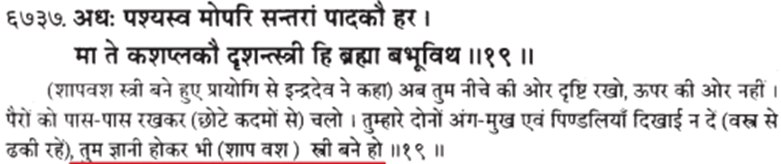
This is elaborated in later texts.
Brhaddevata of Shaunaka VI.41 “The seer turned that Asanga, who had been a woman, into a man (again)…” Tr. Arthur Anthony Macdonnel
Sankhayana Srauta Sutra XVI.11.16-18 “The sixth is that relating to Medhatithi, how Asanga, the son of Plyoga, being a woman became a man…” Tr. W. Caland
OTHERS
There’s a story of King Dilipa the ancestor of Rama in a Bengali Ramayana called Krittvasa Ramayana. In this Ramayana it is stated that King Dilip died without having any son. His kingdom had become kingless, the gods were worried so Shiva ordered King Dilipa’s two wives to have sex with each other like a man. One of the wife conceived a son who was later known as Bhagiratha. There are two versions in the Krittvasa Ramayana, I am mentioning only one, the second version names the two queens as Chandra and Mala.
Krittvasa Ramayana, Adi Kanda “Dilipa ruled like Indra, the king of the gods, but was sad as he did not have a son. Leaving behind his two wives in the city of Ayodhya, Dilipa went in search of the Ganga….On his death the city of Ayodhya was kingless…Riding his bull, Shiva went to Dilipa’s two queens and said to them: ‘By my blessings, one of you will have a son.’ Hearing Shiva’s words, the two women said: ‘We are widows, how can we have a child?’ Shankara replied: ‘You two have intercourse with one another. By my blessings one of you will have a lovely child.’ Having bestowed this boon, the god who destroys the three worlds went his way. The two wives of Dilipa took bath. They lived together in extreme love. After days, one of them menstruated. Both of them knew one another’s intentions and enjoyed love play, and one of them conceived….” Tr. Kumkum Roy
As mentioned in the book Same-Sex Love in India, by Ruth Vanita, Published by Penguin UK, 20-Oct-2008
There is another version mentioned in the Bengali version of Padma Purana.
Padma Purana, Svarga Khanda 16.6-24 “King Dilipa had no son, and after a long time, he died. His two wives were constantly sad. They went to the hermitage of the sage Vasistha and said to him, ‘The dynastic line descended from King Sagara has been broken, and the kingdom has been attacked by enemies. Tell us what to do.’ When he heard this, the great sage thought deeply about the matter, and when he had made his decision he said to the two queens, ‘This human dynasty will not be terminated. A noble son will be born to the two of you, fine ladies with beautiful eyes. I will make a supreme effort on your behalf.’ When he had said this, Vasistha cooked up a consecrated pot of rice and milk (caru) that was infused with all good qualities, using the proper ritual for one who wished to have a son. Then he said to the two noble women, ‘One of you must eat this consecrated pot of rice and milk, and the other must have intercourse with her in the manner of a man.’ When the women heard this, they did what the great sage had told them to do. The eldest queen became pregnant, and after the usual time brought forth a son. But since the boy had been born without any semen of a man, he was born without any bones, and was just like a ball (pinda) of flesh. The two queens named him Bhaghiratha…” Tr. Wendy Doniger
This is the Padma Purana of Bengali manuscript not to be confused with the one translated by N.A Deshpande.
Niyoga
Niyog Pratha is a Vedic practice in which a childless or sonless widow sleeps with another man to conceive a child. However, the child would be considered the offspring of the deceased husband, not the biological father. The brother of the deceased was usually preferred to perform Niyog with the widow, and if he was unavailable, other close relatives were given preference. Niyog is sanctioned by Hindu scriptures, and Swami Vivekananda has also written about this practice.
“…Another cause was instrumental in bringing this about — the change in the system of marriage. The earliest system was a matriarchal one; that is, one in which the mother was the centre, and in which the girls acceded to her station. This led to the curious system of the Polianders [polyandrous], where five and six brothers often married one wife. Even the Vedas contain a trace of it in the provision, that when a man died without leaving any children, his widow was permitted to live with another man, until she became a mother; but the children she bore did not belong to their father, but to her dead husband…” By Swami Vivekananda, Ideals of Womanhood,(Brooklyn Standard Union, January 21,1895) Source
Rig Veda 10.40.2 “Where are ye, Aśvins, in the evening, where at morn? Where is your haltingplace, where rest ye for the night? Who brings you homeward, as the widow bedward draws her husband’s brother, as the bride attracts the groom?” Tr. Ralph Griffith (Source)
Yaska explained this verse as.
Nirukta 3.15 “Where do you remain at night, and where during the day? Where do you obtain the necessities of life, and where do you dwell? Who puts you to bed as a widow her husband’s brother? From what (root) is Devara derived ? (He is)so called (because) he is the second husband…” Tr. Lakshman Swarup (Source)
The man who enters into Niyoga with a widow is referred to as the Appointed Husband or Devar. In this arrangement, the brother of the deceased is given the highest priority. If he is unavailable, Sapinda or close relatives are considered. Niyoga with a Brahmin of a higher caste is also regarded as acceptable, since a widow is prohibited from entering into Niyoga with a man of a lower caste. Arya Samaji scholar Chiranjiva Bhardvaja discussed the meaning of the term Devar in the context of Niyoga in the amended version of his translation in the fourth chapter of Satyarth Prakash,
”*Q. ~ Supposing the deceased husband of a widow had no younger brother, with whom should she contract Niyoga?
A. ~ With her devar, but the word devar does not mean what you think. For the Nirukta says “The second husband by Niyoga of a widow, be he the younger brother of her deceased husband or his elder brother, or of a man of her won Class or of a higher Class, is called Devar.” explanation by Dr. Chiranjiva Bhardwaja, page 134, Ch 4, Satyarth Prakash.
Following is the snapshot of the header from Arya Samaj website.
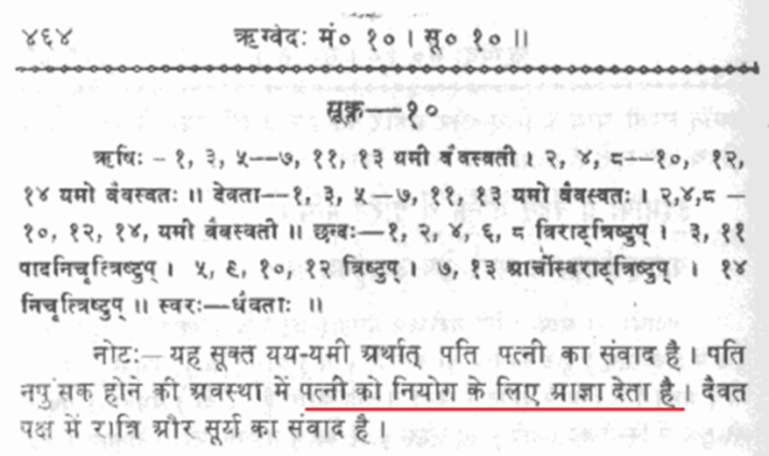
It states,
“This hymn is a dialogue between Yama and Yami i.e. between husband and wife. The husband on being impotent allows his wife to contract Niyoga…” [Source: http://aryasamajjamnagar.org/rugveda_v5/pages/p464.gif ]
Rig Veda 10.40.2 ”O man and woman (connected by Niyoga), just as a widow, cohabits with her husband by Niyoga and produces children for him, and a wife cohabits with her husband by marriage and produces children for him, likewise (it may be asked) where both of you were during the day and during the night, and where you slept, who you are, and what your native place is.” taken from the book Satyarth Prakash, Ch 4, p.134, Translated by Chiranjiva Bhardwaj (Arya Samaj)
Atharva Veda 14.2.18 “Do thou O woman that givest no pain to thy husband or Devar (husband by Niyoga), art kind to animals in this Order of householders, walk assiduously in the path of righteousness and justice, art well-versed in all the Shastras, hast children and grandchildren, givest birth to valiant the brave boys, desirest a second husband (by Niyoga), and bestoweth happiness on all, accept a man of they choice as thy husband or Devar , and always perform the Homa which is the duty of every householder.” taken from the book Satyarth Prakash, Ch 4, p.135, Translated Chiranjiva Bhardwaja (Arya Samaj),
What’s even more disturbing is that the Rishis devised this practice to justify their own desires. It essentially allowed Brahmins to engage in sexual relations with multiple women under the guise of religious sanction. Mulshankar (Dayanand) writes in his book.
“Those, however, who cannot control their passions may beget children by having recourse to Niyoga”- Satyarth Prakash, by Swami Dayanand Saraswati, Ch 4, page 130, Tr. Chiranjiva Bhardwaja.
Niyoga is mentioned and permitted in several later Hindu texts.
It is mentioned in Puranas.
Garuda Purana chapter 95 “The younger brother of a husband, may go unto a childless wife of his elder brother for the purpose of begetting an offspring on her person with the permission of his elders, first had and obtained in that behalf, and with his body annointed with clarified butter.” Tr. M.N. Dutt (source)
Another version of this Purana translated by J.L. Shastri is provided below.
Garuda Purana I.95.16-17 “For producing a son and a heir in the family the brother-in-law or a cousin or a person of the same clan can have intercourse with an issueless widow till she conceives. If he touches her after that he becomes degraded. The son born thus is the legitimate son of the deceased husband.” Tr. J.L. Shastri (source)
Kurma Purana 2.22.98 “…a son born of the Niyoga rite should perform Sraddha to his progenitor as well as the dead husband of his mother. Then he shall be the true heir. If a son is born out of the semen virile without the sanction of Niyoga, the son should offer Pindas to the progenitor. However, he may perform Sraddha to the Ksetrin (mother’s husbands).” Tr. G.V. Tagare (source)
Gautama Dharma Shastra 18.4-6 “A woman whose husband is dead and who desires offspring (may bear a son) to her brother-in-law… (On failure of a brother-in-law she may obtain offspring) by (cohabiting with) a Sapinda, a Sagotra, a Samanapravara, or one who belongs to the same caste.” Tr. Georg Buhler (source)
Baudhyana Dharma Shastra Prasna II, Adhyaya 2, Kandika 4, verses 7-9 “widow shall avoid during a year (the use of) honey, meat spirituous liquor, and salt, and sleep on the ground. Maudgalya (declares that she shall do so) during six months. After (the expiration of) that (time) she may, with the permission of her Gurus, bear a son to her brother in law, in case she has no son.” Tr. Georg Buhler (source)
Vishnu Smriti 15.1-3 Now there are twelve kinds of sons. The first is the son of the body, viz. he who is begotten (by the husband) himself on his own lawfully wedded wife. The second is the son begotten on a wife, viz. one begotten by a kinsman allied by funeral oblations, or by a member of the highest caste, on an appointed (wife or widow). (source)
Yajnavalkya Smriti, Book 1 Achara Adhyaya, chapter 3, verse 68 “The younger brother of the husband, a Sapinda or a Sagotra, being anointed with clarified butter, and with the permission of the Guru, may go to a sonless widows, when in season, with the desire of raising a son.” Tr. R.B.S. Chandra Vidyarnava (source)
Vasistha Dharma Shastra 17.56 “After the completion of six months she shall bathe, and offer a funeral oblation to her husband. (Then) her father or her brother shall assemble the Gurus who taught or sacrificed (for the deceased) and his relatives, and shall appoint her (to raise issue to her deceased husband)…Let him approach (the widow) in the muhuarta sacred to Pragapati (behaving) like a husband, without (amorously) dallying with her, and without abusing or ill-treating her.” Tr. Georg Bühler(source)
Katyayana Smriti verse 859 “When a person begets a fruit (a son) with the consent of the owner of the field (husband of the wife), both of them are entitled to the fruit (the son), since a fruit is not produced in the absence of one (of the two).” Tr. P.V. Kane (source)
Manu Smriti 9.190 “In the case of a man dying childless, if an issue is raised from a member of the same family, all the property that there may be shall be delivered to that child.” Tr. Ganganath Jha (source)
Manu Smriti 9.59 “On failure of issue, the woman, on being authorised, may obtain, in the proper manner, the desired offspring, either from her younger brother-in-law or from a ‘Sapiṇḍa’.” Tr. Ganganath Jha (source)
Medhatithi writes in his commentary on above verse.
“…Our answer to this is that the dead person also does obtain benefits, in the shape of the offering of libations and so forth; and that this is so is clearly asserted in authoritative texts. Though it is true that the dead person has not carried out the injunction regarding the begetting of a child; yet the scriptures clearly lay down that libations are offered to him by the child that may be begotten in the ‘soil’ belonging to him, (i.e. on his wife), according to the law of ‘authorisation’. And from this it follows that benefits for the issue do accrue to the dead father also. How this is we shall explain fully later on…” (Source)
Based on Manu Smriti, Medatithi allows Niyoga of a woman whose husband is alive.
“No significance is meant to be attached to the mention of the. ‘widow’; as the rule laid down here is applicable also to the case of the woman whose husband is alive, but subject to such disabilities as impotence and the like. That such is the meaning is clear from what follows later (in 63). As a matter of fact, the sole purpose underlying the practice lies in what is stated in the present verse; the restriction too pertains to persons subject to the law, and not to the observances themselves. Otherwise it would seem that the whole thing pertained to widows only.” Medatithi on Manu Smriti 9.60 (Source)
This is an extensive list of Hindu scriptures that sanction Niyoga, yet some Hindu apologists selectively quote a single verse from the Parasara Smriti to claim that Niyoga is prohibited in the Kali Yuga. Regardless of the era, such a practice remains abhorrent. Moreover, the Dharma Shastras cited above do not prohibit Niyoga in any Yuga. In fact, the practice is endorsed by the Vedas themselves, whose laws, according to Hindu belief, are considered eternal.
The Gods enjoy Women First
Rig Veda 10.85.37-41; Atharva Veda 14.2.3-4 “Pushan, inspire her who is most auspicious, in whom men may sow seed, who most affectionate. may be devoted to us, and in whom animated by desire we may beget progeny. (The Gandharvas) gave Surya to thee, Agni, with her bridal ornaments; do thou, Agni, give (us) husbands our wife back again with male offspring. Agni gave the wife back again with life and splendour; may he who is her husband enjoying long life live a hundred years. Soma first obtained the bride; the Gandharva obtained her next; Agni was thy third husband; thy fourth (husband) is born of man. Soma gave her to the Gandharva; the Gandharva gave her to Agni; Agni has given her to me and wealth and sons.” Tr. H.H. Wilson (Source)
This is a marriage hymn, interpreted as describing Soma’s role in initiating a girl’s puberty and the Gandharvas as protectors of her virginity etc., However, the verse’s portrayal of the bride as common property is deeply objectionable. Later texts make this idea even more explicit, claiming that the gods enjoy women first. The Padma Purana alludes that a father should marry off his daughter before she is “enjoyed by the gods,” that is, before she attains puberty.
Agni Purana 165.19-20 “The gods first enjoy the women, then the Moon-god, after them the Gandharvas, subsequently the Fire-god, and last of all the mortals; and hence they can never be polluted.” Tr. M.N. Dutt (Source)
Atri Samhita 1.190 “Women were first enjoyed by the Celestials; then by the moon, the Gandharvas and the Fires. Afterwards came men to enjoy them. They are never affected by any sin.” Tr. Manmatha Nath Dutt (Source)
Padma Purana VI.118.2-15 “When small hair appears (on the private parts), Soma enjoys a daughter. When she attains puberty, gandharvas (enjoy her); and when breasts appear (prominent), Fire (enjoys her). A man should marry his daughter as long as she has not attained puberty. Wise men recommend a girl’s marriage when she is eight years old. She should be duly given to a brahmana who is well-versed in sacred learning, possesses moral virtue, has actually studied Vedas, and has observed celibacy. This is said to be the rule regarding a daughter to be given (in marriage).” Tr. N.A. Deshpande (Source)
The reason I included this verse in the section on Niyoga is that Arya Samaji scholars such as Vaidyanath Shastri, Kshemkarandas Trivedi, Pandit Jaydev Sharma, and Swami Dayanand Saraswati have interpreted these verses as references to Niyoga. Swami Dayanand Saraswati writes:
‘’A. ~ “O woman! Thy first husband with whom thou art united by marriage is named Soma, called so because he was a chaste bachelor (before marriage). Thy second husband with whom thou art connected by Niyoga is named Gaandharva, called so because he had already lived with another woman (to whom he had been united by marriage). Thy third husband, (by Niyoga) is named Agni (fire), called so because he so very passionate. All thy other husbands from the fourth to the eleventh are called men.’’ Satyarth Prakash, Ch 4, p.136, by Swami Dayanand Saraswati, Tr. Chiranjiva Bhardwaja
Stories of Niyoga in Hindu Scriptures
Kaushalya the mother of Ram
According to Hindu texts, Rama was born due to the Pinda or boiled rice obtained from a sacrifice by Rishi Shringi, King Dashrath gave the Pinda to his wives who then miraculously conceived sons. It can or cannot be assumed that Ram was born through Niyoga, I leave it to the readers to decide.
Tulsi Ramayana 1.188.1-4 “One day the king was sad at heart that he had no son. He hastened to his preceptorís residence and, falling at his feet, made many entreaties. He told the Guru all his joys and sorrows; the sage Vasista comforted him in many ways and said, “Take heart and wait; you will have four sons, who will be known throughout the three worlds and will rid the devotees of their fears”. Then Vasista invited the sage Sringi and had a noble sacrifice performed by him for the birth of a son to the king. When the sage devoutly offered oblations into the sacred fire, the fire-god appeared with an offering of rice boiled with milk in his hand. Said the fire-god, “Whatever Vasista has contemplated for you, that object is fully accomplished. Take this oblation, O king, and divide it in such proportions as you think fit.” Tr. Gita Press (Source)
It is also mentioned in Valmiki Ramayana.
Valmiki Ramayana, Bala Kanda 1, Sarga 16, Verse 26 “Then Dasharatha on entering palace chambers spoke this to queen Kausalya, “Receive this dessert to beget your son.” (Source)
Dr. B.R. Ambedkar writes, “Rama’s birth is miraculous and it may be that the suggestion that he was born from a pinda prepared by the sage Shrung is an allegorical gloss to cover up the naked truth that he was begotten upon Kausalya by the sage Shrung, although the two did not stand in the relationship of husband and wife. In any case his birth, if not disreputable in its origin, is certainly unnatural.” (Source)
Anjani the mother of Hanuman
Hanuman’s birth was through Niyoga as per Brahmanda Purana 2.3.7.223-227 and Valmiki Ramayana Kishkindha Kanda 4, Sarga 66, Verses 17-18. His mother, Anjani, was married to Kesari, yet she had an illicit relationship with Vayu, also known as Pavan. This is why Hanuman is regarded as Pavan Putra. This has already been discussed above in the Adultery/Fornication section.
Kshatriyas are progeny of Brahmins
When Parashurama, the sixth avatar of Vishnu, exterminated the Kshatriya men twenty-one times, the surviving Kshatriya women approached Brahmins to contract Niyoga and conceive offspring. According to the law of Niyoga, the son is regarded as the child of the deceased husband, not of the biological father. Thus, the Kshatriya women engaged in Niyoga with Brahmins twenty-one times to restore their lineage.
Brahmanda Purana 2.3.46.29-33 “After killing all the Ksatriyas on the surface of the Earth, Rama became calm…Ksatriya kings were begotten of the widowed wives of those Ksatriyas by Brahmanas. Again he (Rama) killed hundreds and thousands of such kings. In two years, Rama made the Earth devoid of Ksatriyas once again…Again, O king, enlightened Ksatriyas were procreated by the Brahmanas. Rama killed them entirely like the god of death, the destroyer of the Earth.” Tr. G.V. Tagare (source)
Mahabharata 1.104.4-7 “And the illustrious scion of Bhrigu’s race, by means of his swift arrows annihilated the Kshatriya tribe one and twenty times. “And when the earth was thus deprived of Kshatriyas by the great Rishi, the Kshatriya ladies all over the land had offspring raised by Brahmanas skilled in the Vedas. It has been said in the Vedas that the sons so raised belongeth to him that had married the mother. And the Kshatriya ladies went in unto the Brahamanas not lustfully but from motives of virtue. Indeed, it was thus that the Kshatriya race was revived.” Tr. K.M. Ganguli (source)
Vasistha and Madayanti wife of King Sudasa
There are several stories that prove Niyoga existed during the Vedic period. It was perhaps also used to satisfy carnal desires, as evident from the story of Sage Vyasa and the maidservant. Sage Vasistha, the common son of Mitra and Varuna, is also said to have contracted Niyoga
King Sudasa was cursed by a Brahmin lady, King Sudasa couldn’t impregnate his wife so his wife Madayanti contracted Niyoga with Rishis Vashista.
Srimad Bhagavatam 9.9.35-39 “O foolish, sinful person, because you have eaten my husband when I was sexually inclined and desiring to have the seed of a child, I shall also see you die when you attempt to discharge semen in your wife. In other words, whenever you attempt to sexually unite with your wife, you shall die. Thus the wife of the brāhmaṇa cursed King Saudāsa, known as Mitrasaha. Then, being inclined to go with her husband, she set fire to her husband’s bones, fell into the fire herself, and went with him to the same destination. After twelve years, when King Saudāsa was released from the curse by Vasiṣṭha, he wanted to have sexual intercourse with his wife. But the Queen reminded him about the curse by the brāhmaṇī, and thus he was checked from sexual intercourse. After being thus instructed, the King gave up the future happiness of sexual intercourse and by destiny remained sonless. Later, with the King’s permission, the great saint Vasiṣṭha begot a child in the womb of Madayantī. Madayantī bore the child within the womb for seven years and did not give birth. Therefore Vasiṣṭha struck her abdomen with a stone, and then the child was born. Consequently, the child was known as Aśmaka [“the child born of a stone”].” Tr. Swami Prabhupada (Source)
Vasistha and Adrisyanti wife of King Saktri
Mahabharata 1.179.33-47 “…O best of Brahmanas, I desire to obtain from thee that by which, O foremost of all that are conversant with the Vedas, I may be freed from the debt I owe to the race of Ikshvaku! O best of men, it behoveth thee to grant me, for the perpetuation of Ikshvaku’s race, a desirable son possessing beauty and accomplishments and good behaviour.’ “The Gandharva continued, ‘Thus addressed, Vasishtha, that best of Brahmanas devoted to truth replied unto that mighty bowman of a monarch, saying, ‘I will give you…After the royal sage had entered his capital, the queen, at the king’s command, approached Vasishtha. The great Rishi, making a covenant with her, united himself with her according to the high ordinance. And after a little while, when the queen conceived, that best of Rishis, receiving the reverential salutations of the king, went back to his asylum. The queen bore the embryo in her womb for a long time. When she saw that she did not bring forth anything, she tore open her womb by a piece of stone. It was then that at the twelfth year (of the conception) was born Asmaka, that bull amongst men, that royal sage who founded (the city of) Paudanya.” Tr. K.M. Ganguli (source)
This story is also mentioned in Srimad Bhagavatam 9.9 and Narada Purana.
Srimad Bhagavatam 9.9.35-39 “O foolish, sinful person, because you have eaten my husband when I was sexually inclined and desiring to have the seed of a child, I shall also see you die when you attempt to discharge semen in your wife. In other words, whenever you attempt to sexually unite with your wife, you shall die. Thus the wife of the brāhmaṇa cursed King Saudāsa, known as Mitrasaha. Then, being inclined to go with her husband, she set fire to her husband’s bones, fell into the fire herself, and went with him to the same destination. After twelve years, when King Saudāsa was released from the curse by Vasiṣṭha, he wanted to have sexual intercourse with his wife. But the Queen reminded him about the curse by the brāhmaṇī, and thus he was checked from sexual intercourse. After being thus instructed, the King gave up the future happiness of sexual intercourse and by destiny remained sonless. Later, with the King’s permission, the great saint Vasiṣṭha begot a child in the womb of Madayantī. Madayantī bore the child within the womb for seven years and did not give birth. Therefore Vasiṣṭha struck her abdomen with a stone, and then the child was born. Consequently, the child was known as Aśmaka [“the child born of a stone”].” Tr. Swami Prabhupada (source)
Narada Purana, Uttarabhaga 28.32 “O Brahmana, the activities of the Lord are beyond human scrutiny though he abides by the favourably Dharma. Vyasa the son of Parasara, is himself the classifier of the Vedas. He was a man of truthful vision. His very form is worthy of being worshipped. (But) he was born of the semen virile of one who destroyed the virginity (of a woman). Hence he is called a Kanina (son of an unmarried girl). Moreover, he had sexual intercourse with the wives of his younger brothers.” Tr. G.V. Tagare (Source)
Satyavati requested Vyasa who was born of her from Parasara, to have sons from the queens of his younger brother Vicitravirya as mentioned in Mahabharata Adi Parva section 104 & 105.
This king was cursed thus he couldn’t impregnate his wife and requested Vasistha to impregnate her. But why did Vasistha do that when he could have just discharged semen in a pot and given birth to a son just like he was born or else he could have used his mystic power to remove the curse.
Dirghatama and wife of King Bali
A Sage named Dirghatama had done a similar act with the wife of King Bali named Sudeshana but the King wasn’t cursed.
Mahabharata 1.104.37-47 “The virtuous Vali, ever devoted to truth, then learning who the man was that was thus saved by him, chose him for raising up offspring. And Vali said, ‘O illustrious one, it behoveth thee to raise upon my wife a few sons that shall be virtuous and wise.’ Thus addressed, the Rishi endued with great energy, expressed his willingness. Thereupon king Vali sent his wife Sudeshna unto him. But the queen knowing that the latter was blind and old went not unto him, she sent unto him her nurse. And upon that Sudra woman the virtuous Rishi of passions under full control begat eleven children of whom Kakshivat was the eldest…Thy unfortunate queen Sudeshna, seeing me blind and old, insulted me by not coming herself but sending unto me, instead, her nurse.’ The king then pacified that best of Rishis and sent unto him his queen Sudeshna. The Rishi by merely touching her person said to her, ‘Thou shalt have five children…” Tr. K.M. Ganguli (source)
Let me show you the ugly side of this Rishi Dirghatama.
Matsya Purana 48.67-76 “After that, King Bali appeased that sage and was furious with his wife; and sent her again well-dressed, after her toilet, to the sage, when the seer said. “O. Devi! Cast off your bashfulness and then lick the whole of my body with your tongue, after rubbing it with salt, curds and honey; you will then attain your wish and get sons.” The queen followed the directions of the seer, but omitted to lick the hind private parts. When the sage said; “O, blessed one! Your eldest son will be without that part of the body which you have omitted to lick.” The queen said:- “Sire! It is not worthy of you to bless me with such an offspring. Be pleased at my devotion and show your mercy to me.” Dirghatama said: – “O, Blessed one, through your fault this will happen exactly as I have told you and this son of yours will not delight you in any way, but your grandson will; he will, however, not feel the necessity of the missing part of his body.” Then the sage, touching her abdomen, said, “O, queen because you have licked all parts of my body except the privates, your sons will be like the full moon, and, in all you will be blessed with five sons of Divine beauty who will be most illustrious, renowned, righteous and performers of sacrifices.” Tr. Taluqdar of Oudh, Edited by B.D. Basu (source)
This story originates from the Veda.
Rig Veda 1.18.1 “Brahmaṇaspati (Agni, connected with prayer) make the offerer of the libation illustrious among the gods, like Kakṣīvat, the son of Uśij (and Dīrghatamas).” Tr. H.H. Wilson (Source)
Sayana writes in his commentary on above verse.
“Legend: Kakṣīvat, was the son of Dīrghatamas, by Uṣij, a feminine le servant of the queen of Kaliṅga Rāja, whom her husband had desired to submit to the embraces of sage to beget a son. The queen substituted her maid Uṣij. Sage was aware of the deception, sanctified Uṣij, begot by her a son, named Kakṣīvat, who was a kṣatriya with the affiliation to Kaliṅga and was also a brāhmaṇa since he was the son of Dīrghatamas. He is also a ṛṣi: aham kaśivān ṛṣirasmi: I am the ṛṣi kakṣīvat (Nirukta.6.10)” (Source)
Brahma and Amogha the wife of Santanu
Brahma had gone to sage Santanu’s house, however, Santanu was not present at that time and Brahma was welcomed by Santanu’s wife Amogha, seeing the beautiful wife of sage Santanu, Brahma ejaculated on their seat and left the house. When sage Santanu came to of all this, instead of becoming furious, he asked his wife Amogha to drink Brahma’s semen in order to conceive a son, as commanded by her husband, Amogha drank the semen and was impregnated.
Padma Purana Section 1 Sṛṣṭi-khaṇḍa, Chapter 55, verses 19b-30a “There was a well-known sage, Śantanu by name, who was honoured by gods and whose lustre was like that of the lotus-born one (i.e. Brahmā). (His) beautiful and youthful (wife) was known as Amoghā. Once Brahmā went to her house to meet her husband (Śantanu). At that time, the best sage (i.e. Śantanu) had gone to the forest for (collecting) flowers etc… Seeing that woman of a spotless body, the Creator was overpowered with the passion of love…The semen of the supreme soul, Brahmā, fell on the bedstead. Then Brahmā, being afflicted and distressed, quickly left. Then the sage came home, and saw (Brahmā’s) semen on the seat. He asked the beautiful woman (his wife): “Who had come here?” Then that brāhmaṇa understood it by means of meditation. “O good woman, please preserve by my order the very important semen of Brahmā. A son, who alone will purify all the worlds, will be born (to you). Our desire which is all auspicious will (now) be fulfilled.” Then the chaste, illustrious woman, obeying his order, drank, for the birth of a son, the semen of Brahmā, the supreme soul.” Tr. N.A. Deshpande (source)
Angira and wife of Rathitara
A sage named Angira had contracted Niyoga with the wife of Rathitara.
Srimad Bhagavatam 9.6.2-3 “Rathītara had no sons, and therefore he requested the great sage Aṅgirā to beget sons for him. Because of this request, Aṅgirā begot sons in the womb of Rathītara’s wife. All these sons were born with brahminical prowess.— Having been born from the womb of Rathītara’s wife, all these sons were known as the dynasty of Rathītara, but because they were born from the semen of Aṅgirā, they were also known as the dynasty of Aṅgirā. Among all the progeny of Rathītara, these sons were the most prominent because, owing to their birth, they were considered brāhmaṇas.” Tr. Swami Prabhupada (source)
Ved Vyasa, Queen Ambalika and Maidservant
King Pandu was also born of Niyoga. After his marriage, he urged his wife Kunti to contract Niyoga with other men and beget offspring. Pandu’s biological father was Muni Vyasa.
Srimad Devi Bhagavatam 6.25.1-10 “Vyasa said :– OKing! The mother became astonished to hear me. Becoming very anxious for a son, she began to speak to me. O Child! The wife of your brother, the daughter Ambalika of Kasiraj, is a widow; she is very sorrowful; she is endowed with all auspicious signs and endowed with all good qualities; better cohabit with that beautiful young wife and get a child according to the tradition of the S’istas…Seeing me an ascetic with matted hairs on my head and void of every love sentiment, perspiration came on her face; her body turned pale and her mind void of any love towards me. When I saw that lady trembling and pale beside me, I angrily spoke :– “O One of beautiful waist! When you have turned out pale, considering your own beauty, let your son be of a pale colour.” Thus saying I spent there that night with Ambalika. After enjoying her I took farewell from my mother and went to my place.” Tr. Swami Vijnananda (source)
It is also described in the Mahabharata, Adi Parva 106. Sage Vyasa was appointed to cohabit with the princess, but she initially sent a maid in her place. Despite knowing that she was only a maidservant, Vyasa still accepted her. He explains this in the following passage.
Devi Bhagvatam 6.25.11-21 “Ambika sent to me a maid-servant of Vichitravîrya, full of youth and beauty, and adorned with various ornaments and clothings. That maid-servant of beautiful hairs and of a swan-like gait adorned with garlands and red sandal-paste, came to me with many enchanting gestures and making me take my seat on the cot, became herself merged in love sentiments. O Muni! I became pleased with her gestures and amorous sports and passed the night, full of love towards her and played and cohabited with her.” Tr. Vijnananda (source)
The narrative detailing the sage Vyasa’s cohabitation with a maidservant is also documented in the Devi Bhagavatam 2.6.1-12. This account serves as further evidence that the practice of Niyoga was used for personal gratification rather than solely for procreation.
King Pandu’s wife Kunti with several Men
King Pandu was afflicted with a curse and thus couldn’t approach his wife for sexual intercourse. But he did not hesitate in ordering his wife to cohabit with other men.
Mahabharata 1.120.26-41 “Hearing these words of the ascetics, Pandu, remembering the loss of his procreative powers owing to the curse of the deer, began to reflect deeply. And calling his wedded wife the excellent Kunti, unto him, he told her in private, ‘Strive thou to raise offspring at this time of distress… The religious institutes mention six kinds of sons that are heirs and kinsmen, and six other kinds that are not heirs but kinsmen. I shall speak of them presently. O Pritha, listen to me. They are: 1st, the son begotten by one’s own self upon his wedded wife; 2nd, the son begotten upon one’s wife by an accomplished person from motives of kindness; 3rd, the son begotten upon one’s wife by a person for pecuniary consideration; 4th, the son begotten upon the wife after the husband’s death; 5th, the maiden-born son; 6th, the son born of an unchaste wife; 7th, the son given; 8th, the son bought for a consideration; 9th, the son self-given; 10th, the son received with a pregnant bride; 11th, the brother’s son; and 12th, the son begotten upon a wife of lower caste. On failure of offspring of a prior class, the mother should desire to have offspring of the next class. In times of distress, men solicit offspring from accomplished younger brothers. The self-born Manu hath said that men failing to have legitimate offspring of their own may have offspring begotten upon their wives by others, for sons confer the highest religious merit. Therefore, O Kunti, being destitute myself of the power of procreation, I command thee to raise good offspring through some person who is either equal or superior to me. O Kunti, listen to the history of the daughter of Saradandayana who was appointed by her lord to raise offspring. That warrior-dame, when her monthly season arrived, bathed duly and in the night went out and waited on a spot where four roads met. She did not wait long when a Brahmana crowned with ascetic success came there. The daughter of Saradandayana solicited him for offspring. After pouring libations of clarified butter on the fire (in the performance of the sacrifice known by the name of Punsavana) she brought forth three sons that were mighty car-warriors and of whom Durjaya was the eldest, begotten upon her by that Brahmana. O thou of good fortune, do thou follow that warrior-dame’s example at my command, and speedily raise offspring out of the seed of some Brahmana of high ascetic merit.” Tr. K.M. Ganguli (source)
Kunti and Surya
King Pandu ordered his wife Kunti to conceive children with the Sun god Surya.
Mahabharata 1.123.1-9 “Vaisampayana said, ‘O Janamejaya, when Gandhari’s conception had been a full year old, it was then that Kunti summoned the eternal god of justice to obtain offspring from him. And she offered without loss of time, sacrifices unto the god and began to duly repeat the formula that Durvasa had imparted to her some time before. Then the god, overpowered by her incantations, arrived at the spot where Kunti was seated in his car resplendent as the Sun. Smiling, he asked, ‘O Kunti, what am I to give thee?’ And Kunti too smiling in her turn, replied, ‘Thou must even give me offspring.’ Then the handsome Kunti was united (in intercourse) with the god of justice in his spiritual form and obtained from him a son devoted to the good of all creatures. And she brought his excellent child, who lived to acquire a great fame…And this first child of Pandu shall be known by the name of Yudhishthira. Possessed of prowess and honesty of disposition, he shall be a famous king, known throughout the three worlds.” (source)
Do not confuse this instance of consensual intercourse with rape. When Surya raped Kunti, she gave birth to Karna, as mentioned in Devi Bhagavatam 2.6.36–48, and that event occurred before her marriage. The story discussed above took place after her marriage to King Pandu, resulting in the birth of Yudhishthira. These are two entirely different incidents. Since Hindu scripture permits Niyoga, King Pandu had no objection to the practice. He continued urging, even pressuring, his wife to engage in Niyoga with various men until the distressed Kunti finally resisted and addressed Pandu in protest.
Mahabharata 1.123.75-77 “The celebrated Pandu, tempted by the desire of having more children wished to speak again unto his wedded wife (for invoking some other god). But Kunti addressed him, saying, ‘The wise do not sanction a fourth delivery even in a season of distress. The woman having intercourse with four different men is called a Swairini (heanton), while she having intercourse with five becometh a harlot. Therefore, O learned one, as thou art well-acquainted with the scripture on this subject, why dost thou, beguiled by desire of offspring, tell me so in seeming forgetfulness of the ordinance?’” Tr. K.M. Ganguli (source)
This is just a reason given by Kunti to stop her husband from getting her violated by other men. Vedic law permits a woman to cohabit with up to 11 men to beget children.
Bestiality
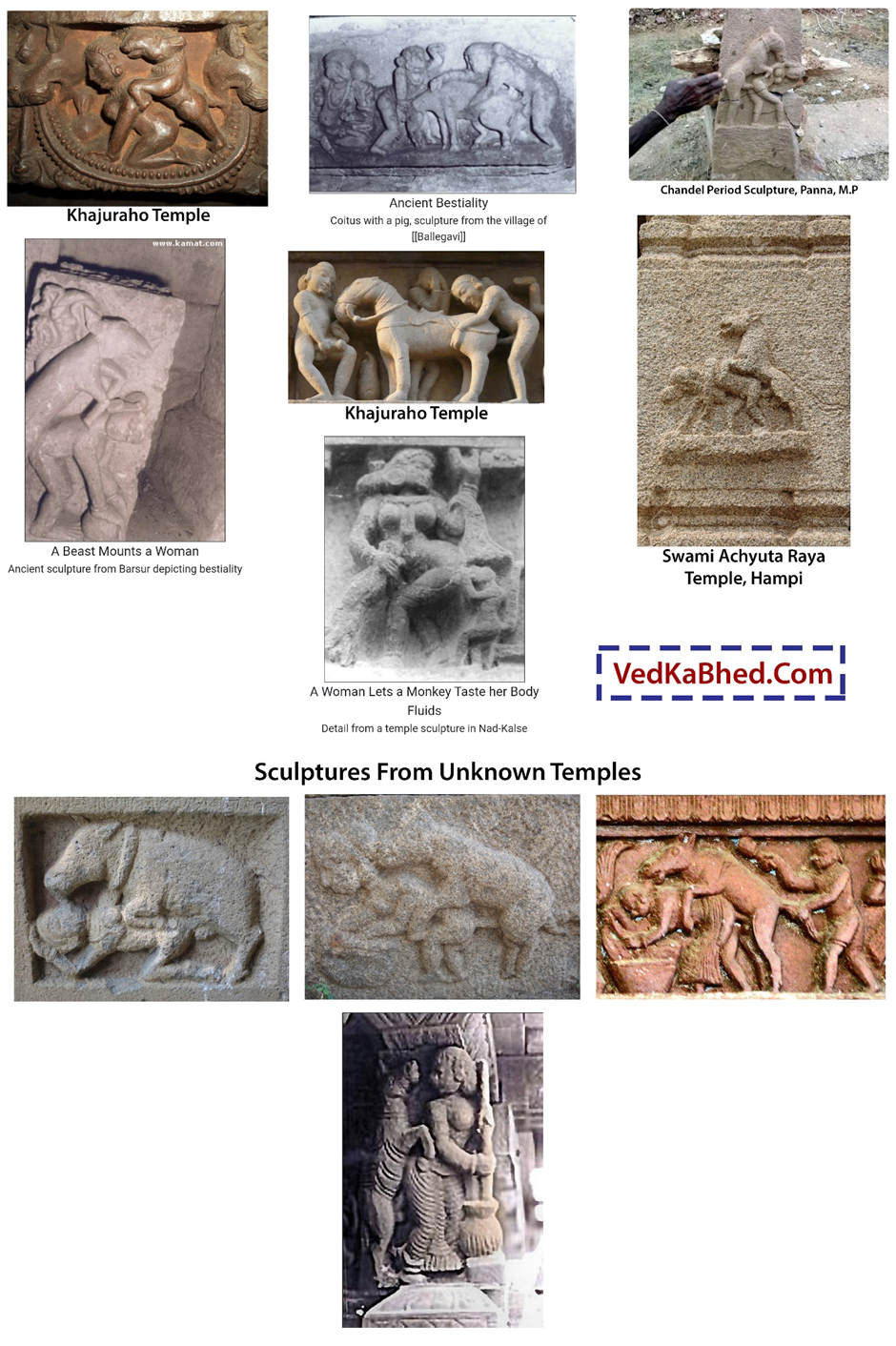
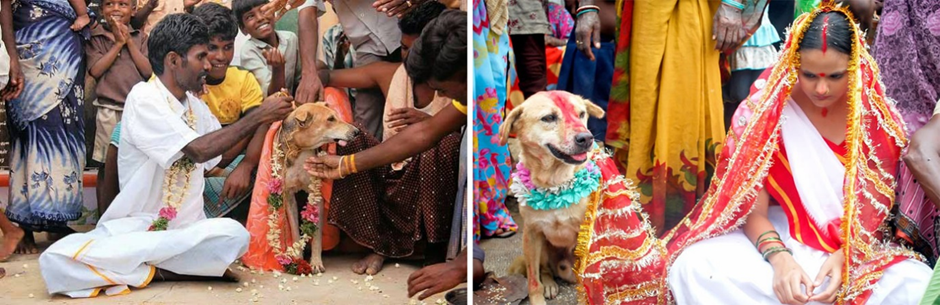
There are several instances of bestiality described in Hindu texts. As mentioned earlier, Shiva is said to have raped Agni while Agni was in the form of a parrot, inserting his penis into Agni’s mouth and releasing semen.
Brahma Purana, Gautami-Mahatmya 58.16-24 “At the instance of Devas the fire-god assumed the form of a parrot and went to the place where the lord of the worlds was sporting with Uma…The lord of Devas called the fire-god moving about in front of him, in the form of a bird and said, “O Agni, you have been recognised through various ways. Do not speak anything. Open your mouth. Take this in and carry it with you.” After saying this lord Sambhu discharged a great deal of semen into the mouth of fire-god. With this semen within him Agni could not at all go. Utterly tired, Agni sat down on the bank of Ganga. He then discharged a greater portion of that semen into Krttikas wherefrom Karttika was born. The remaining portion of the semen of Sambhu that had been within his body, Agni split into two and deposited into his beloved wife Svaha who was particularly eager to have a child.” Tr. Board of Scholars, Edited by J.L. Shastri (source)
A passage from the Mahabharata states that a Rishi named Kindama engaged in sexual intercourse with a deer, claiming he was uncomfortable having sex with humans.
Mahabharata 1.118.5-38 “Vaisampayana said, ‘O king, one day Pandu, while roaming about in the woods (on the southern slopes of the Himavat) that teemed with deer and wild animals of fierce disposition, saw a large deer, that seemed to be the leader of a herd, serving his mate. Beholding the animals, the monarch pierced them both with five of his sharp and swift arrows winged with golden feathers. O monarch, that was no deer that Pandu struck at, but a Rishi’s son of great ascetic merit who was enjoying his mate in the form of a deer. Pierced by Pandu, while engaged in the act of intercourse, he fell down to the ground, uttering cries that were of a man and began to weep bitterly…[Rishi in deer form said] The time of sexual intercourse is agreeable to every creature and productive of good to all. O king [Pandu], with this my mate I was engaged in the gratification of my sexual desire. But that effort of mine hath been rendered futile by thee…I am, O king [Pandu], a Muni who liveth on fruits and roots, though disguised as a deer…I was engaged in sexual intercourse with this deer, because my feelings of modesty did not permit me to indulge in such an act in human society. In the form of a deer I rove in the deep woods in the company of other deer. Thou hast slain me without knowing that I am a Brahmana, the sin of having slain a Brahmana shall not, therefore, be thine. But senseless man, as you have killed me, disguised as a deer, at such a time, thy fate shall certainly be even like mine. When, approaching thy wife lustfully, thou wilt unite with her even as I had done with mine… Tr. Kisari Mohan Ganguli (Source)
Rishi Kindama is described as having engaged in sexual intercourse with a deer, raising the question of how a sage could be sexually attracted to an animal. Manu mentions that several sages were born after other sages had cast their semen into animals, suggesting that such bestial acts were not isolated incidents but accepted within certain mythological narratives. This could also be a reference to unnatural births such as Rishi Shringi born after Rishi Vibhandaka released his semen in a lake upon seeing Apsara Urvashi which was later drunk by a deer.
Manu Smriti 10.72 “Since through their excellent energies (potency), seeds, cast in the wombs of beasts (by the holy sages), fructified in the shapes of human beings, who became honoured and commendable Rishis in life; the seed is commended (as of greater importance in an act of fecundation).” Tr. M.N. Dutt (Source)
Yaska recounts a peculiar story about the birth of the Ashvins (the twin horsemen), which elaborates on Rig Veda 10.17. According to the account, Saranyu was unwilling to have intercourse with Vivasvat and fled from him, but Vivasvat pursued and raped her. Yaska writes.
Nirukta 12.10 “Saranyu daughter of Tvastr bore twins, Yama and Yami, to Vivasvat the sun. She having substituted another lady of similar appearance, and having assumed the shape of a mare, ran away. He, Vivasvat, the sun, having also assumed the shape of a horse, pursued her, and joined her. Thence the Asvins were born. Manu was born from the lady of similar appearance.” Tr. Lakshman Swarup (source)
This story of Vivasvat raping his wife by forcing intercourse through her mouth is further elaborated in Brahma Purana 4.42–43, Shiva Purana Uma Samhita 5.35.32–34, Matsya Purana 11.34–37, and Brahmanda Purana 2.3.59.74–76, which I have discussed under the “Oral Sex” category. The troubling question is how the sun god could have been aroused by his wife when she had taken the form of a mare. It appears that the Vedic god Vivasvat exhibited sexual attraction toward animals, as he violated his wife while she was in that form. This is also mentioned in Shiva Purana.
Shiva Purana Uma Samhita 5, chapter 4, verse 21 “The sun of fierce rays, deluded by Shiva’s Maya became lustful on seeing a mare and assumed the form of a horse.” Tr. J.L. Shastri (source)

Ved Vyasa was attracted to Apsara Ghritachi even after she had assumed the form of a parrot.
Narada Purana II.58.18-25 “After having obtained that excellent boon from the Lord, Vyasa, the son of Satyavati, was one day engaged in churning the sacrificial sticks, with the desire of making a fire (for sacrificial purpose). At that time, the illustrious sage happened to see a heavenly damsel called Ghrtaci who, in consequence of her brilliant splendour, possessed excellent beauty. Seeing that celestial damsel, in that forest, the great sage Vyasa became instantly passionately enamoured of her. After making Vyasa deeply agitated with passion, the most beautiful Ghrtaci, transforming herself into a she-parrot, approached him. Even after seeing the celestial lady disguised in another form, he was overcome with cupid (passionate love) who spread in every part of his body…Due to the inevitablity of Destiny (lit.what was to happen) the heart of the sage was fascinated by the (beautiful) form (of Ghrtaci). With the desire to do this (viz. the kindling of fire) while he was suppressing his passion with special efforts, all of sudden his semen fell on the churning sticks. It was thus that the great ascetic Suka was born, while Vyasa continued the churning of sacrificial sticks.” Tr. G.V. Tagare (source)
There is another version of this story which is mentioned Devi Bhagavatam 1.14.1-70.
A demon named Rambha was a devotee of the fire god Agni. He should not be confused with the celestial nymph (Apsara) named Rambha. Desiring to have progeny, he prayed to Agni, who accepted his request and instructed him to copulate immediately with any species, assuring him that he would beget offspring.
Devi Bhagavatam 5.2.27-31 “…Vyasa said :– O king! Hearing thus the sweet words of Fire, Rambha quitted the hold of his hairs and said :– O Lord of the Devas! If thou art pleased, grant my desired boon that a son be born unto me, who will destroy the forces of my enemy and who will conquer the three worlds. And that son be invincible in every way by the Devas, Danavas and men, very powerful, assuming forms at will, and respected by all. The Fire said :– O highly Fortunate! You will get your son, as you desire; therefore desist now from your attempting suicide. O highly fortunate Rambha! With any female of whichever species, you will co-habit, you will get a son, more powerful than you; there is no doubt in this. Vyasa said :– O king! Hearing thus the sweet words of the Fire as desired, Rambha, the chief of the Danavas, went, surrounded by Yaksas, to a beautiful place, adorned with picturesque sceneries; when one lovely she-buffalo, who was very maddened with passion, fell to the sight of Rambha. And he desired to have sexual intercourse with her, in preference to other women. The she-buffallo, too, gladly yielded to his purpose and Rambha had sexual intercourse with her, impelled as it were by the destiny. The she-buffalo became pregnant with his semen virile…” Tr. Swami Vijnananda (source)
Why would a Vedic god like Agni command his devotee to have sex with “any species”? When a god’s word is considered divine law, such a command effectively implies permission for the act.
There is a story in the Vishnu Purana about King Satadhanu, who was reborn as a dog for committing the “sin” of speaking with an infidel. His wife, after being reborn as the daughter of Kasi, recognized her husband and married him while he was still a dog.
Vishnu Purana 3.18.64-67 “With the eye of divine intelligence she knew that her own husband had been regenerate as a dog, and going once to the city of Vaidiśá she saw the dog, and recognised her former lord in him. Knowing that the animal was her husband, she placed upon his neck the bridal garland, accompanying it with the marriage rites and prayers…” Tr. H.H. Wilson (source)
Bhogavati had Sex with a Serpent.
Brahma Purana Gautami Mahatmya 41.67-68 “After saying this and remaining there on the bed the lady of slender limbs made the serpent sport about through songs delightful to serpents as well as contacts with his limbs. She pleased her husband by means of fragrant flowers and beverages. Due to her favour the serpent was able to recollect, O sage. After remembering everything perpetrated by fate the serpent said to his beloved wife at night.” Tr. Board of Scholars, Edited by J.L. Shastri (source)
Hinduism also prescribes the Ashwamedha Yajna, a ritual that was performed by kings along with their queens, under the supervision of priests who chanted mantras. This ritual involved the sacrifice of a horse, after which the chief queen would place the penis of the dead horse in her vagina, an act performed publicly in the presence of the king and the officiating priests. According to the texts, Rama’s mother, Kaushalya, is said to have spent a night beside the dead horse as part of this ritual.
Yajur Veda 23.19-21 “We invoke you, the Commander of Hosts among the multitudes; we invoke you, the Master of the Beloved among the cherished; we invoke you, the Lord of Treasures among wealth. O my Treasure! May I recognise the impregnator of the womb; you are indeed the impregnator of the womb. Let us both extend our four limbs; may we be enveloped within the heavenly realm. May the virile steed, the depositor of seed, place the seed. Elevate the thighs and position the loins; insert the procreative organ, O vigorous one that which constitutes the vital sustenance of women.”
Baudhayana Srauta Sutra chapter 15 verse 29 “The Adhvaryu escorts the senior queen fully decorated, making amends, being reproached (and addresses the three queens) “O Ambā, O Ambāli O Ambikā” (The senior queen says) “No person leads me. The poor horse is sleeping.” Having lain down by the side of the horse towards the north, she draws a piece of cloth over her head. The Adhvaryu covers both of them with the piece of linen with the formula, “O fair one, clad in a fair garment, do you two be covered together in the heaven.” The senior queen lays the horse’s penis on her lap with the formula, “I have clasped the impregnatory; do thou clasp me for impregnation. Let us together spread out our four legs.” The Adhvaryu follows her with the formulas, “Let the impregnator out of you deposit the seed. O horse, do thou press thy region of male organ upon the thighs (of the queen) and insert into the queen’s genitals thy penis which is the means of enjoyment of women, which dashes into their womb, and which, when entered into the genitals pleases them, and which attacks the central part of genitals within the black spot.” The senior queen censures the horse.” Tr. Dr. Chintaman Ganesh Kashikar (Source)
Sankhayana Srauta Sutra XVI.3.33-36 “When the horse has been quietened (slaughtered) they cause the first consort of the king to lie down near it. They cover them both (horse and consort) with an upper-garment. To these two the sacrificer addresses the obscene (verse). ‘Put the penis (?) into (the space between the) thighs, bring the sleek one down, which is the life and delight of women’.” Tr. W. Caland (Source)
For more information, read the article Ashvamedha Yajna: The Obscene Ritual.
Bestiality Treated as a Minor Offence
The following Dharma Shastras impose no major punishment for bestiality and treat it merely as a minor offence that can be atoned for.
Skanda Purana I.ii.41.46-60 “The following are Upapatakas (minor sins) …those who practise intercourse with animals or women in their monthly course or with a woman of a different caste or inanimate objects…such acts are known as Upapatakins (sinners of a minor gravity.” Tr. G.V. Tagare (Source)
Manu Smriti 11.173 “A man who has had sexual intercourse with nonhuman females, or with a menstruating woman, and he who has discharged his semen in a place other than the female organ, or in water, should perform the ‘Santapana Krcchra.” Tr. Ganganath Jha (source)
Yajnavalkya Samhita 292 “…for holding sexual intercourse with a beast, a hundred panas...intercourse with a cow, is the second form of pecuniary punishment.” Tr. M.N. Dutt (Source)
Vasistha Dharma Shastra 23.5 “If he has committed a bestial crime, he shall give a white bull (to a Brâhmana).” Tr. Georg Bühler (Source)
Gautama Dharma Shastra 22.36 “For committing a bestial crime, excepting (the case of) a cow, (he shall offer) an oblation of clarified butter, (reciting) the Kûshmânda texts.” Tr. Georg Bühler (Source)
Vishnu Smriti 53.3-7 For intercourse with a cow, the Govrata (must be performed). For intercourse (knowingly) with cattle (other) than cows) or with a public prostitute, (he must perform) the Pragapatya penance.” Tr. Julius Jolly (source)
Vishnu Smriti 5.41–44 “For adultery with women of a lower caste, the second amercement. The same (fine is ordained) for a bestial crime committed with a cow. He who has had connection with a woman of one of the lowest castes, shall be put to death. For a bestial crime committed with cattle (other than cows) he shall be fined a hundred Karshapanas.” Tr. Julius Jolly (source)
Sex Positions
Why should a divine scripture concern itself with describing sexual positions? It’s supposed to be a holy text, not pornographic literature.
Rig Veda 10.110.5 “Let the expansive Doors be widely opened, like wives who deck their beauty for their husbands…” Tr. Ralph Griffith (Source)
Yaska explained this verse as.
Nirukta 8.10 “Having spaciousness, make yourself wide open as exceedingly beautiful wives do their thighs for their husbands in sexual intercourse. The thighs are the most beautiful parts (of the body) …” Tr. Lakshman Swarup (Source)
The next verse is even more obscene.
Yajur Veda 19.88 ‘‘Just as a wife, the recipient of semen, at the time of cohabitation keeps her head opposite to the head of the husband, and her face opposite to that of his, so should both husband and wife perform together their domestic duties. A husband is a protector like a physician. He lives happily like a child, and with tranquillity produces progeny with penis keen with ardour.” Tr. Devi Chand (Arya Samaj)
Following is the Arya Samaj Hindi translation with commentary.
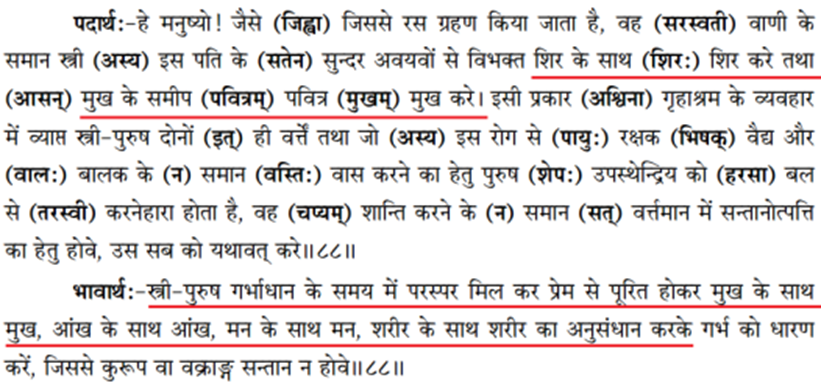
http://aryasamajjamnagar.org/yajurveda/pages/p728.gif
The Atharva Veda and Brihadaranyaka Upanishad outline a ritual of sexual union for conception, comparing the husband and wife to heaven and earth. These texts even describe the sex position and accompanying mantras in explicit detail.
Atharva Veda 14.2.71 “O bride, I am Amah and you are Saa I am Saman and you are Rik and I am sun and you earth. Let both of us unite together and procreate progeny.” Tr. Vaidyanath Shastri (Arya Samaj)
Brihadaranyaka Upanishad 6.4.20-22 Then he embraces her, repeating the following mantra: I am the vital breath and you are speech. You are speech and I am the vital breath. I am Saman and you are Rig; I am heaven and you are earth. Come, let us strive together so that we may have a male child.” Then he spreads apart her thighs, repeating the following mantra: “Spread yourselves apart, Heaven and Earth.” Inserting the member in her and joining mouth to mouth, he strokes her three times from head to foot, repeating the following mantra:” Let Vishnu make the womb capable of bearing a son! Let Tvashtra shape the various limbs of the child! Let Prajapati pour in the semen! Let Dhatra support the embryo! O Sinivali, make her conceive; O goddess whose glory is widespread, make her conceive! May the two Atvins, garlanded with lotuses, support the embryo! “Let the two Atvins chum the womb with the two golden arani sticks! I am placing a seed in your womb to be delivered in the tenth month. As the earth has fire in its womb, as heaven is pregnant with the sun, as the quarters are impregnated by air, so I am impregnating you by placing this seed in your womb.” After the reciting of the mantra, he utters his own name and that of his wife and places the seed.” Tr. Swami Nikhilananda (Source)
Brihadaranyaka Upanishad 6.4.9-10 “If a man desires his wife with the thought: “May she enjoy love with me.” Then, after inserting the member in her, joining mouth to mouth and stroking her organ, he should utter the following mantra “O semen, you have been produced from my every limb…Bring this women under my control, like a deer pierced by a poisoned arrow.” Now, the wife whome he desires with the thought: “May she not conceive”- after inserting the member in her and joining mouth to mouth, she should inhale and exhale, repeating the following mantra: “with power, with semen, I reclaim the semen from you.” Thus she comes to be without semen.” Tr. Swami Nikhilananda (source)
The Padma Purana too indulges in explicit and vulgar descriptions unworthy of a sacred text.
Padma Purana II.53.98-109 “…O messenger, the organs of generation of the male and also of the female throb. Then the male and the female, being inflamed with passion, unite. The body (of the male) is rubbed with the body (of the female). Due to coitus a momentary pleasure is produced…” Tr. N.A. Deshpande
Padma Purana V.100.59b-77 “…O king, there is the itching for sex in all beings. The penis of the man expands, so also the vulva of the woman. The woman and the man, getting mad, are then united. Due to rubbing of one body with another, there is a momentary pleasure…” Tr. N.A. Deshpande
Kama Sutra 2.8.34 “The bee [bhramaraka]. Once the instrument is in place, moving it in a circular fashion is known as the bee, and requires practice.” “The phallus is driven into the vagina. Lifting her body with the hands, her legs folded, make her turn on the instrument as on the axis of a potter’s wheel. This requires practice.” (source)
Oral Sex
There is a story of the sun god raping his wife by inserting his male organ into her mouth.
Brahma Purana 4.42-43 “The Lord assumed the form of a horse and approached her as she grazed about fearlessly in the form of a mare. It was in her mouth that he had his sexual intercourse, as she began fidgeting due to her suspicion that he might be a person other than her own husband. She let out the semen of Vivasvat through her nostrils.” Tr. Board of Scholars, Edited by J.L. Shastri (source)
This is also mentioned in Shiva Purana.
Shiva Purana, UmaSamhita 5.35.32-34 “He assumed the form of a horse and approached her for sexual indulgence with her who could not be overwhelmed by any living being due to her lustre and observance of restraint. O sage, in the course of the sexual activity she suspected him to be another man. Hence she received the semen through the mouth into the nostril. Thence were born the twin gods Asvins, the foremost among physicians.” Tr. Board of Scholars, Edited by Jagdish Lal Shastri (source)
This story is also found in the Matsya Purana 11.34–37 and the Brahmanda Purana 2.3.59.74–76. It is likewise mentioned in the Nirukta, which elaborates on Rig Veda Mandala 10, Hymn 17, although it does not provide as much detail as the above passages.
Nirukta 12.10 “Saranyu daughter of Tvastr bore twins, Yama and Yami, to Vivasvat the sun. She having substituted another lady of similar appearance, and having assumed the shape of a mare, ran away. He, Vivasvat, the sun, having also assumed the shape of a horse, pursued her, and joined her. Thence the Asvins were born. Manu was born from the lady of similar appearance.” Tr. Lakshman Swarup (source)
As mentioned earlier, Shiva is described as raping Agni by forcing his male organ into Agni’s mouth.
Brahma Purana, Gautami-Mahatmya 58.16-24 “At the instance of Devas the fire-god assumed the form of a parrot and went to the place where the lord of the worlds was sporting with Uma…The lord of Devas called the fire-god moving about in front of him, in the form of a bird and said, “O Agni, you have been recognised through various ways. Do not speak anything. Open your mouth. Take this in and carry it with you.” After saying this lord Sambhu discharged a great deal of semen into the mouth of fire-god. With this semen within him Agni could not at all go. Utterly tired, Agni sat down on the bank of Ganga. He then discharged a greater portion of that semen into Krttikas wherefrom Karttika was born. The remaining portion of the semen of Sambhu that had been within his body, Agni split into two and deposited into his beloved wife Svaha who was particularly eager to have a child.” Tr. Board of Scholars, Edited by J.L. Shastri (source)
For more information, read the Shiva-Agni homosexual story mentioned in the LGBT category above.
The Kama Sutra also discusses oral sex. Although I should not be quoting the Kama Sutra here, it is evident that other Hindu scriptures are equally explicit, showing little difference in tone or content.
Kama Sutra 2.9 When, holding the man’s lingam with his hand, and placing it between his lips, the eunuch moves about his mouth, it is called the ‘nominal congress’. When, covering the end of the lingam with his fingers collected together like the bud of a plant or flower, the eunuch presses the sides of it with his lips, using his teeth also, it is called ‘biting the sides’. When, being desired to proceed, the eunuch presses the end of the lingam with his lips closed together, and kisses it as if he were drawing it out, it is called the ‘outside pressing’. When, being asked to go on, he puts the lingam further into his mouth, and presses it with his lips and then takes it out, it is called the ‘inside pressing’. When, holding the lingam in his hand, the eunuch kisses it as if he were kissing the lower lip, it is called ‘kissing’. When, after kissing it, he touches it with his tongue everywhere, and passes the tongue over the end of it, it is called ‘rubbing’. When, in the same way, he puts the half of it into his mouth, and forcibly kisses and sucks it, this is called ‘sucking a mango fruit’. And lastly, when, with the consent of the man, the eunuch puts the whole lingam into his mouth, and presses it to the very end, as if he were going to swallow it up, it is called ‘swallowing up‘.
Masturbation
The Padma Purana explicitly describes a woman masturbating, but why would a supposed word of God contain such details?
Padma Purana V.112.23a-33a “On the death of the husband before (her death) she should not enter fire (with the thought) ‘In my widowhood, all this wealth will be useful for my religious merit.’ Resolving like this with (i.e. in) her mind, when widowhood has come, she, when she gets and itching of the vulva (i.e. has a desire for sex) by day or at night, she said (i.e. would say), after having gone to a lonely place and after having uncovered (i.e. taken off) her garment, to her vulva these words, through grief, and with her hand on her generative organ: ”O vulva, what have you done? What sin have you committed? Or is it the sin of the penis due to having got into you? Or is it the sin of the doer due to avoiding service like me?” Even then when the itch is produced, she would put her finger (into her vulva); and due to the feeling of the itch she would do strange movements after that. Having rubbed it with her hands, having struck it and having expanded it, she, being extremely pained, repeatedly shook her feet. She, after having embraced the (piece of) wood of the cot, and pressed her breasts (against it) as she liked, became sad due to peculiar disposition of her mind…” Tr. Board of Scholars; G.V. Tagare (source)
Mahabharata 3.224.7 “Markandeya continued, ‘Then Agni, filled with great joy and delight, married Swaha in the guise of Siva, and that lady joyfully cohabiting with him, held the semen virile in her hands.” Tr. K.M. Ganguli (source)
Kama Sutra 5.6.5 The women of the royal harem cannot see or meet any men on account of their being strictly guarded, neither do they have their desires satisfied, because their only husband is common to many wives. For this reason among themselves they give pleasure to each other in various ways as now described. Having dressed the daughters of their nurses, or their female friends, or their female attendants, like men, they accomplish their object by means of bulbs, roots, and fruits having the form of the lingam, or they lie down upon the statue of a male figure, in which the lingam is visible and erect.
You may also refer to the “Black Magic” section under the Immorality category, which includes verses describing the touching of intimate body parts.
Open/Group Sex
Many Hindu gods and sages are depicted as engaging in sexual acts openly, often in forests and without any sense of restraint. On several occasions, their acts were even witnessed by others. One such instance is that of Indra copulating with Paulomi, an act observed by the sage Anga.
Indra
Padma Purana II.30.76-85 “O brahmanas, once the brahmana, the very lustrous and vigorous son of Atri went to the Nandana (garden); there is saw Indra, Pakasasana. He saw Indra, who was accompanied by hosts of celestial nymphs and Gandharvas and Kinnaras…who was adorned with all ornaments, who was engaged in sexual sports, who possessed an unlimited prowess…By his side he saw the blessed virtuous Paulomi, charming and auspicious, glorious with beauty, lustre and penance, shining with good fortune and chastity. With her that Indra enjoyed in the Nandana forest. Seeing his sport, the best brahmana Anga (thought): ‘Lucky is the king of gods who is surrounded by such (beings). Oh, (great) is the power of his penance, due to which he has obtained such a great (i.e. high) position.” Tr. N.A. Deshpande (Source)
Another act of Indra.
Mahabharata 3.115.17 “…And the mighty ruler of the Haihaya tribe placing himself on his celestial car, affronted Indra, while that deity was enjoying himself with Sachi, his queen. Then, O Bharata’s son, the blessed and the revered god (Vishhnu) held a consultation with Indra…” Tr. K.M. Ganguli (Source)
Shiva
Shiva was an ascetic in title rather than in conduct, as his actions often contradicted the very essence of asceticism. Several accounts describe instances where sages witnessed Shiva engaging in intimate acts with his consort, during which she was seen bare-chested.
Devi Bhagavatam 1.12.1-53 “…Once on a time, Sanaka and other Risis went to this forest to pay a visit to Sankara, illuminating the ten quarters by their holy aura. But then Bhagavan Sankara was in amorous dealings with Sankari. The beautiful Devi Ambika was then naked and sitting on the lap of Sankara and therefore became very much ashamed at their sight…” Tr. Swami Vijnananda (Source)
This is also mentioned in Brahmanda Purana 2.3.60.24-26a. However, this did not deter Shiva from engaging in intercourse openly. On another occasion, he is said to have cohabited with his consort in a forest, where the sage Bhrigu witnessed the act and subsequently cursed him.
Devi Bhagavatam 4.20.36-37 “O King! When Mahadeva, being infatuated with Kama, went into the forest of Bhrigu and becoming naked, began to copulate, the ascetic Bhrigu, seeing him in that state, exclaimed “O You are very shameless” and cursed Him thus :– Let your penis drop off just now. Mahadeva, then to satisfy his thirst for passion, began to drink the water of the lake Amrita Vapi, dug by the Danavas.” Tr. Swami Vijnananda (Source)
Once Uma the daughter of demon Bana observed the act between Shiva and Parvati and was struck with passion.
Vishnu Purana 5.32.11-13 “PARASARA.–Usha, the daughter of Bana, having seen Parvati sporting with her lord, Sambhu, was inspired with a wish for similar dalliance…” Tr. H.H. Wilson (Source)
There is a story in the Skanda Purana that, although not about Shiva or his wife having sex in the open, still reflects a lack of modesty. It describes how the breasts of Shiva’s wife were exposed to demons when her upper garments were tossed aside while she was playing with a ball.
Skanda Purana IV.ii.65.26-27 “The brilliance of her body was completely revealed as the upper cloth over her breasts was tossed about. The lotus like palms of the goddess became excessively red as she continuously beat the springing ball. Her eyebrows seemed to dance as her eyes closely followed the ball. Mrdani, the beautiful mother of the universe, was playing thus and she was seen by the Ditijas (demons) named Vidala and Utpala who happened to go through the firmament…” Tr. G.V. Tagare (Source)
Vishnu
Narada Muni went to Shveta Dvipa, the abode of Vishnu, where he saw Vishnu engaged in intercourse with his wife Lakshmi and also saw her bare breasts.
Devi Bhagavatam 6.28.1-11 “…Thus the Bhagavan Narayana was playing in amorous movements with the daughter of the ocean, fully capable to give one delight and enjoyment. Seeing me, the lovely Devi Kamala, dear to Vasudeva, full of youth and beauty, decorated with ornaments, endowed with all auspicious signs, superior to all the women, went away at once (to another room) from the presence of Janardana. The breast of Laksmi Devi was becoming visible even through the cloth thrown over it…” Tr. Swami Vijnananda (Source)
Krishna
Vishnu’s avatar Krishna also engaged in a similar act with his mistress Viraja. His aunt and concubine Radha became enraged upon learning of it, and out of fear of Radha’s anger, Viraja ultimately took her own life.
Brahma Vaivarta Purana, Prakriti Khanda 49.1-9 “…Once upon a time, Lord Krisna, well decked was sporting with a cow herdess named Viraja on a part of the Sata Sringa mountain situatied in Vrindavana at the Goloka…Their sexual intercourse was interminable Krisna and Viraja both expert in sexual intercourse enjoyed the pleasures of that intercourse. For one Manwantra according to the calculation of the residents of the Goloka, free from death and birth their intercourse lasted. Four female messengers of Radha went and informed Radha of the matter. Radha was thereupon highly incensed and threw down the garland from her breast…She ascended, with millions of her beloved female companions…This car was faster in speed than the mind. Sudama, the friend of Krisna as soon as he perceived the approach of Radha, warned Krisna and ran away with his associates. Afraid of forfeiting the love of his beloved Radha, Krishna left the chaste Viraja and disappeared. Viraja, too, through Radha’s fear, committed suicide…” Tr. Rajendra Nath Sen (Source)
Parasara
An aged sage named Parashara became overwhelmed with desire upon seeing a young woman named Satyavati on a boat and insisted on having sex with her there in full public view.
Mahabharata 1.63.69-84 “…While engaged in this vocation, Satyavati was seen one day by the great Rishi Parasara, in course of his wanderings. As she was gifted with great beauty, an object of desire even with an anchorite, and of graceful smiles, the wise sage, as soon as he beheld her, desired to have her. And that bull amongst Munis addressed the daughter of Vasu of celestial beauty and tapering thighs, saying, ‘Accept my embraces, O blessed one!’ Satyavati replied, ‘O holy one, behold the Rishis standing on either bank of the river. Seen by them, how can I grant thy wish?’ “Thus addressed by her, the ascetic thereupon created a fog (which existed not before and) which enveloped the whole region in darkness. And the maiden, beholding the fog that was created by the great Rishi wondered much. And the helpless one became suffused with the blushes of bashfulness…”And Satyavati gratified with having obtained the excellent boon in consequence of which she became sweet-scented and her virginity remained unsullied conceived through Parasara’s embraces. And she brought forth the very day, on an island in the Yamuna, the child begot upon her by Parasara…” Tr. K.M. Ganguli (Source)
This incident is also mentioned in the Shiva Purana, Uma Samhita 44.23. The poor girl Satyavati could not openly refuse the sage, fearing that he might curse her. In her distress, she attempted several other ways to avoid him, as described below.
Shiva Purana, Umasamhita 5.44.18-25 “Afflicted with lust the sage caught hold of the lass. Tremblingly the lass spoke to the merciful sage. “O great sage, I have foul smell and black complexion…Afflicted by lust the sage caught hold of her again. On seeing him bent upon seizing her she said again. ”It is mentioned in the Vedas that sexual intercourse shall be indulged in at night; not during the day…Hence please wait till the night falls. Now all the men will see us and so shall my father who stands at the other bank.” On hearing the words uttered by her, the leader sage immediately created a screen of snow, thanks to his strength of his merit.” Tr. Board of Scholars, Edited by J.L. Shastri (Source)
In my view, this incident is hardly distinguishable from prostitution. In prostitution, money is exchanged for illicit sex, whereas here the sage offered Satyavati physical beauty and a pleasant fragrance in return for sexual gratification. The aged sage was so overcome by desire that he disregarded her unpleasant odor and plain appearance, seizing her hand and insisting on intercourse right there on the boat. He appeared utterly indifferent to the presence of others on the opposite shore, seeking only carnal satisfaction. It is possible that onlookers witnessed the act but chose to remain silent, unwilling to condemn what was clearly a degrading spectacle.
Others
A Rakshasa king spotted a Rishi having sex with his wife.
Narada Purana I.9.52 “Moving about on the banks of the Narmada, that Raksasa (king) who frightened all the world, happened to see a certain sage engaged in amorous sports with his beloved.” Tr. G.V. Tagare (Source)
Upon seeing the Gandharvas engaged in sexual intercourse, sage Pippalada became overwhelmed by desire.
Shiva Purana, Rudra Samhita 2, Parvati Khanda 3, chapter 34, verses 9-10 “The Gandharva was an expert in the science of erotics. He was in the company of a woman. He was therefore completely submerged in the ocean of pleasure, sexual dalliance and was lusty. On seeing him the great sage became very lustful. He lost interest in penance and began to think of acquiring a wife.” Tr. Board of Scholars, Edited by J.L. Shastri (Source)
The Gandharva king engaged in open sexual intercourse, which was witnessed by Ranuka, wife of Jamadagni and mother of Parashurama.
Srimad Bhagavatam 9.16.2-3 “Once when Reṇukā, the wife of Jamadagni, went to the bank of the Ganges to get water, she saw the King of the Gandharvas, decorated with a garland of lotuses and sporting in the Ganges with celestial women [Apsarās]. She had gone to bring water from the Ganges, but when she saw Citraratha, the King of the Gandharvas, sporting with the celestial girls, she was somewhat inclined toward him and failed to remember that the time for the fire sacrifice was passing.” Tr. Swami Prabhupada (Source)
Group Sex/Orgy
It is difficult to imagine anything more reprehensible. Balarama, the elder brother of Krishna, approached the Gopis who had been forsaken by Krishna, and they addressed him as follows.
Srimad Bhagavatam 10.65.11-12 “For Kṛṣṇa’s sake, O descendant of Dāśārha, we abandoned our mothers, fathers, brothers, husbands, children and sisters, even though these family relations are difficult to give up. But now, O Lord, that same Kṛṣṇa has suddenly abandoned us and gone away, breaking off all affectionate ties with us. And yet how could any woman fail to trust His promises?” Tr. Swami Prabhupada (Source)
Balarama followed in the footsteps of his younger brother, Krishna. Instead of advising the Gopis to lead a chaste life, he engaged in sexual relations with them.
Srimad Bhagavatam 10.65.17-18 “Lord Balarama, the Personality of Godhead, resided there for the two months of Madhu and Mādhava, and during the nights He gave His cowherd girlfriends conjugal pleasure. In the company of numerous women, Lord Balarama enjoyed in a garden by the Yamunā River. This garden was bathed in the rays of the full moon and caressed by breezes bearing the fragrance of night-blooming lotuses.” Tr. Swami Prabhupada (Source)
Swami Prabhupada makes every effort to argue that the Gopis associated with Balarama were different from those enjoyed by Krishna. However, Srimad Bhagavatam 10.65.9–10 clearly states that the Gopis whom Balarama enjoyed were the very same ones previously enjoyed by Krishna. Like his brother, Balarama displayed no shame in engaging in sexual intercourse with multiple women simultaneously. As mentioned earlier, Krishna too had engaged in group sex/orgy with Gopis.
Skanda Purana II.iii.4.17 “With the tip of his nail with which he had pierced the neck of hyena, he pinched the breasts of the cowherd lasses. He has been sportingly given many form by young women. Let this Sesa (?) be for (i.e. bring about) calmness and peace.” Tr. G.V. Tagare (source)
Srimad Bhagavatam 3.3.21 “The Lord enjoyed His pastimes, both in this world and in other worlds [higher planets], specifically in the association of the Yadu dynasty. At leisure hours offered by night, He enjoyed the friendship of conjugal love with women.” Tr. Swami Prabhupada (Source)
Another passage from the Srimad Bhagavatam also depicts the Apsaras participating in group sex.
Srimad Bhagavatam 4.6.25 “My dear Kṣattā, Vidura, the celestial damsels come down to those rivers in their airplanes with their husbands, and after sexual enjoyment, they enter the water and enjoy sprinkling their husbands with water.” Tr. Swami Prabhupada (Source)
As per the story mentioned in the Srimad Bhagavatam, a sage named Kardama divided himself into nine men and impregnated his wife through nine discharges.
Srimad Bhagavatam 3.23.47 “The powerful Kardama Muni was the knower of everyone’s heart, and he could grant whatever one desired. Knowing the spiritual soul, he regarded her as half of his body. Dividing himself into nine forms, he impregnated Devahuti with nine discharges of semen.” Tr. Swami Prabhupada (Source)
Wife Swapping
Hindu scriptures contain several references to the practice of wife swapping. However, this discussion does not include instances of Niyoga, such as when King Pandu compelled his wife Kunti to engage in sexual relations with other men for the purpose of conception, or when Kartikeya was said to have relations with the wives of Hindu deities. The practice of Niyoga itself may be regarded as a form of wife swapping, as it could occur even during the lifetime of the husband.
Giving wife to unmarried elder Brother
According to the Dharma Shastras, if a younger brother marries while his elder brother remains unmarried, he is obliged to temporarily offer his wife to the elder brother for sexual relations. Once the elder brother has been intimate with her, the younger brother may then resume his marital relationship with his wife.
Mahabharata 12.165.67-70 “If a younger brother weds before his elder brother, then the younger brother, the elder brother and the woman that is married, all three, in consequence of such wedding, become fallen. All of them should observe the vows prescribed for a person who has neglected his sacrificial fire, or practise the vow of Chandrayana for a month, or some other painful vow, for cleansing themselves of their sin. The younger brother, wedding, should give his wife unto his unmarried elder brother. Afterwards, having obtained the permission of the elder brother, the younger brother may take back his wife.” Tr. K.M. Ganguli (Source)
Vasistha Dharma Shastra 20.8-10 “Now he who has taken a wife before his elder brother shall perform a Krikkhra penance and an Atikrikkra penance, give (his wife) to that (elder brother), marry again, and take (back) the same (woman whome he wedded first). The husband of a younger sister married before her elder sister shall perform a Krikkhra penance during twelve days, marry and take to him that (elder sister). The husband of an elder sister married after the younger one shall perform a Krikkhra penance and an Atikrikkhra penance, give (his wife) to that (husband of the younger sister and marry again).” Tr. Georg Bühler (Source)
Manu Smriti 3.171-2 censures the marriage of a younger brother while the elder brother remains single.
Vishnu giving his wives to Brahma and Shiva
Some Hindu texts describe Vishnu engaging in an exchange of wives, where he gave his own consorts to Shiva and Brahma.
Devi Bhagavatam 9.6.45-67 “…Now go in full Amsas to Brahmâ and become His wife. Let Gangâ go also in Her fullness to S’iva. Let Padmâ remain with Me. Padmâ is of a peaceful nature, void of anger, devoted to Me and of a Sâttvika nature…” Tr. Swami Vijnananda (Source)
This is also repeated in Brahma Vaivarta Purana.
Brahma Purana, Prakriti Khanda, chapter 6, verses 13-60 “…you should go to Brahma and become his wife. Let Ganga also personally go to Siva. Lakshmi, you had better remain here in person…” Tr. Rajendra Nath Sen (Source)
I suggest you all read the verses from the source link provided above. According to the Brahma Vaivarta Purana, Ganga expressed her desire to have sexual relations with Vishnu, which enraged Saraswati, who in turn accused Vishnu of showing favoritism toward his wives. The verses describing this incident are rather amusing, as they depict a furious Saraswati attempting to seize Ganga by her hair.
Ram telling Sita to go to other Men
In the Valmiki Ramayana, Rama openly declares that his rescue of Sita from Ravana was motivated not by love or affection, but by a desire to restore his lost honour. He disclaims any emotional attachment to her and instructs Sita to seek refuge elsewhere. The figure venerated as Maryada Purushottama (so called ideal man) thus reveals a cold and utilitarian attitude toward his wife. Strikingly, Rama even suggests that Sita may go to any man she wishes, including his brothers Lakshmana, Bharata, Shatrughna, Sugriva, or even Vibhishana, Ravana’s brother. Such words, devoid of empathy, reduce Sita to an object of social propriety rather than a partner deserving dignity, prompting her to break down in sorrow.
Valmiki Ramayana, Yuddha Kanda 6, Sarga 115, verses 1-25 “… Let it be known to you that this endeavor in the shape of war, which has been successful carried through, due to the strength of my friends was not undertaken for your sake. Let there be prosperity to you! This was done by me in order to keep up my good conduct and to wipe off the evil-speaking from all sides as well as the insinuation on my own illustrious dynasty. You, with a suspicion arisen on your character, standing in front of me, are extremely disagreeable to me, even as a light to one, who is suffering from a poor eye-sight. O Seetha! That is why, I am permitting you now. Go wherever you like. All these ten directions are open to you, my dear lady! There is no work to be done to me, by you. Which noble man, born in an illustrious race, will take back a woman who lived in another’s abode, with an eager mind? While mentioning greatly about my lineage, how can I accept again, you who were harassed in Ravana’s lap (while being borne away by him) and who were seen (by him) with evil looks? You were won by me with that end in view (viz. the retrieval of my lost honour). The honour has been restored by me. For me, there is no intense attachment in you. You may go wherever you like from here. O gracious lady! Therefore, this has been spoken by me today, with a resolved mind. Set your mind on Lakshmana or Bharata, as per your ease. O Seetha! Otherwise, set your mind either on Shatrughna or on Sugreeva or on Vibhishana the demon; or according to your own comfort. Seeing you, who are endowed with a beautiful form and attractive to the sense, detained for long in his abode, Ravana could not have endured your separation. Hearing that unpalatable speech of her beloved husband, Seeta who used to hear pleasing words alone, was very much trembled for long, like a creeper attacked by the proboscis of an elephant and thereupon shed tears.” Tr. K. M. K. Murthy (Source)
Sudarsana giving his wife to Shiva
According to the story, Shiva, wishing to “test” the devotion of a married couple, appeared at their home disguised as a Brahmin guest. The husband, Sudarshana, had earlier instructed his wife to treat all guests with utmost respect, as guests are to be regarded as forms of Shiva himself. Taking advantage of Sudarshana’s absence, Shiva proceeded to have sexual intercourse with his wife. When Sudarshana returned home, Shiva brazenly informed him that he was engaged in intercourse with his wife. Instead of expressing anger or outrage, Sudarshana was inexplicably “delighted” and quietly departed, viewing the act as divine grace rather than violation.
Linga Purana, Section I, chapter 29, verses 46-64 “Formerly, a householder known as Sudarsana, vowed to conquer the God of Death. He said to his chaste wife. ‘O lady of good holy rites, fine eye-brows and good fortune, listine to what I say, assiduously. Never should you dishonour the guests who visit your gouse. Since everyone of the guests is the Pinaka bearing lord, you should dedicate even your self to the guest and adore him…O excellent brahmins, in order to test their devotion, Dharma himself assumed the form of a brahmin and came to the house of the sage…Dharma disguised as a brahmin said ‘O gentle lady where has your noble husband Sudarsana gone? O noble lady, enough of this cooked rice and other eatable! I say, you should dedicate yourself (to me)‘ Remembering what had been previously mentioned by her husband that chaste lady full of bashfulness and with closed eyes, began to move (towards him)…all the same, she made up her mind to dedicate herself to Dharma there itself at the behest of her own husband. In the meantime, Sudarsana, the husband of that lady, came to the threshold and called to her ‘Come, come, O gentle lady? Where have you been?’ It was the guest himself who replied to him. ‘O Sudarsana, O highly blessed one, I am now engaged in sexual intercourse with this wife of yours. What should be done here may kindly be mentioned. O leading brahmin, the sexual intercourse is concluded. O excellent brahmin, I am satisfied.’ Sudarsana the noble brahmin then said in great delight:- ‘O excellent brahmin, enjoy her as you please. I shall go away now.” Tr. Board of Scholars, edied by J.L. Shastri (Source)
Immorality
Ravana describes color of Sita’s Nipples
Valmiki Ramayana, Aranya Kanda 3.46.16-20 “While standing before her then Ravana eyed at the auspicious wife of Rama, whose lips and teeth are fine, visage is shiny like a full moon, and who is presently tortured by her tearful lamentation and sitting in the straw-cottage, and he approached that lotus-petal eyed Vaidehi who is dressed in ochry silks, as that night-walker is gladdened at his heart for her solitude. Glittering like the glitter of gold, silkened in ochry silks, you are like a lotus-tendril garlanded with divine lotuses as your ensemble, who are you?” Thus Ravanan started addressing Seetha. “Oh, rosy faced one, are you the personified numen of Respect, Renown or Resplendence, or the Felicitous Lakshmi herself, or oh, curvaceous one, are you a nymphal Apsara, or the numen of Benefactress, or a self-motivated woman, or Rati Devi, the consort of Manmatha, the Love God. “Your hips are beamy, thighs burly akin to elephant’s trunks, and these two breasts of yours that are ornamented with best jewellery are rotund, rubbing and bumping each other, and they are swinging up and up, their nipples are brawny and jutting out, and they are smoothish like palm-fruits, thus they are covetable for they are beautiful.” Tr. Desi Raju Hanumantha Rao (Source)
Sita was wearing a silk saree, so it’s possible that her breasts and nipples were visible through the fabric, or that she had denuded herself. There are several more explicit verses in the Valmiki Ramayana, for instance, Hanuman describing Sita’s breasts as round (Sundara Kanda, Chapter 15, Verses 28–29). Hanuman also describes the softness of Rama’s penis tip (Sundara Kanda, Chapter 35, Verse 17). All of these have been discussed in the article. Debauchery in Valmiki Ramayana.
Hanuman describes breasts of Sita
Valmiki Ramayana, Sundara Kanda 5, Sarga 15, verse 29 “Hanuma saw Seetha with a face like full moon, with beautiful eyebrows, with graceful rounded breasts, by the radiance making all directions without darkness, goddess like with black hair, with lips like bimba fruit, with a good waist, very firm, with eyes like lotus petals, like Rati the consort of god of love.” Tr. K.M.K. Murthy (Source)
Hanuman describes Penis and Testicles of Ram
Hanuman describes Ram’s physical appearance to Sita. He also describes that Ram’s testicles are small and his penis has soft tip.
Valmiki Ramayana, Sundara Kanda 5, Sarga 35, verses 17 & 20 “He is ever firm in three limbs (viz. the breast, waist and fist), long in three (viz. the breast, waist and fist), long in three (viz. the eyebrows, arms and soles), uniform in three (viz. his locks, testical and knees, elevated in three (viz. his breast, rim of his navel and lower abdomen), coppery in three of the navel and the lower abdomen), coppery in three (viz. the rims of his eyes, nails, palms and soles), soft in three (viz. the lines on his soles, hair and the end of the membrane virile) and always deep in three (viz. the voice, gait and the navel)… Rama has ten lotus-like limbs (viz. the countenance, the mouth, the eyes, the tongue, lips, palate, breasts, nails, the hands and the feet). He has ten ample limbs (viz. the chest, the head, the forehead, the neck, the arms, the heart, the mouth the feet, the back and the ears). He is spread through by reason of three (viz. splendour, renown and glory). He is doubly pure (on father’s and mother’s side). He is elevated in six limbs (viz. the flanks, the abdomen, the breast, the nose, the shoulders and the forehead). He is small, thin, fine or sharp in nine (viz. the hair, the moustaches and the beard, nails the hair on the body, the skin, the finger-joints, the membrum virile, acumen and perception). He pursues religious merit, worldly riches and the sensuous delight in three periods (viz. the forenoon, midday and afternoon).” Tr. K.M.K. Murthy (Source)
Shiva appeared with erected penis before Brahma and Vishnu
Linga Purana Part 1, Chapter 20, Verses 59-62. “O Viṣṇu, who is this incomprehensible person with a huge face and curved fangs? With hairs dishavelled, with ten arms stretched and holding a trident, with all-round eyes he seems to be the lord of the universe. He has a deformed body and a girdle of Muñja grass. With huge penis lifted up, he is roaring loudly and terribly. With a mass of splendour and lustre he has enveloped the quarters and the firmament. He comes this way itself.” Tr. J.L. Shastri (Source)
Shiva’s Necrophilia
When Shiva’s wife died, he held her lifeless body and kissed it repeatedly, an act that could be interpreted as necrophilic in nature.
Brahma Vaivarta Purana, Krishna Janma Khanda 43.1-24 “…Lamenting thus and afflicted with grief, he held the dead body of his beloved wife to his breast and kissed and embraced it again and again. Siva pressed his lips to the lips of his beloved and embracing her repeatedly swooned again” Tr. Rajendra Nath Sen (Source)
Human Sacrifice-Necrophilia Ritual
The reference to necrophilia in the Sankhayana is somewhat ambiguous. It mentions that the queen is to lie beside the sacrificed human, similar to the practice in the Ashvamedha ritual, but it does not explicitly describe the act of sexual intercourse, unlike the Ashvamedha Yajna.
Sankhayana Srauta Sutra 16.13.7-13 “When the human victim has been quieted, they cause the first consort of the sacrificer (king) to lie down near it. They cover them both with the upper garment. These two the sacrificer addresses in the same manner. The injurious verses are ‘A royal consort, who is rejected’… The verses for making (the consort, who still rests near the victim) to arise are ‘Arise O woman ‘Arise from there, thou who hast a husband’, ‘Arise from there O Visvavasu ‘Rich in stones’ (one verse for each of the four rtvijs.” Tr. W. Caland (Source)
Shiva offers his Testicles to a Hungry Lady
Padma Purana 1.31.123-127 states that Shiva offered his testicles to a hungry Shivaduti as food.
Padma Purana, Srsti Khanda section 1, chapter 31, verses 123-127 “Thus addressed Maheśvara, the god of gods, told them in the vicinity of Pārvatī about their food: “I have accomplished the food prepared in many ways. All that is exhausted. And no other (kind of food) is seen here…. I shall give you as food which has never been tasted before by anyone. Below my navel are these two circular long and fruit-like testicles. Even with this food you will have great satisfaction.” Tr. N.A. Deshpande (source)
Soma Sacrifice
Krishna states that priests engage in sexual intercourse with women during the Soma sacrifice.
Garuda Purana 3.28.79 “Neither men nor women nor ascetics have any dread or shame in this respect. Men can copulate even with their sisters, that too at the day time, just as the priests do with the women at the Soma sacrifice.’’ Tr. J.L. Shastri (Source)
Giving breasts to an adult Brahmin for suckling
A woman, desiring the birth of a virtuous son, vowed to nurse a Brahmin before nursing her own child. To fulfil her vow, she later insisted that a Brahmana suck her breasts. Surprisingly, the Brahmin agreed.
Skanda Purana V.iii.20.47-48 “Sri Devi said:- If a righteous son well-known all over the world is to be born to me, I will first breast-feed a Brahmana and then alone my son. O great sage, such a son has been born to me. O eminent Brahmana, if you wish to be alive suck the breasts.” Tr. G.V. Tagare (source)
Black Magic
Hindu scriptures also describe explicit forms of black magic and ritual practices that are notably sexual or graphic in nature.
Khadira Grihya Sutras 1.4.15-16. At the time of her courses he should touch with his right hand her secret parts with (the verse), ‘May Vishnu make thy womb ready’ (MB. I, 4, 6). When (that verse) is finished, he should cohabit with her, with (the verse), ‘Give conception’ (l.l. 7). (source)
Narada Purana III.84.32-35 “In the north-eastern corner he shall duly worship Vighnaraja accompanied by his beloved. He is shining with goad and noose in his hands. His fingers are engaged in touching the beloved’s private parts. He is naked and holds a skull filled with wine. With the tusk he is holding a bowl that shines and from which jewels roll down. He shall worship Pusti who is also naked. Her features resembles saffron. She is unfettered in her intoxicated gestures and movements. With one hand, she holds a red lotus and with the other she touches penis. She is pink in colour. She has embraced her lover. The two treasures are to be worshipped…” Tr. G.V. Tagare (Source)
Narada Purana III.84.24-26 “He who meditates on the vaginal passage of a woman splashed with the menstrual blood and repeats the mantra ten thousand times, shall certainly fascinate and captivate the people by means of sweet poesy. The devotee shall meditate on Kali as follows: She is stationed on the chest of Shiva who is on the Yantra with fifteen corners. She is engaged in amorous battle with lord Mahakala and is smiling sweetly. The devotee himself shall perform sexual intercourse. even as he does so he shall repeat the mantra a thousand times. [29] While during the day, the devotee should take sacrificial meals and during the night while engaged in sexual intercourse he should repeat the mantra a hundred thousand times. He shall thereby become a king” Tr. G.V. Tagare (Source)
Technique to secure the love of Husband
Agni Purana 302.7-18 “…The above Mantra sacred to the goddess Chamunda, should be deemed as the best of charms. A wife, should wash her vagina with the expressed juice of the drugs known as the Triphala, whereby she would be able to win her husband’s affections for good. Similarly a wife should apply over her private parts, a paste composed of Ashvagandha, barley, turmeric, camphor, Pippali, the eight sorts of grain known as the Ashtadhanya, Vrihati, and twenty black pepper, who would thereby retain the affection of her husband for the last day of her life…” (source)
This sounds more like a beauty tip or a chicken marination recipe from a cooking show.
The following verses claims to teach methods for securing a husband’s love and preventing him from straying to other women.
Garuda Purana, Dhanvantari Samhita 203. “…A plaster composed of Samdhava, Krishna Lavanam, galls of fishes, and sugar pasted together with honey and clarified butter may be applied by a woman to her own private parts before sharing the bed of a man. The man, who will know her thus, will never visit any other woman in his life…” Tr. M.N. Dutt (source)
Agni Purana 313.15-23 “…The same Mantra, repeated by a man or a wife at the time of sexual intercourse, would captivate his or her mind forever. A man, fondly looking at the nudity of a woman, or touching her while repeating the Mantra, is sure to enthrall her mind for good…” Tr. M.N Dutt (source)
Hindu scriptures even provide such methods for men as well.
Garuda Purana Ch 208 “O thou supreme deity, O thou beloved of Parvati, let a man, during an act of sexual congress, take his own seed, and smear the left leg of the woman therewith with this left hand, whereby he is sure to bring her under his control. O thou supreme deity, the application of a plaster composed of pigeon’s dung and rock-salt pasted together with honey by a man, before an act of coitus, to his own reproductive organ, enables him to bring the woman under his control. Take five red flowers of different species, and Privangu, equal in weight with these flowers; and paste them together. The plastering of his reproductive organ with this paste, before an act of sexual union, gives a man the power of fascinating the woman.” Tr. M.N. Dutt (source)
Ghosts suck the blood of menstruating women
Garuda Purana 2.22.61-62 “We lick up the urine mixed with semen from the vaginal passage of the widow having illicit intercourse with her paramour. Dear friend, I am ashamed to tell you about the food we take. O pious brahmana, we lick up the menstrual blood from the generative organ of a woman.” J.L. Shastri (Source)
The verses mentioned above may seem relatively modest when compared to those found in the Narada Purana, which contains several bizarre and irrational black magic spells.
Narada Purana III.85.22-24 “In the cremation ground the devotee shall sit naked on the chest of a corpse. Repeating the mantra he shall offer a thousand flowers of the arka plant smearing them with his own semen. With these flowers he shall devotedly worship the goddess. Ere long, he shall become the lord of the earth. He who meditates on the vaginal passage of a woman splashed with the menstrual blood and repeats the mantra ten thousand times, shall certainly fascinate and captivate the people by means of sweet poesy.” Tr. Board of Scholars, Edited by J.L. Shastri (Source)
Narada Purana III.85.20 “He who repeats mantra ten thousand times seeing the sexual organ of a woman with beautiful eyes shall attain equality with the lord of speech ere long.” Tr. Board of Scholars, Edited by J.L. Shastri (Source)
Narada Purana III.85.25-26 “The devotee shall meditate on Kali as follows: She is stationed on the chest of Siva who is on the Yantra with fifteen corners. She is engaged in amorous battle with lord Mahakala and is smiling sweetly. The devotee himself shall perform sexual intercourse. Even as he does so he shall repeat the mantra a thousand times.” Tr. Board of Scholars, Edited by J.L. Shastri (Source)
Narada Purana III.85.29 “While during the day, the devotee should take sacrificial meals and during the night while engaged in sexual intercourse he should repeat the mantra a hundred thousand times. He shall thereby become a king.” Tr. Board of Scholars, Edited by J.L. Shastri (Source)
Narada Purana III.87.32-36 “On the fourteenth day of the dark fortnight, during the pitch dark midnight, the devotee shall take bath and wear red garments, garlands and unguents. He must bring a woman of youthful charms to represent the deity Chinnamasta and worship her. She must be beautiful and capable of having intercourse with five men, be of smiling look and have her hair dishevelled. She should be made satisfied by offering her ornaments. She must be made naked and worshipped and then he must repeat the mantra ten thousand times. After giving her offering and spending the night she should be sent away fully contended with gifts of wealth. He shall then feed the brahmins with different kinds of food. In this manner, he shall attain good fortune, sons, grandsons, wealth, fame, good wife, longevity, happiness, virtue and desired things.” Tr. Board of Scholars, Edited by J.L. Shastri (Source)
Narada Purana III.84.32-33 “In the north-eastern corner he shall duly worship Vigjnaraja accompanied by his beloved. He is shining with goad and noose in his hands. His fingers are engaged in touching the beloved’s private part. he is naked and holds a skull filled with wine. With the tusk is is holding a bowl that shines and from which jewels roll down.” Tr. Board of Scholars, Edited by J.L. Shastri (Source)
Obscene verses from Vedas
Yajur Veda 20.9 “May my memory, navel, knowledge, anus, my wife’s productive womb, my testicles the givers of pleasure through cohabitation, my sovereignty and penis flourish…” Tr. Devi Chand (Source)
Yajur Veda 19.76 ‘‘The generative organ releases urine, but when it enters the womb, it releases semen…” Tr. Devi Chand (Source)
Atharva Veda 20.126.17; Rig Veda 10.86.16-17 “He whose organ even in dream and even before cohabitation discharges genitive fluid may not be capable of having progeny. He whose long-shaped organ enters deep in the womb straight may be capable of having progeny. Almighty God is rarest of all and supreme over all. Tr. Vaidyanath Shastri
Atharva Veda 5.25.1 “The phallus of man which sows the seminal fluid, lays in the female organ as feather on a shaft, the seed of embryo which is drawn from limb to limb and from cloud and heavenly region.’ Tr. Vaidyanath Shastri
Atharva Veda hymn 1.11.5 “O pregnant woman; I the physician and surgeon open your organ; Stretch the mouth of the womb; separate the embryo from arteries adjacent to it…” Tr. Vaidyanath Shastri
Yajur Veda 8.10 “…O’ master of a devoted wife, full of prowess and semen, thou art the progenitor of offspring. Impregnate semen in me…” Tr. Devi Chand (Source)
Atharva Veda 5.25.8 “Says wife to her husband at the time of pregnation ceremony — O husband! please rise up, put forth your manly strength, lay the germ of embryo in the womb…” Tr. Vaidyanath Shastri
Yajur Veda 19.87 ‘‘A husband full of semen like a pitcher, enjoyer, progenitor of children…” Tr. Devi Chand (Source)
Yajur Veda 19.84 “Those learned persons get progeny, who chase afar folly and ill intention, generate near at hand, by milk and medicinal juices, through generative organ, pure, disease-destroying, children-producing semen…” Tr. Devi Chand (Source)
Atharva Veda 12.3.29 “…Let these drops mingle with these rices as woman sees her husband and embraces him for cohabitation” Tr. Vaidyanath Shastri
Yajur Veda 12.93 “O married man, God has created the various herbs, whose king is Soma, that overspread the earth. With their aid, grant semen for this woman, and spread the knowledge of these medicines unto all.” Tr. Devi Chand (Source)
Atharva Veda 6.101.1 “O man! be strong through practice of continee, gain vitality through vital air, strengthen your body and invigorate extensively your limbs, so that the genitive organ of yours develop in proportion to your body and with that you attend your wife in sexual function.” Tr. Vaidyanath Shastri
Atharva Veda 6.101.2-3 “O man of medical science! extend the organ of the impotent man like the bow with medicine through which the physicians make the debilitated man strong and stimulant and through which the ailing man excitant. I, the physician extend the potential power of your organ of generation like the bow-string on its arch, O feeble one! and you like the lion pouncing on deer enjoy the sex with your wife without being subject of any agony and discomfiture.” Tr. Vaidyanath Shastri
Atharva Veda 14.1.36 “Let Ashvinau, Prana and Apana adorn this bride with that sheen or splendour by whatever are filled these Akshas, the organs of body, by whatever is endowed the Sura woman having good bodily strength, by whatever is in the thigh of the woman having great sexual appetite.” Tr. Acharya Vaidyanath Shastra
Yajur Veda 6.14 ‘‘O disciple, through various sermons, I enjoin upon thee to purify thy voice, thy breath, thy eye, thy ear, thy navel, thy penis, thy anus ; and all thy dealings.” Tr. Devi Chand (Source)
Yajur Veda 21.55 “…just as God, the Dispeller of misery, like pleasure-giving water and semen-virile, invests in this world the soul…” Tr. Devi Chand (Source)
Yajur Veda 25.1 “…Acquire the knowledge of oozing semen from testicles…” Tr. Devi Chand (Source)
Atharva Veda 6.72.1-2 “…so He makes the genital organ endowed with vigour of yours endowed with vigour, O man! in proportion to the stature of the one limb with other limb. As the genital organ of male made stout with the power of vital air, becomes capable of impregnation and as proportionate is the organ of well-developed man so great stout proportionately be your organ, O man of house hold life.” Tr. Acharya Vaidyanath Shastri
Yajur Veda 25.26 “This perishable body made of earth, the home of all organs is created for the enjoyment of the soul. God, for the excellent enjoyment of this active soul, grants this enjoyable object.” Tr. Devi Chand (Arya Samaj)
Yajur Veda 25.7 “…Strengthen scrotum with the testicles. Examine the strength of a horse from his penis. Produce progeny with semen. Digest meals with the force,Strengthen your belly by free discharge of digested food through anus.” Tr. Devi Chand (Arya Samaj)
Rig Veda 9.67.12 “This Soma juice, O glowing God, flows like pure oil, effused for thee: He shall give us our share of maids.” (Source)
Indra the Testicle Breaker
Atharva Veda 6.138.2-4 “Turn him into a eunuch that wears his hair dressed, and into one that wears a hood! Then Indra with a pair of stones shall break his testicles both… The two canals, fashioned by the gods, in which man’s power rests, in thy testicles . . . . . . . . . . . . I break them with a club.” Tr. Maurice Bloomfield (Source)
Following is the Hindi translation by Shripad Damodar Satvalekar (Arya Samaj)

Impotent Varuna’s Virility Restoration
The following verse describes how the Vedic god Varuna became impotent, and his virility was later restored by a Gandharva through the use of an herb. The verse also contains several explicit expressions.
Atharva Veda 4.4.1-7 “This is that herbacious plant which is dug out from the earth by a physician for the use of the man whose potency is lost. We also dig out that remedial plant which stimulates the nerves and organ. Let the dawn be stimulant, let the sun be stimulant, let our words be stimulant and let the remedial plant which is the protective force for creatures and which is most effective, be stimulant to impotent nerve with its might energy. O man! let this herb make your nerve so stronger and more stimulant that in spite of impotency your strong body and nerve be active like him who is under the fever of passion…O physician, O nourisher, O enlightened woman, O protector of knowledge! You all by your restorative efforts make the organ of the impotent man strong like the bow. O man! I, the physician by the proper remedial treatment make your genital organ strong like a bow-string tight on its bow-ends. Let you be free from agony for ever and step on in your house-hold life. O physician! You are the expert of body and limbs. Please restore into the impotent man that power which horse, ass, the goat, ram and possess in them.” Tr. Acharya Vaidyanath Shastri
Another English translation.
Atharva Veda 4.4.1-7 “1. Thee, the plant, which the Gandharva dug up for Varuna, when his virility had decayed, thee, that causest strength, we dig up. Ushas (Aurora), Sûrya, (the sun), and this charm of mine; the bull Pragâpati (the lord of creatures) shall with his lusty fire arouse him! This herb shall make thee so very full of lusty strength, that thou shalt, when thou art excited, exhale heat as a thing on fire! The fire of the plants, and the essence of the bulls shall arouse him! Do thou, O Indra, controller of bodies, place the lusty force of men into this person! Thou (O herb) art the first-born sap of the waters and also of the plants. Moreover thou art the brother of Soma, and the lusty force of the antelope buck! Now, O Agni, now, O Savitar, now, O goddess Sarasvatî, now, O Brahmanaspati, do thou stiffen the pasas as a bow! I stiffen thy pasas as a bowstring upon the bow. Embrace thou (women) as the antelope buck the gazelle with ever unfailing (strength)! The strength of the horse, the mule, the goat and the ram, moreover the strength of the bull bestow upon him, O controller of bodies (Indra)!” Tr. Maurice Bloomfield (Source)
Pasas means penis.
Semen Should not be Wasted
Atharva Veda 14.1.22 “You attain a long life, not short of hundred years obeying the rules of disciplined cohabitation without spoiling the semen in vain and according to the law of Dharma play your role accompanied by sons, grandsons…” Tr. Vaidyanath Shastri
In this context, Ishwar instructs husband and wife to engage in sexual activity with discipline, in accordance with divine prescription. It is considered sinful to waste semen, according to certain Hindu texts, semen should not be discharged elsewhere but within the vagina, which is regarded as its proper place. This principle is also mentioned in the Upanishads.
Brihadaranyaka Upanishad 6.4.4-5 “Having known this, Uddalaka the son of Aruna, Naka the son of Mudgala and Kumaraharita said: “Many mortals, brahmins only in name, perform the sexual act without knowledge of what has been said and depart from this world impotent and without merit.” Even if this much semen of one asleep or of one awake is spilled, He should touch it and repeat the following mantra: “Whatever semen of mine has split on earth, whatever flowed to plants, whatever to water, I reclaim it.” With these words he should take the semen with his ring finger and thumb and rub it between his breasts or eyebrows, repeating the following mantra: “Let the semen return to me, let Vigour come to me again, let glow and good fortune come to me again. May the deities who dwell in the sacrificial fire put the semen back in its proper place.” Tr. Swami Nikhilanda
“If a virgin girl is married to suitable man he can tell her any thing of sexual nature that would not be treated obscene. That will be taken only as the science of sex.” Vaidyanath Shastri (Arya Samaj) on Atharva Veda book 20, hymn 133, Vol 2, p.716, Published by Arya Pratinidhi Sabha, New Delhi-2, 2003 Reprint.
Mahanagni (Great naked woman)
Mahanagni is mentioned in Atharva Veda, Kanda 20, Adhyaya 136. However, because the hymn contains explicit references to the size of the sexual organ and a “Big Naked Woman,” Griffith chose to translate it into Latin. The following is the Sanskrit text from the Atharva Veda.
यस्या अहुभेद्याः कृधु स्थूलमुपातसत्. मुष्काविदस्या एजतो गोशफे शकुलाविव.. (१)
यथा स्थूलेन पससाणौ मुष्का उपावधीत्. विष्वञ्चा वस्या वर्धतः सिकतास्वेव गर्दभौ.. (२)
यदल्पिकास्वल्पिका कर्केष्विवेषद्यते. वासन्तिकमिव तेजं यन्यव्वाताय वित्यति.. (३)
यद् देवासो ललामगुं प्रविष्ठीमिनमाविषुः. सकुला देदिश्यते नारी सत्यस्याक्षिभुवो यथा.. (४)
महानग्न्यृ तुप्रद्धि मोक्रददस्थानासरन्. शक्तिकानना स्वचमशकं सक्तु पद्यम.. (५)
महानग्न्यु लूखलमतिक्रामन्त्यब्रवीत्. यथा तव वनस्पते निरघ्नन्ति तथैवति.. (६)
Atharva Veda 20.136.1 “If anyone inserts his phallus into the narrow straits of this slender-clefted woman, her genitals move about like the hooves of a cow or Sakula fish. [2] When a man strikes her small genitals with his large penis, her insides swell up here and there, just like two donkeys on sandy ground. [3] When a very small thing falls into her, [like] a jujube berry, her inner parts stretch out, like a reed in springtime. [4] When the Gods have favored the swelling, entering member, the woman reveals herself with her ‘family’ (thighs) open, like a true witness. [5] The Mahānagnī (Great Naked one) was greatly delighted: like a loosed horse approaching, she made a sound: “Vagina, young man! Strike with your penis! The middle of the thigh is ready!” [6] The Mahānagnī, stepping over the mortar, said: “O great tree (mortar), just as they pound in you, so also [they pound in me].”
A reference to Maha Nagni (the Great Naked One) is also found in the Khila version of the Rig Veda.
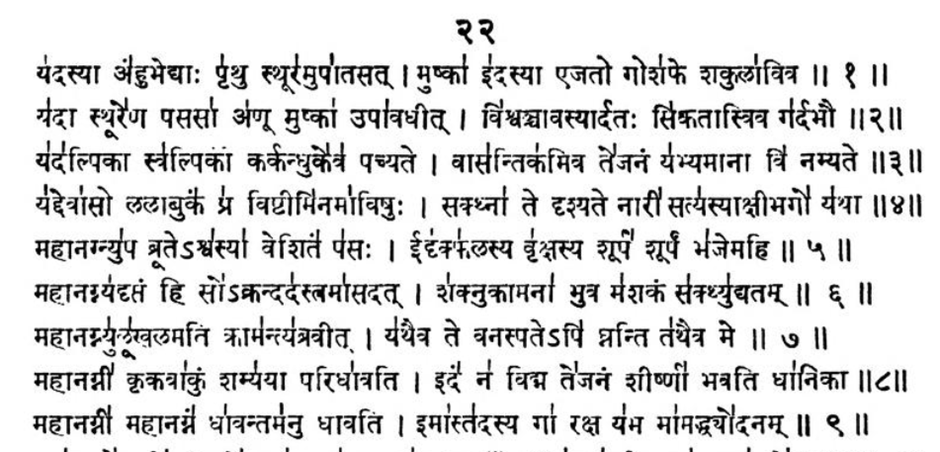
Khila Rig Veda chapter 5, section 22, verses 1 “When the broad and protuberant segments of this [ritual object], characterized by their density, were positioned in proximity, the two testicles of Indra vibrated within the scrotum like two restless fish in a shallow pool. [2] When he struck the minute, granular testicles with the stout penis, the entire assembly was shaken, much like donkeys agitated amidst shifting sands. [3] Just as a small lizard is boiled alongside jujube fruits, the vernal energy—vibrant and potent—is stretched out; the three-fold [ritual] is thus inclined. [4] When the deities sought the wild cucumber, they pierced it in the midst of the thicket; the thighs of the woman are subsequently observed, as if her gaze were fractured. [5] The Great Naked One (Mahanagni) articulates: “The horse’s penis is well-inserted.” We obtain the winnowing basket of the Bilva tree, or the vessel of the fruit-bearing tree. [6] The Great Naked One ascended; she, emitting a cry, settled upon the dark surface. Desiring to perform the act, he agitated the small fly and the gnat between the thighs. [7] The Great Naked One traversed the boundary with great celerity; even as they strike the forest tree, so too do they strike me. [8] The Great Naked One, resembling a barking dog, runs around the sacrificial stake. We do not comprehend this vibrant power; the grain becomes parched and fragile. [9] The Great Naked One pursues the great food, following the breath; O Indra, protect the kine of this devotee, even as you safeguard the sacrificial porridge.” (Source)
You can also translate from Latin to English which is available at Sacred-texts.com. For a comprehensive and accurate understanding, I recommend you consult both the original Sanskrit text and the established Latin translation by Ralph T.H. Griffith. By comparing these two, you can produce a translation that captures the precise meaning, nuance, and poetic integrity of the verses. The Sanskrit words mentioned here are Mushka (मुष्क) which means vagina/testicles, Pasas (पसस्) / Pasasa (पससा) which means semen/penis, Sthula (स्थूल) This literally means “thick,” “large,” or “bulky” but in the context of the action described (entering the female part) would be penis, the masculine noun implied by the verb/case ending is the object being described by this adjective.
This is also mentioned in Brihaddevata.
Brhaddevata i.55 “…the harlot (mahanagni: AC. XX.136.5) would be a lascivious verse…” Tr. Arthur Anthony Macdonell (Source)
Swami Parmeshwarananda writes.
“…the Vedic religion had developed the concept of the ‘Great naked woman’, the Mahanagni, as early as the period of the Atharvaveda (AV) some hymns from which are known to form part of the Khila hymns of the Rgveda. At one place in the AV, Mahanagni (another reading is Mahanaghni, but only at this place) is alluded to in the mantras in the context of marriage; and the gods Asvins are invoked to protect the bride by their powers by which they got sprinkled the genitals of Mahanagni (AV XIV.4, 36 yena mahanaghnya jaghanam…abhy’ asicyanta.
In the same context we have some ritual-detail; for, along with the genital of Mahanaghni, wine and the dice are also referred to have been sprinkled (Ibid. yena va sura yena aksa abhy’ asicyanta). This will indicate that the sprinkling of the genitals of the Mahanagani, together with the wine and the dice probably formed some sort of a ritual; and, very probably, it was done for prosperity; it is the ritual-belief of the propitation of this naked goddess that further entered the ritual of marriage, as a charm for the happy married life for the bride. However, the propitation of Mahanagni is not exclusively associated with marriage, it was a much wider practice, and was extended to the ritual of marriage…Mahanaangi is told that ‘he’ is roaring, being unsatisfied; she should be easy, and lift her thighs (RV-Khila V.22.6; AV XX.136.5 with variant reading). Mahanagni strides over the mortar and says, ‘As do they pound you, so do they mine’ (RV ib. 7=AV ib. 6). Mahanagni rinses the ‘cock’ with the wooden peg (TV ib.8=AV ib.10 mahannagni krakravakum samyaya pari-dhavati); and now, the singer says that he does not know, ‘the beast carries the woman by head!’ (AV ib.10 ayam na vidma, yo mrgah sirsna harati dhaninkam; RV 8 has it as, ‘This bamboo-stic (tajanam) we do not know; the woman dhanaka) becomes ‘endowed with the head’ (? sirsna bhavati dhanaka). Mahanagni says, ‘Well is the membrum virile entered; of the ‘tree having such fruit’ may we gainbasket after basket’ (AV ib.9=RV ib.5, with the difference that in RV at ab we have ‘the organ of the horse has entered’).
Then we have references to the male partner of Mahanagni, who is called Mahanagna. This is what is said: ‘Mahanagni runs after Mahanagna, who runs (or, ‘rinses’ Mahanagna who ‘rinses’ her, dhavantam anu dhavati ‘where the sense seems to be twofold, including the sexual); (and says), ‘These his cows, protected them; ‘enjoy’ me, ‘eat the moist one’ (AV ib. 11 = RV ib. 9)’, where the sense is clear, and the eating of the ‘moist one’, is to be understood with ‘enjoy me’ (yabha mam, adhhy, odanam), the whole concept being of the sexual act as a charm for the protection of the cows…” Encyclopaedic Dictionary of Vedic Terms, Volume 1, page 355-6, by Swami Parmeshwaranand, Published by Sarup & Sons, 2000 (Source)
Swami Parmeshwaranand then goes on to mention the verses from Khila version of the Atharva Veda,
“(i) As a single goddess she is the norm for all feminine charm, and is associated, in the mantras, to bless the bride;
(ii) It is probable that dice and wine are associated with her as ritual-objects; but the point is not quite certain;
(iii) In the sphere of general fertility, as is indicated by the basket (actually “winnowing basket”, surpam surpam bhajemahi, cf. the places noted above), she is associated with the sex-act; and there too, the symbol is that of the mortar (vanaspati) and the pestle that pounds in it. But is no clear indication of the mortar being the symbol of a feminine deity in the Vedic ritual, though, among other things, the mortar-pestle form a mithuna;
(iv) Mahanagni has her male counterpart in this aspect, Mahanagna; he is described by the tree-symbol (cf. “of the ‘tree having such fruit’”, idrkhalasya vrksasya), and is likened to the Bilva and the Udumbara trees; his copulation with Mahanagni is conducive to the protection of the cows, and also of the held, his copulative ‘dig’ (khodanam) indicating the dig of plough.
(v) Mahanagni is said to be associated with some beast, who is said to carry her by his heard; but there is a variant reading in the RV, according to which it appears that there is an indication of some sort of a head-dress (sirsna bhavati at RV; cf. variant at AV sirsnam harati dhandikam; the meaning is dark);
(vi) Along with the beast (AV Ib. 10 yo mrgah sirsna harati), and the partner Mahanagna, she is said to have copulative relationship with Isudeva and adeva; the words being indicative of erotic sense.” Encyclopaedic Dictionary of Vedic Terms, Volume 1, page 356-7, by Swami Parmeshwaranand, Published by Sarup & Sons, 2000 (Source)
The following are two translations of Atharva Veda 20.136.1–5 by two different Hindu scholars. Curiously, the translations vary. What exactly are they trying to hide? If the verse carries a single meaning, shouldn’t the translations be identical?
Following is the Hindi translation by Ram Swaroop Gaud.
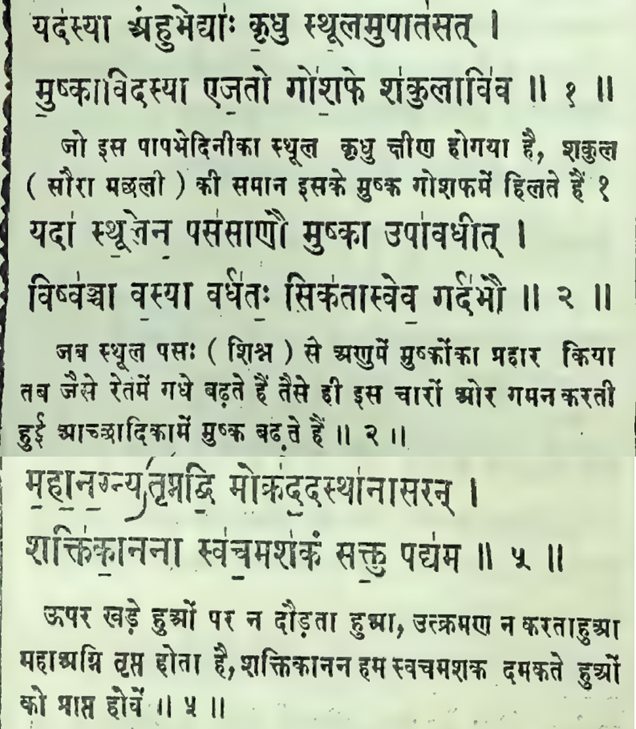
Following is the re-translation of Ram Swaroop’s translation from Hindi to English.
“The thick, short [part] of this sin-piercer has become diminished; like a Sakula (fish), do its mushka (testicles/genitals) shake in the cow’s hoof-print? When the gross organ (penis) strikes the released particles, then just as seeds grow in sand, in the same way, in these rays moving all around, the released particles increase. [5] Though not running or passing over those who stand above, the Maha-agnya (Great Fire) becomes satisfied. May we obtain the shining ones in the forest of power, [those who are] our own skin-pouches (or, those who shine like our own skin-pouches).”
Following is the English translation by Acharya Vaidyanath Shastri.
“When the king crushes the minor and maijor offence of this subject which may get exterminated through violence and offence the thieve man and woman tremble in fear as the two fishes in the dig of cow-hoofs. When the king in the eye of law and justice by his administration punishes these man and woman thieves all the pairs of men and women who are praisable and under good control of the king flourish as the two asses in the place covered with sands. [5] The great man should satisfy the two fires, the fire of Yajna and the fire of stomache, should not hesitate in passing through the difficult and troublesome places. We full of capabilities and capacity fine good food and flour of fried corn and barley.” Tr. Acharya Vaidyanath Shastri
Incest
Earlier, marriages even used to happen between brothers and sisters, says Swami Chandermoli
“500 years ago in India, there was no Gotra dispute, meaning not marrying within the lineage of one’s mother or father. Lord Rishabhdev’s wife was his real sister. Lord Mahavir was married to his maternal uncle’s daughter. Lord Krishna got his sister Subhadra married to his real paternal aunt’s son, Arjun. His lover Radha was the daughter of his uncle (Tau) Vrishbhanu. Maharaja Agrasen, who is the father of the Agarwal society, had 18 sons—Garg, Goyal, Bansal, Mittal, etc.; their relationships were among themselves. Just 500 years ago, Prithviraj Chauhan was married to Sanyogita, the daughter of Jaichand, his real maternal aunt’s son. There are thousands of such examples.
It seems to us that after Muslims came to India, just for 200 years we have started opposition to create a separate identity from Muslims. They tie lungis, they keep beards, we do not. When marriages happened within the family, there were no mother-in-law/daughter-in-law quarrels, no dowry, no foeticide. Foeticide does not happen in Pakistan because relationships happen within the family there.”
Source: Indiatimes
Creator in Hinduism and his Daughter
Skanda Purana, Book 2 Vaiṣṇava-khaṇḍa, Section 3, Badarikāśrama-māhātmya chapter 2, verses 3-4 “Formerly, in the beginning of Kṛtayuga, Brahmā attempted to have sexual intercourse with his own daughter who was richly endowed with beauty and youth. On seeing him like that I cut off his head with a sword into five parts in a great fury. Taking the skull (sticking to) the hand that attempted the murder of Brahmā, I immediately left the place in order to resort to various Tīrthas in heaven, earth and nether worlds and performed penances as well.” Tr. G.V. Tagare (source)
Brahma’s rape of his daughter is mentioned in detail in the article Brahma’s Incestuous Relationship with his Daughter Saraswati.
Viraj (Manu) raped his daughter Satarupa
As per Brihadaranyaka Upanishad all creatures were born after God raped his own daughter.
Birhadaranyaka Upanishad 1.4.3-4 “He was not at all happy. Therefore people (still) are not happy when alone. He desired a mate. He became as big as man and wife embracing each other. He parted this very body into two. From that came husband and wife. Therefore, said Yajnavalkya, this (body) is one-half of oneself, like one of the two halves of a split pea. Therefore this space is indeed filled by the wife. He was united with her. From that men were born. She thought, ‘How can he be united with me after producing me from himself? Well, let me hide myself.’ She became a cow, the other became a bull and was united with her; from that cows were born. The one became a mare, the other a stallion; the one became she-ass, the other became a he-ass and was united with her; from that one hoofed animals were born. The one became a ewe, the other became a ram and was united with her; from that goats and sheep were born. Thus did he project everything that exists in pairs, down to the ants.” Tr. Swami Madhavananda (Source)
Adi Shankaracharya comments on this verse.
‘’He, the Viraj called Manu, was united with her, his daughter called Satarupa, whom he conceived of as his wife. From that union men were born.’’ by Shankara on Brihadaranyaka Upanishad 1.4.3, Shankara Bhashya, p.101, Tr. Swami Madhavananda (Source)
Manu and his daughter Ida incest
Satapatha Brahmana 1:8:1:7-10 “Being desirous of offspring, he engaged in worshipping and austerities. During this time he also performed a pâka-sacrifice: he offered up in the waters clarified butter, sour milk, whey, and curds. Thence a woman was produced in a year: becoming quite solid she rose; clarified butter gathered in her footprint. Mitra and Varuna met her. They said to her, ‘Who art thou?’ ‘Manu’s daughter,’ she replied. ‘Say (thou art) ours,’ they said. ‘No,’ she said, ‘I am (the daughter) of him who begat me.’ They desired to have a share in her. She either agreed or did not agree, but passed by them. She came to Manu. Manu said to her, ‘Who art thou?’ ‘Thy daughter,’ she replied. ‘How, illustrious one, (art thou) my daughter?’ he asked. She replied, ‘Those offerings (of) clarified butter, sour milk, whey, and curds, which thou madest in the waters, with them thou hast begotten me. I am the blessing (benediction): make use of me at the sacrifice! If thou wilt make use of me at the sacrifice, thou wilt become rich in offspring and cattle. Whatever blessing thou shalt invoke through me, all that shall be granted to thee!’ He accordingly made use of her (as the benediction) in the middle of the sacrifice; for what is intermediate between the fore-offerings and the after-offerings, is the middle of the sacrifice. With her he went on worshipping and performing austerities, wishing for offspring. Through her he generated this race, which is this race of Manu; and whatever blessing he invoked through her, all that was granted to him. Now this (daughter of Manu) is essentially the same as the Idâ…” Tr. Julius Eggeling (Source)
Manu and his sister Satarupa
During the propagation of living beings, Manu sprang from the lower half of Brahma and Satarupa from the left-hand side of Brahma’s body. And these two siblings then begat children.
Devi Bhagavatam 3.13.15-16 “Next Svayambhava Manu sprang from the lower half of Brahma; and the daughter named Satarupa came out of the left hand side of the Brahma’s body. The two sons Priyavrata and Uttânapâda were born of Manu in the womb of S’atarûpâ and the three daughters, very beautiful and fair complexioned, were also born of him.” Tr. Swami Vijnananda (Source)
In another account, Prajapati is said to have created both sons and a daughter from himself. The sons, driven by desire for their sister, released their semen, which Brahma subsequently gathered and preserved in a bowl.
Kausitaki Brahmana 6.1.1-12 “Prajapati, being desirous of propagation, underwent penance; from him when heated were born five, Agni, Vayu, Adityaa, Candramas, and Usas as fifth. He said to them, ‘Do ye also practise fervour.’ They consecrated themselves; then when they had consecrated themselves and had acquired fervour, Usas, offspring of Prajapati, taking the form of an Apsaras, came out in front of them; to her their minds inclined; they poured out seed; they went to Prajapati, their father, and said, ‘We have poured out seed; let it not remain here’. Prajapati made a golden bowl, an arrow breadth in height and similar in breadth; in it he poured the seed; then arose he of a thousand eyes, of a thousand feet, with a thousand fitted (arrows).” Tr. A.B. Keith (Source)
Daksa (Brahma’s son) desire for his sister and brother
Shiva Purana narrates the story of Daksa who on being deluded by Shiva’s Maya desired to have sexual intercourse with his sister,
Shiva Purana, Section 5 Uma Saṃhita, chapter 4, verse 26 “Dakṣa, son of Brahmā deluded by Śiva’s Māyā, had a desire for sexual intercourse with his sister along with his other brothers.” Tr. J.L. Shastri
Krishna
Krishna and his First Cousins
Hindus generally regard marriages between close relatives, such as cousins, as incestuous. Yet, the scriptures themselves present contradictions to this norm. Krishna, for instance, is said to have married Mitravinda, the daughter of Rajadhidevi, who was the sister of his father Vasudeva. This makes Mitravinda Krishna’s first cousin, showing how even divine figures in Hindu tradition sometimes defied the very social codes later followers came to uphold.
Srimad Bhagavatam 10.58.31 “My dear King, Lord Kṛṣṇa forcibly took away Princess Mitravindā, the daughter of His aunt Rājādhidevī, before the eyes of the rival kings.” Tr. Swami Prabhupada (Source)
Krishna is said to have married another cousin named Bhadra.
Srimad Bhagavatam 10.58.56 “Bhadrā was a princess of the Kaikeya kingdom and the daughter of Lord Kṛṣṇa’s paternal aunt Śrutakīrti. The Lord married Bhadrā when her brothers, headed by Santardana, offered her to Him.” Tr. Swami Prabhupada (Source)
Srimad Bhagavatam 10.83.15-16 “Śrī Bhadrā said: My dear Draupadī, of his own free will my father invited his nephew Kṛṣṇa, to whom I had already dedicated my heart, and offered me to Him as His bride. My father presented me to the Lord with an akṣauhiṇi military guard and a retinue of my female companions. My ultimate perfection is this: to always be allowed to touch Lord Kṛṣṇa’s lotus feet as I wander from life to life, bound by my karma.” Tr. Swami Prabhupada (Source)
I find it rather ironic that many Hindus ridicule Muslims for marrying their first cousins, when consanguineous marriages are also quite prevalent among Hindus themselves. According to the National Family Health Survey (NFHS-5), 10.1% of Hindu women are married to a blood relative, compared to 16% among Muslim women. Despite the measurable prevalence within their own community, Hindus sometimes focus narrowly on the practice among Muslims, often employing exaggerated accusations of “marrying sisters”. Furthermore, this custom finds validation in Hindu tradition, for instance, Krishna is depicted as having married his first cousin.. In regions such as Karnataka, Telangana, and parts of Maharashtra, avunculate marriages (unions with one’s niece) is prevalent. Moreover, Dasharat Jataka, a Buddhist text pertaining to the Rama narrative, even portrays Rama and Sita as siblings.
Krishna and his maternal aunt Radha
Krishna is also said to have had an affair with his maternal aunt Radha, who was married to Rayana, the brother of Yashoda, Krishna’s foster mother.
Brahma Vaivarta Purana, Prakriti Khanda, Chapter 49, Verses 36-43 “In the Varaha-kalpa, Radhika was born in the village of Gokula in the family of a Vaisya cowherd. She was born without any human contact…After the expiry of twelve years, finding her becoming youthful, she was married to a trader named Rayana; at the time of her marriage only a shadow of Radha was married to the trader while the real Radha herself disappeared. After the expiry of fourteen years Krsna, the lord of the universe appeared there as an infant…This Rayana was the real brother of Yasodha the mother of Krsna who happened to be an amsa of Krsna in Gokula and was his maternal uncle in the sacred forest of Vrndavana. Brahma the creator of the universe had performed the marriage of Radha with Krsna. Radha whose lotus-like feet were beyond the sight of cowherds even in dream, the same Radha enjoyed the lap of lord Krsna and her shadow was very much present in the house of Rayana.” Tr. Shanti Lal Nagar (Source)
Krishna and his mother Yashoda
Krishna through his “mystical powers” appeared in the dream of Gopis and his mother, after having sex with Gopis in their dreams, Krishna sucked the breast of his mother Yashoda. Though it was a dream but Krishna did this being in full consciousness after having sex with Gopis.
Brahma Vaivarta Purana, Krishna Janma Khanda, Chapter 98, Verses 41-44 “In spite of that I shall honour your words, I shall go to Radhika, the cowherdesses and my mother Yasoda in dream. On hearing this the glorious Uddhava went back to his abode. Then lord Krsna reached Gokula which was suffering from separation. In the dream he assured Radhika and bestowed the divine knowledge on her and satisfied the cowherdesses with various types of sports. He sucked the breast of Yasoda who was enjoying the deep sleep and asurring the cowherds and the cowherd boys variouslly, he returned to Mathura.” Tr. Shanti Lal Nagar (Source)
Sadhguru, a prominent Hindu scholar, has stated that Krishna and his foster mother Yashoda were like lovers.
“Yashoda was the foster mother of Krishna. She loved him. But, this love was not merely a motherly love. It was till Krishna was an infant. Krishna grew too fast. Then, that love changed into that of a lover. She started doing Rasa with Krishna…” Source
Dharm Shastra permits cousin marriages for South Indian Hindus
Baudhyana permits cousin marriages for south Indian Hindus.
Baudhayana Dharma Shastra, Prasna I, Adhyaya 1, Kandika 2, verses 3-5 “They are, to eat in the company of an uninitiated person, to eat in the company of one’s wife, to eat stale food, to marry the daughter of a maternal uncle or of a paternal aunt…He who follows (these practices) in any other country than where they prevail, commits sin.” Tr. Georg Buhler (Source)
Krishna’s Sons and Grandsons’ Incest
Krishna’s Son Pradumyna’s incest with his adoptive mother Mayavati
Krishna’s son by Rukmini was Pradumnya. When he was seven days old he was carried away by an Asura prince named Samvara and was entrusted to the care of his childless wife Mayavati as per Harivamsa Purana, Visnu Parva, 104, 6-7. When Pradumnya grew up into manhood Mayavati one day offered her love to him. He was at first shocked at this unseemly behaviour having been under the impression that she was his mother. Knowing from her the fact of this birth in the Yadava family he killed Samvara and married her (Vishnu Purana 5.27 and Srimad Bhagavatam 10.55).
Pradumnya and his cousin
Another wife of Pradumnya was Rukmavati, who was the daughter of his maternal uncle Rukmi.
Srimad Bhagavatam 10.61.18 “Dīptimān, Tāmratapta and others were the sons of Lord Kṛṣṇa and Rohiṇī. Lord Kṛṣṇa’s son Pradyumna fathered the greatly powerful Aniruddha in the womb of Rukmavatī, the daughter of Rukmī. O King, this took place while they were living in the city of Bhojakaṭa.” Tr. Swami Prabhupada (Source)
Krishna’s Grandson Aniruddha and his Niece
Pradumnya’s son Aniruddha similarly married his maternal uncle’s daughter, Rochna, who was the grand-daughter of Rukmi.
Srimad Bhagavatam 10.61.25 “Rukmī gave his granddaughter Rocanā to his daughter’s son, Aniruddha, despite Rukmī’s relentless feud with Lord Hari. Although Rukmī considered this marriage irreligious, he wanted to please his sister, bound as he was by the ropes of affection.” Tr. Swami Prabhupada (Source)
Krishna’s wives and their step-son Samba
Samba, the son of Krishna and his wife Jambavati, became the object of desire for Krishna’s sixteen thousand wives, who were aroused upon seeing him. Enraged by this, Krishna cursed his own son.
Varaha Purana 177.2-31 “When Krsna was living there with his wives and sons, once Narada stepped in…But Narada took Krsna aside and spoke to him in private. ‘I have to tell you something in secret. Please liten. Your son Samba is young, eloquent and handsome is longed by all the women here. The Supreme God gave you these sixteen hundred divine women for your pleasure. Their minds get agitated (with love) when they see Samba, and this (scandal) has spread even in Brahmaloka…By calling Samba and all this multitute of women and seating them here, I shall show you whether what I say is true or false…Then Samba entered with folded hands and waited to know the command (of Krsna). Seeing the exceptionally handsome Samba, all those noble women felt agitated in mind even when Krsna was watching them. Then Krsna asked these beloved women of his to get up and go to their homes and they did so… Looking at Narada, Krsna bent down his face in shame. He then told Narada in detail about the nature of women and their conduct leading to sin. ‘They have no consideration of time, of secrecy of what they do. Still they pass to be virtous. Women irrespective of their age, whether they be girls, teenagers, middle-aged or advanced in age, get their passion excited at the sight of a handsome man. O great sage, this is natural to them… A chariot does not move, ‘ (he said), ‘with a single wheel alone. It is only with the response of men do women get excited with passion. They get gratified by the looks of men. Seeing (your other son) Pradyumna, they become highly shy. But by seeing Samba, they become stricken with passion and the sandal paste and such other things (on his body) act as additional excitants. So Samba must be held responsible for ruining your women and you cannot obliterate the scandal that has reached even Satyaloka…Krsna then cursed Samba to become ugly and immediately he became a leper. Foul smelling blood began to ooze from his body which became full of wounds.” Tr. Venkitasubramonia Iyer, J.L. Shastri (Source)
Skanda Purana VII.I.101.1-38 “At this very juncture (came) venerable sage Narada…In the court of his wandering at will, he always used to come to Dvaravati to pay a visit to Vasudeva. As he came on quickly all the Yadava youths beginning with Pradyumna remained with their heads (politely) bent down…but Samba due to the inevitability of the curse, slighted the noble souled Narada as usual. Being very proud of his youth and handsome features he was forever indulgent in sexual dalliance and liquor. On seeing him impolite and rude, Narada thought thus: Today I shall try to curb this impolite one…After thinking thus, he spoke to Vasudeva: O most excellent one among Devas, here there are sixteen thousand women. O my Lord, their emotional fondness for Samba is much…On hearing these words from Narada, Kesava began to think. What has thus been mentioned by Narada may have some truth in it…Narada went away as he came. A few days thereafter, he returned to Dvaraka. On that day the Lord was engaged in drinking liquor after enjoying aquatic sports along with all the members of his Antahpura (inner apartment)…Staying there the Lord drank the liquor of great auspicious flavour. In the meantime, fully aware that the women were inebriated due to liquor, Narada spoke to Samba: ‘O princely youth, do come and stand here. The Lord calls you. It is not proper on my part to stay on there.’ Urged by Narada…Samba entered quickly and bowed down to his father. He took the seat pointed out by Visnu with natural feeling. In the meantime those women there who were deficient in self control became highly agitated as soon as they saw Samba. As they were staying within the Antahpura so long, they had not seen him before. The liquor had its own effect in making them forget everything. Further they were naturally devoid of self control. Hence their loins became moistened. On seeing an excellent man, the excellent organ of generation of women becomes moistened and dump even if they are observing celibacy or are Yoginis…After sending Samba in, Narada also came hurriedly closely on the heels of Samba. On seeing the sage coming with pleasant manners, all those women suddenly got up; they were tipsy. Even as Vasudeva was watching, when they got up suddenly their valuable garments got torn and fell down into the pots (of liquor). The clothes clinging to their loins (underwear) also fell separately. On seeing it Hari became angry, he cursed those women: O women, since your minds strayed elsewhere unmindful of me, you will not get into the regions occupied by your husband at the close of your life. Slipping down from the world of your husband as well as from the path of heaven, you will have no refuge and will fall into the clutches of robbers. As a result of this defect and curse, those women, at the time of Krsna’s heavenward departure, were abducted by robbers belonging to Pancanada even as Arjuna was looking on.” Tr. G.V. Tagare (Source)
There is another version of this story.
Matsya Purana 70.2-7 “Siva said:- There will be 16,000 wives of Krisna in the Yuga mentioned before. When once, in the spring time, those ladies, having decorated themselves with ornaments, would be drinking together on the banks of a pond studded with full budded lotus flowers, dancing with the wind and resounding with the melodious notes of the cuckoo and musical tunes of the big black bee, they will see Lord Samba, beautiful like Cupid, having eyes handsome like those of a gazelle, and wearing the garlands of malati, passing by. They will cast on him amorous glances, their hearts being fired with lustful feelings and they being targets of the arrows of Cupid. Lord Krishna will come to know all that with his mental vision, and will curse them as follows: ‘Because you cherished the desire of amorous pastime during my absence, all of you will be taken away by bandits.” Tr. Taluqdar of Oudh, edited by B.D. Basu (Source)
Rishi Agastya and his daughter Lopamudra
According to a story in the Mahabharata, after the Asura Ilwala killed the ancestors (pitrs) of Sage Agastya, they requested him to beget a son who would deliver them from the pit of hell. In response, Sage Agastya first created a girl with the intention of marrying her, which logically makes her his own daughter. Later, he gave this girl to a childless king who had been performing penance for progeny, and the king adopted her as his daughter, naming her Lopamudra. When she reached maturity, Sage Agastya married her and fathered a child with her.
Mahabharata 3.96.18-25 “…Agastya replied, saying, ‘Ye Pitris, I will accomplish your desire. Let this anxiety of yours be dispelled.’ And the illustrious Rishi then began to think of perpetuating his race. But he saw not a wife worthy of him on whom he himself could take his birth in the form of a son. The Rishi accordingly, taking those parts that were regarded as highly beautiful, from creatures possessing them, created therewith an excellent woman. And the Muni, endued with great ascetic merit, thereupon gave that girl created for himself to the king of the Vidharbhas who was then undergoing ascetic penances for obtaining offspring. And that blessed girl of sweet face (thus disposed of) then took her birth (in Vidarbha’s royal line) and, beautiful as the effulgent lightning, her limbs began to grow day by day…” Tr. K.M. Ganguli (Source)
Mahabharata 3.97.8-9 “…And at these words of his daughter, O monarch, the king gave away Lopamudra unto the illustrious Agastya with due rites. And obtaining her as wife…” Tr. K.M. Ganguli (Source)
Brahmin Mother-Son Incest
Brahma Purana narrates the story of a Brahmin who had sexual intercourse with his mother.
Brahma Purana Gautami Mahatmya 22.8-10 “Her son too wandered over many countries as a lecherous debauchee. As time passed he too came to Janasthana and lived there. The son of Dhrtavrata, the brahmin (Sanajjata) was desirous of a harlot. The lady Mahi too wanted men who would lavishly spend money on her. Due to the curious turn of fate the mother and the son had sexual union. She did not recognise her son nor did he recognize his mother.” Tr. Board of Scholars, Edited by J.L. Shastri (Source)
Yajnavalkya Impregnated his Sister
A sage named Yajnavalkya accidentally impregnated his own sister.
Skanda Purana V.iii.42.8-12 “She attended to his needs and stayed there performing penance. On a certain occassion, she had her monthly course during the day when she took her bath. She saw a rag kept concealed and so wore it as her undergarment. In the meantime, at night Yajnavalkya had an erotic dream in a place where there was none. As a result of the dream, there was an emission of semen in his loin cloth. It resembled a drop of blood…The poor Brahmana woke up and found the piece of cloth defiled. He thought it not worthy of being touched and so cast it off and washed himself clean in accordance with the injunctions in the Smrti texts. Bath at night has been prohibited. So the Brahmana went to sleep again. At midnight the woman took this cloth and covered her vaginal aperture.” Tr. G.V. Tagare (Source)
She later abandoned the child.
Skanda Purana V.iii.42.16-24 “O lady of auspicious Vratas, it is none of your faults nor mine. Of the foetus in your womb, fate alone is the cause. It has to be carefully preserved by you forever. It should not be destroyed. It should be awaited till the whole period is over.” The chaste lady was ashamed. Yet she said in distress, “So be it”. She nurturted the child in the womb till the normal deliver. As soon as the child was born, the Brahmana lady came to the root of a banyan tree. Abandoning the child there she spoke thus: “May all those living beings in all the worlds, mobile and immoble, protect this child abandoned by me.” Tr. G.V. Tagare (Source)
Vedas Promote Incest
Rig Veda 6.55.4 Pūṣan, who driveth goats for steeds, the strong and Mighty, who is called His Sister’s lover, will we laud. His Mother’s suitor I address. May he who loves his Sister hear…” Tr. Ralph Griffith (Source)
Yaska explained this verse as.
Nirukta 3.16 “The author calls dawn his sister, from companionship, or drawing the juices. Or else this human lover may have been meant; the enjoyment in that case will refer to the woman, derived from (the root) bhaj (to enjoy)” Tr. Lakshman Swarup
Yaska’s Nirukta offers one interpretation that treats the passage as referring to a human lover, while also proposing an alternative reading in which Pusan represents the sun and the sister symbolizes dawn. However, this apologetic maneuver does not eliminate the incestuous theme embedded in the Vedic imagery. The texts themselves nowhere prohibit such relations. My objection, therefore, is not limited to whether the passage is metaphorical or literal, but to the fact that the obscenity remains intact and is effectively endorsed, irrespective of the allegorical veneer applied to it.
Other Instances of Vedas promoting Brother-Sister incest.
Rig Veda 10.3.3 “Attendant on the Blessed Dame the Blessed hath come: the Lover followeth his Sister…” Tr. Ralph Griffith (Source)
The Vedas mention instances of brother–sister incest in several hymns, including Rig Veda 10.10 and Atharva Veda 18.1.8, which record a dialogue between siblings Yama and Yami. However, there appears to be no reference to Ishwar explicitly prohibiting such relations in the Vedas. In Rig Veda 10.10.5 and Atharva Veda 18.1.5, Yami declares that Tvashtar had made her and Yama husband and wife while still in their mothers’ wombs, though Yama rejects her advances, saying that such an act has never been done before.
The Vedas also promote incest between a father and daughter, as described in another hymn of the Rig Veda.
Rig Veda 10.61.5-7 “(Rudra), the benefactor of man, whose eager virile energy was developed, drew it back when disseminated (for the generation of offspring) again the irresistible (Rudra) concentrates (the energy) which was communicated to his maiden daughter. When the deed was done in mid-heaven in the proximity of the father working his will, and the daughter coming together, they let the seed fall slightly; it was poured upon the high place of sacrifice. When the father united with the daughter, then associating with the earth, he sprinkled it with the effusion then the thoughtful gods begot Brahma: they fabricated the lord of the hearth (of sacrifice); the defender of sacred rites.” Tr. H.H. Wilson (Source)
Following Hindi translation is by Pandit Ram Govind Trivedi
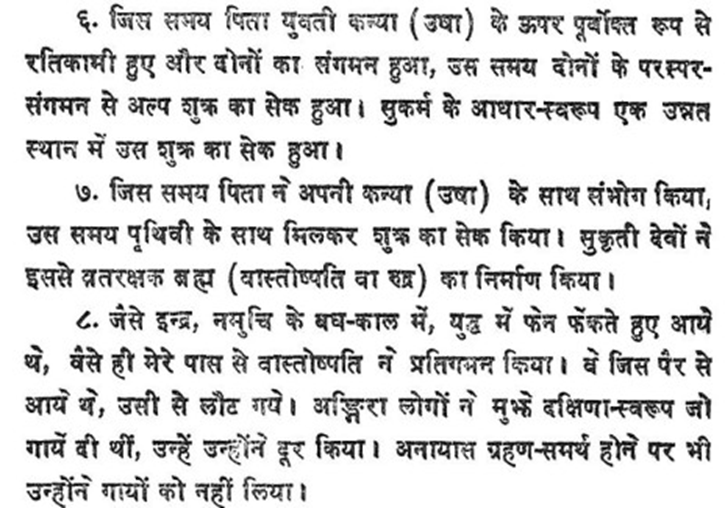
Rig Veda 1.164.33; Atharva Veda 9.10.12 “Dyaus is my Father, my begetter: kinship is here. This great earth is my kin and Mother. Between the wide-spread world-halves is the birth-place: the Father laid the Daughter’s germ within it.” Tr. Ralph Griffith (Source)
Following is the Hindi translation by Pandit Ram Govind Trivedi
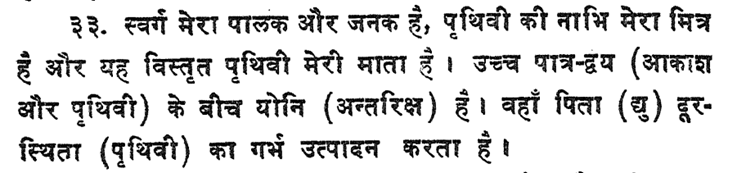
The line “the father laid the daughter’s germ within it” is interpreted metaphorically by Yaska in the Nirukta as referring to rain clouds and the earth. However, this still reflects an underlying theme of incest, regardless of whether the verse is taken literally or symbolically. We have already seen how such Vedic imagery evolved into the personified Brahma–Saraswati incest narratives in later texts. This demonstrates the consequences of having the highest authoritative scriptures of Hinduism contain and normalize incestuous motifs.
Prostitution
Devadasi
Although certain Hindu texts prohibit prostitution, other narratives depict gods and sages involving their wives or daughters in acts of prostitution. The term Devadasi, meaning “servant/slave of God,” refers to women who were dedicated to temple service. These women not only performed ritual dances but were also compelled to engage in prostitution, fulfilling both ceremonial and sexual functions under the authority of Brahmin priests. Although the Devadasi system has been officially banned by the government, temple-based or sacred prostitution remains prevalent in many parts of India. According to a 2015 report by a one-man commission headed by Justice Raghunath Rao, there are an estimated 80,000 Devadasis in the states of Telangana and Andhra Pradesh, as reported by The Times of India.
As per Theguardian.com’s 2011 report “The National Commission for Women estimate that there are 48,358 Devadasis currently in India.”
And as per TheHindu.com “Quoting the National Commission for Women, the authority says there are 2.5 lakh “Devadasi” girls who have been dedicated to Yellamma and Khandoba temples on Maharastra-Karnataka border. This includes 16,624 from Andhra Pradesh, 22,941 from Karnataka and 2,479 from Maharastra. The Devadasi system is prevalent in 10 districts of north Karnataka and 14 districts in Andhra Pradesh.”
Krishna’s Wives in Prostitution
The sanction for this abhorrent practice is rooted directly in Hindu scriptures. The Padma Purana contains a narrative in which Krishna curses his 16,100 wives to become prostitutes after his death, as punishment for their attraction to his stepson, Samba. Subsequently, the sage Dalbhya Caikitayana instructs them on the rules of temple prostitution. Significantly, this chapter is titled “The Vows of Prostitutes”, a heading that directly summarizes its content and implicitly legitimizes the practice within a Hindu religious context.
Padma Purana 1.23.74b-87a “The Lord said: O Brahman, born from the lotus, in the same city there will be sixteen thousand wives of Vasudeva. Krsna, the universal soul, having eyes like those of a deer, the dignified scion of Yadu family, who had put the garland of Malati flowers on his head, and being adorned with his praiseworthy wives, will enjoy with them in a garden rich with flowers, and situated on the bank of a lake, in the spring season abounding in cuckoos and swarms of bees. Samba, Jambavatl’s son, adorned with all (kinds of ornaments), going along with the path nearby, really of the form of Cupid, will be longingly seen by the ladies and passion will be aroused in the hearts of them who will be tormented by the arrows of Cupid. He, the lord of the world, the omniscient master, having perceived it with his eye of contemplation, will say to them: “The evil being will kidnap you, since you have thus entertained the passion of love (for Samba) in my presence.” Then the revered lord, the cause of beings, the holder of the bow made of horn, being propitiated (by the ladies) tormented with the curse, will say this: “(You will observe) the vow, beneficial in the future, which sage Dalbhya, emancipator of the fishermen living in the north and of an unlimited (generosity of) mind will tell you.” Saying so and leaving them, the lord vanished. Then after a (long) time when the burden (on the earth as a result of the great Bharatawar) will be lightened and when the fight with clubs (among the Yadavas) will be over, when Kesava will have come back to the heaven, when the entire Yadu-family will be no more, when even Arjuna will be defeated by the thieves, when Krsna’s wives will be kidnapped and will be enjoyed by the fishermen for a hundred million years and when they will be (thus) tormented, a devout soul, Dalbhya by name, with great penance (to his credit) will come there.” Tr. N.A. Deshpande (source)
Padma Purana 1.23.91-121 “O revered sir, all of us have been perforce enjoyed by the evil beings; we have slipped from (i.e. erred in) our duty. You are our refuge. O brahmana, you have been formerly instructed by the intelligent Kesava. Why have we become prostitutes after having come in contact with the lord? O you, whose wealth is penance, explain to us the duties of the prostitutes.” I shall tell you what Dalbhya Caikitayana said to them. Dalbhya said: Formerly Narada approached you, who were proud, while (you were) sporting in the water of the Manasa lake. All of you were daughters of Agni and were the nymphs in olden days. Not saluting Narada through haughtiness you asked the sage conversant with deep and abstract meditation: “Advise us as to how Narayana will be our husband.” From him, this boon and this curse came forth (i.e. Narada gave this boon to and pronounced this curse on the ladies) in ancient days: “By giving a couple of beds with articles of gold (to a brahmana) on the twelfth day of the bright fortnight of Caitra and Vaisakha, Narayana will certainly be your husband (i.e. you will obtain Narayana as your husband); (and) since, you asked me (a question) without saluting me, due to your selfish addiction to your beauty and good fortune, you will be kidnapped by thieves and will become prostitutes.” Thus, due to the curse of Narada and also that of Kesava, all of you, deluded by passion, have become prostitutes. O you excellent ladies, listen, even now, to what I shall say. The lord of lords, the best speaker, formerly said to the hundreds and thousands of thousands of the wives of the demons, the Asuras (the evil spirits—enemies of gods), the sons of Diti and the goblins, when these (ladies) were married and enjoyed by force (by the gods), after hundreds of the Asuras and demons were killed by the gods in the war between gods and Asuras (that took place) in ancient days: “O you devout and beautiful ladies, now live as prostitutes in king’s residences and in temples of gods; you will obtain your livelihood from the king and the master; and all of you will have good fortune as per your capacity. He, who enters your house with the fee should be served by you with attitude of love void of deceit… At that time, he, having the five arrows as his soul (i.e. Cupid), will go (i.e. remain) near Hari. She should worship the lotus-eyed (god i.e. Visnu), followed by eulogies of Cupid. She should worship the feet (of the image of the deity saying:) ‘My salutation to Kama’; (she should worship) the shanks (saying:) ‘My salutation to Vaimohakarin’; (she should worship) the generative organ (of the image of the deity saying:) ‘My salutation to Kandarpanidhi…Having thus worshipped Govinda, the lord of the form of Ananga, the lady having made an offering with sandal, flowers and incense, and then having invited a Brahmana knowing customary observances, who has mastered the Vedas and who is without any deformity, and then having honoured him with adoration of sandal, flowers etc. she should give the brahmana rice of the measure of a prastha along with a pot of ghee, (saying:) ‘May Madhava be pleased’. She should bear in mind that the best Brahmana, who has eaten well according to his sweet will, is Kamadeva meant for Rati. The lady should do whatever the best Brahmana desires.” Tr. N.A. Deshpande (Source)
Padma Purana 1.23.130b-142 “Then having circumambulated and allowed the best Brahmana to go, she should take all (the articles) like the bed, the seat, to the Brahmana’s house. Since then whosoever comes to her house for sexual enjoyment should be similarly honoured on a Sunday and should always be adored. Thus till the thirteenth month arrives, she should gratify a Brahmana and then send him to his house; with his permission (she may entertain) a handsome (person) till he arrives (to her residence). When she has a difficulty as a result of impurity due to child-birth or abortion or from the king or a difficulty due to divine or human (forces) or due to an eclipse, then she should offer herself according to her capacity, for fifty-eight times. This (vow) I have especially narrated to you, since this is the duty that should be always performed by the prostitutes in this world…” Tr. N.A. Deshpande (Source)
Sage Dalbhya instructs them to engage in prostitution, much like how Indra had commanded the wives of slain demons in Matsya Purana 71.26–59, which I have already discussed in the “Sex Slaves” category. For further context, readers may refer back to these verses. Similarly, Agni Purana 211.37–43 also describes the practice of gifting female slaves to Brahmins, a topic likewise covered under the same category.
Offering Women to Brahmins (Priests and Sages) & Dedicating Girls to Temples
Padma Purana V.113.40-46b “Vasistha said:- O king, you have not asked enough. That is said to be holy which enables one to be more sportive, O king. He should make Siva’s temple white with whitewash on all sides. He should have women who are endowed with beauty and graceful movements, adorned with all ornaments, skilled in (singing) many good songs, and proficient in various kinds of dancing…All should be beautiful and should have graceful movements. All should be of firm breasts. They should be skilled in the ways of sexual love and should be trustworthy…O king, he who has caused women like this to dance (even) on one day, gets into a (divine) aeroplane in a year.” Tr. N.A. Deshpande (source)
Padma Purana I.52.97-100 “By offering a dear, young, beautiful woman (i.e. a maiden) along with ornaments and bed, to (one of) the sages, a man would obtain unending fruit. The fruit of a young virgin and a girl eight years old is the same. One should be given to a suitor, the other one to a brahmana. A wise man, without troubling himself, should offer a purchased daughter to god. Till the end of the Kalpa he would get (i.e. live in) heaven, and would be a king or a very rich man on the earth; and in every birth he would get a very beautiful, fine wife.” Tr. N.A. Deshpande (source)
Valmiki Ramayana 2.32.15 “Oh, Lakshmana! Which brahman is studying Taittiriya (a school of yajurveda), a preceptor, a man of conformity; a knower of Vedas, serving Kausalya with his devotion and blessing, to him see that he is duly gifted conveyance, servant maids and silken clothing till he gets satisfied.” (source)
Brahma Purana 39.19-33 “There were many temples of gods embellished by outer walls and gardens. The ways of worship therein were wonderful and they enhanced the beauty of the holy centre. The women were slender-waisted and joyous. Their necks were adorned by necklaces. They had large eyes like the petals of the lotus. Their breasts were plump and lifted up. These ladies were dark-complexioned with faces shining like the full moon. Their forelocks were steady. Their cheeks were fine. Their girdles and anklets sounded sweet. They had good tresses of hair; their buttocks were beautiful and their eyes were large extending as far as the ears. They were richly endowed with all characteristic signs and bedecked in all ornaments. They wore white and lustrous garments. Some were golden-coloured. Their bodies bent down due to the weight of their breasts. They resembled the celestial ladies and they sported about in their respective houses. They remained gay and jolly by day and night. O excellent sages, the women were experts in dancing and singing. They were proud of their feminine virtues.” Tr. Board of Scholars, edited by J.L. Shastri (source)
Rishi Galava engaged his daughter in prostitution
The Mahabharata recounts the story of the Rishi Galava, who involved his daughter in prostitution to acquire horses. He got her married to three kings and a Rishi in exchange for horses. As the narrative is extensive and appears across four different sections of Mahabharata Udyog Parva, it is not feasible to detail every event here. Therefore, I will present a summarized version of the story, compiled by Ibn Muhammad.
Mahabharata Udyog Parva section 115 “She is my daughter. She is extremely beautiful and virtuous. She is desired by every male in three worlds. She can charm any Sur, Asur, Aryan or non-Aryan. I offer my daughter to you. You can sell her to any king and manage to have your gurudakhshina.” (Source)
Mahabharata Udyog Parva, Section 116 “So, Rishi Galav, without any qualms of conscience, accepts the king’s daughter and mortgages her to Ayodhya’s king Haryashaw and in return gets 200 horses. He takes 200 horses, leaving Madhavi to bear a son to the king.” (Source)
Mahabharata Udyog Parva, sections 117 and 118 “The Rishi Galav then searched another buyer for Madhavi and this time it is king Divodas who gives 200 horses in the bargain. (Udyog Parv, section117). Then he takes her to king Ushinao and manages to strike a better bargain. He receives now 400 horses. (Udyog Parv, section 118). (Source 117 and 118)
Devas exchanging Saraswati for Soma Ras
According to the Brahma Purana, the Devas are said to have traded Saraswati to the Asuras in exchange for Soma Rasa.
Brahma Purana Gautami Mahatmya 35.6-13 “…If Devas are prepared let them come there for sacrifice. Gandharvas are always fond of women. Exchange me for Soma”. “So be it”, said Devas who firmly agreed to what was said by Sarasvati. Through the messengers they invited Devas, Yaksas, Gandharvas and Nagas severally to the sacred mountain. There-after, O sage, the name of that mountain became Devagiti. There came Devas, Gandharvas, Yaksas, Raksasas, Siddhas, sages and the eight species of inferior gods… [Indra said] Exchange the nectar-souled Soma of yours for Saraswati. [Brahma said] At the instance of Indra those Gandharvas, passionate over women, gave Soma to Devas and took Saraswati. Devas possessed Soma and Gandharvas possessed Saraswati.” Tr. Board of Scholars, Edited by J.L. Shastri (Source)
Satapatha Brahmana 3:2:4:3-7 “They said, ‘The Gandharvas are fond of women: let us send Vâk (speech) to them, and she will return to us together with Soma.’ They sent Vâk to them, and she returned to them together with Soma. The Gandharvas came after her and said, ‘Soma (shall be) yours, and Vâk ours 1!’ ‘So be it!’ said the gods; ‘but if she would rather come hither, do not ye carry her off by force: let us woo her!’ They accordingly wooed her.The Gandharvas recited the Vedas to her, saying, ‘See how we know it, see how we know it!” The gods then created the lute and sat playing and singing, saying, ‘Thus we will sing to thee, thus we will amuse thee!’ She turned to the gods; but, in truth, she turned to them vainly, since she turned away from those, engaged in praising and praying, to dance and song. Wherefore even to this day women are given to vain things: for it was on this wise that Vâk turned thereto, and other women do as she did. And hence it is to him who dances and sings that they most readily take a fancy. Both Soma and Vâk were thus with the gods.” Tr. Julius Eggeling (Source)
Aitareya Brahmana 1.27 (v.1) “1). Soma the king was among the Gandharvas; the gods and the seers meditated on him, How shall Soma the king come hither to us? Speech said, ‘The Gandharvas love women; with me as a woman do ye barter it.’ No, replied the gods, how could we be without you? She replied, ‘Still do ye buy; when ye will have need of me, then shall I return to you.’ ‘Be it so(they replied). With her as a great naked one they bought Soma the king.” Tr. Arthur Berriedaled Keith (Source)
Rishi Bhardaja Supplying Women to King Bharata Army
Valmiki Ramayana, Ayodhya Kanda 2, Sarga 91, verses 10- “Thereafter Bharata, having been commanded by that great sage to bring the army there, allowed the army’s arrival to the hermitage…Let some rivers flow with Maireya (a kind of wine made from date palms etc) some others flow with highly refined spirituous liquor and some others flow with cool water with a taste of sugarcane…Troops of Apsaras (divine nymphs) danced to the melodious rustling of the wind. The celestials and the celestial musicians sang. Vinas, stringed musical instruments transmitted their tunes…Seven or eight young women bathed every single man on the beautiful river-banks, after massaging their body with oil. Women with charming eyes came running and shampooed their limbs. Lovely women likewise wiped off the moisture on their body with towels and gave them beverages to drink, mutually sharing them among each other.” Tr. K.M.K. Murthy (Source)
Hindu Scriptures on Prostitution
Yajnavalkya Samhita 295 “If a public woman, after having received her hire, declines [to submit to a man’s embraces], she shall have to refund double the amount; on her not receiving any consideration, (she] shall have to pay a like sum; similar is the punishment for a man.” Tr. M.N. Dutt (Source)
Yajnavalkya Smriti 2.290-2 “A man [having intercourse] with an Avaruddha (protected female slave) and Bhujishya [another’s mistress] shall be required to pay a fine of fifty panas, even though intercourse with them be [in other respects] permissible, For forcible connexion with a Dasi, the fine is declared to be ten panas; when several [have a forcible connexion] with an unwilling Dasi, the fine for each is twenty-four panas, A prostitute who has received her wages, shall, if unwilling, be made to pay twice as much Similarly if the man [after payment of the wages] be unwilling, he shall forfeit [his advance].” Tr. Vishwanath Narayan Mandlik (Source)
The translator Vishwanath Narayan Mandlik writes in the introduction explaining the verses.
“A man [having intercourse] with an avaruddha (protected female slave) and Bhujishya (another’s mistress), shall be required to pay a fine of fifty panas, even though intercourse with them be [in other respects] permissible.’ Avaruddhah [means] female slaves forbidden by their master to have intercourse with other men. Narada ‘An unchaste [married] woman [who is] not [of the] Brahmana [class], or a professional prostitute, a female slave, who has left the family [protection], may be carnally known by a man of the same or a higher class; [but] not by a man of a lower class. But if such women be the kept mistresses [of some persons], the offence [of approaching the] would be that [of approaching] another man’s lawful wife.” (Source)
This passage from Kautilya’s Arthashastra effectively legalizes and regulates prostitution, treating it as a taxable and state supervised profession with defined rights, penalties, and obligations.
Kautilya Arthashastra book 2, chapter 27 “From the age of eight years, a prostitute shall hold musical performance before the king…When having received the requisite amount of fees, a prostitute dislikes to yield her person, she shall be fined twice the amount of the fees. When, in her own house, a prostitute deprives her paramour of his enjoyment, she shall be fined eight times the amount of the fees…Every prostitute (rupajiva) shall pay every month twice the amount of a day’s earning (bhogadvigunam) to the government.” Tr. R. Shamasastry (Source)
The Matsya Purana not only allows sex with a prostitute or concubine but also allows gang rape of a concubine or prostitute, with the fine considered as her payment.
Matsya Purana 227.142-6 “…a twice born indulging with a whore should be made to pay her wages…If a man after bringing a harlot does not indulge with her, the king should make him pay her twice as much and should levy a similar amount of fine for himself. Dharma will not thereby be upset. If a number of people forcibly indulge with a concubine, the king should make each one of them pay her double the amount of her wages.” Tr. Taluqdar of Oudh, edited by B.D. Basu (Source)
Vishnu Smriti states that a group must earn their livelihood by dancing and being public women (prostitutes).
Vishnu Smriti 16.12 “Vaidehakas must earn their livelihood by keeping [dancing girls and other public] women and profiting by what they acquire.” Tr. Manmatha Nath Dutt
Narada Smriti 7.9 “It is by permission (of the owner) only that a female slave, cattle, or an estate may be enjoyed (by a stranger). He who enjoys that which had not been given up to him (by the owner), must pay for the (illegitimate) enjoyment of what he had been enjoying.” (source)
According to the Vedas, everyone is born with a predetermined profession, including prostitution, based on their past deeds.
Yajur Veda 30.5 “For Brahman (Priesthood) he binds a Brahman to the stake… for Kama a harlot…” Tr. Ralph Griffith (Source)
Following is the Hindi translation by Ram Sharma Acharya

Swami Karpatri Maharaj’s Hindi translation
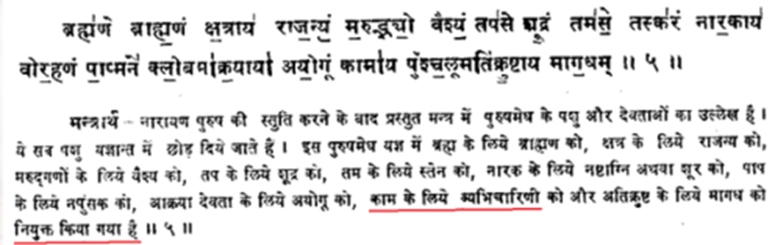
Yajur Veda 30.20 “For Pastime a harlot; for Laughter a jester; for Lust a woman with spotty skin…” Tr. Ralph Griffith (Source)
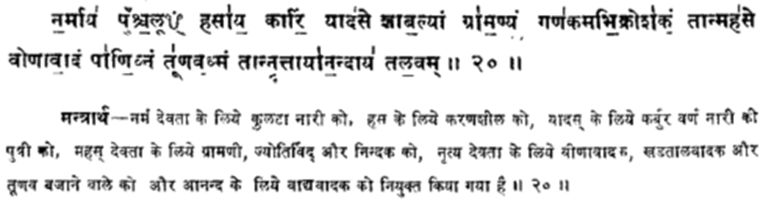


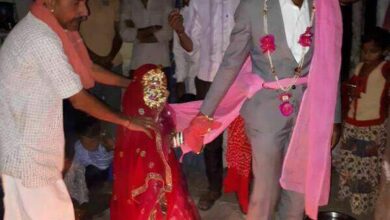
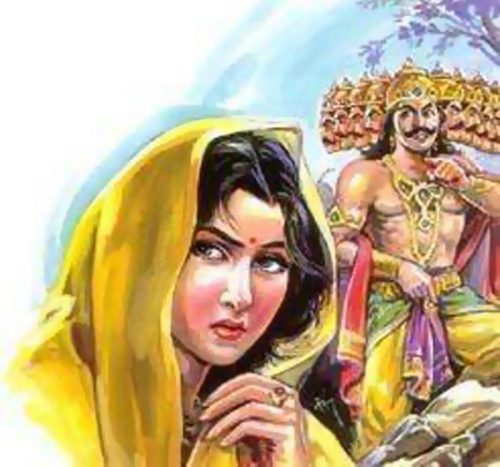
,_a_man_receives_fellatio_from_a_seated_male_as_part_of_an_orgiastic_scene.jpg)
![http://aryasamajjamnagar.org/rugveda_v5/pages/p464.gif ]](http://aryasamajjamnagar.org/rugveda_v5/pages/p464.gif)