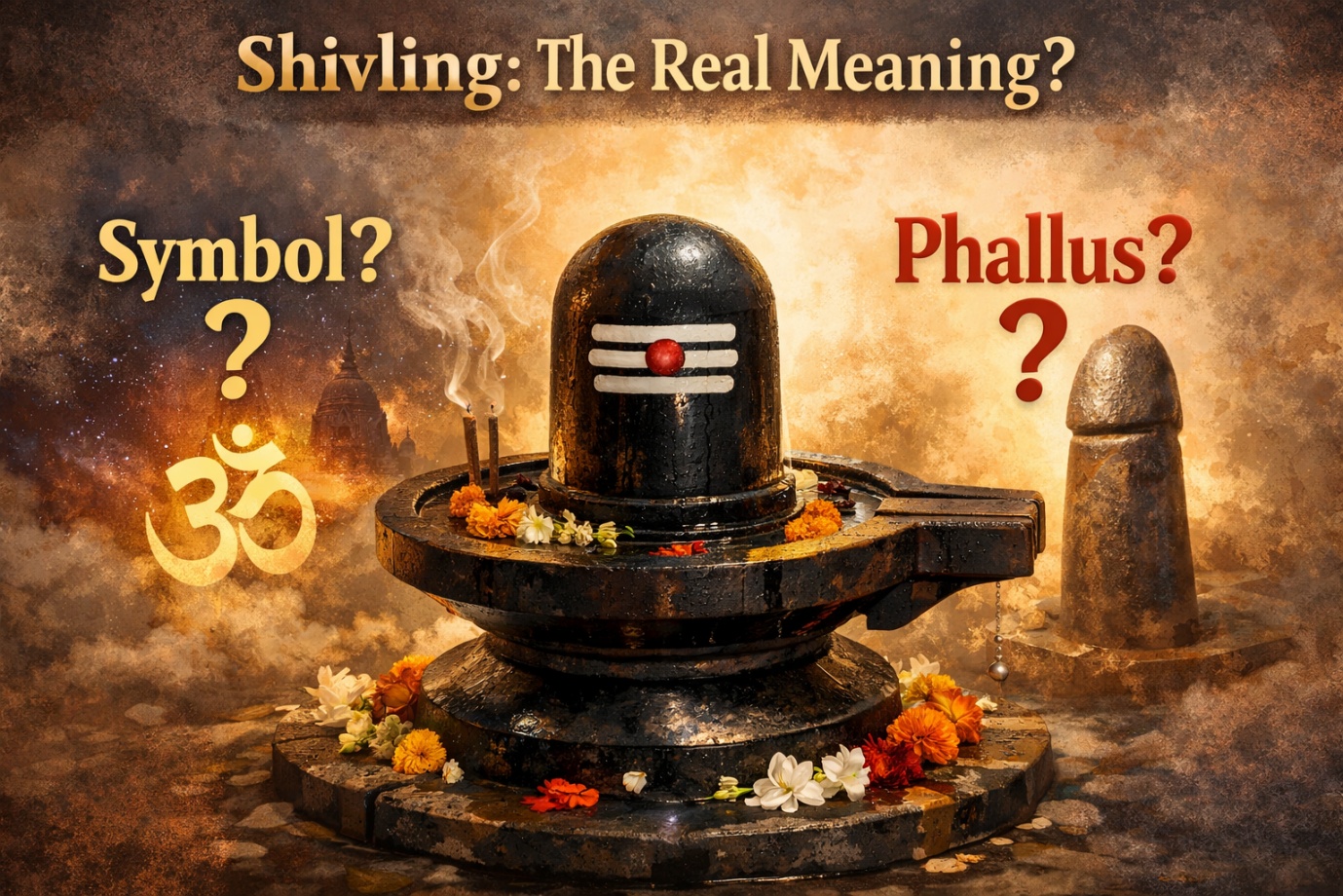
Written by Sulaiman Razvi
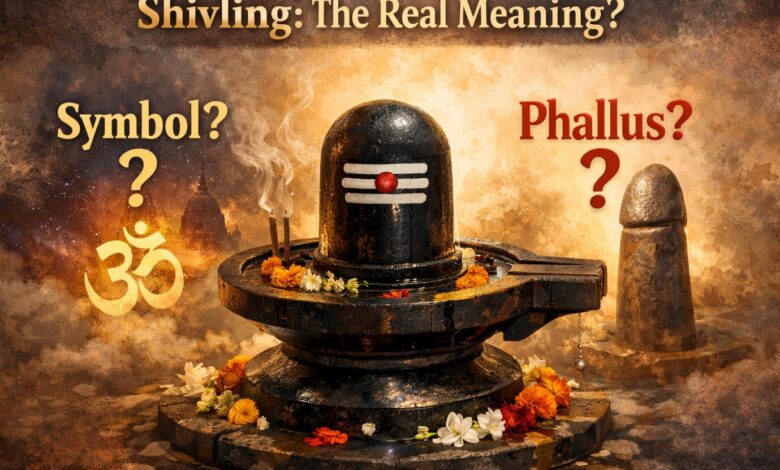
The meaning of the Shiva Linga has become a subject of considerable controversy in modern times. Hindus revere the Shiva Linga, and Shiva himself is regarded as the Destroyer within the Trimurti, as well as an ascetic deity. Early Hindu scholars did not place significant emphasis on defining the precise meaning of the Shiva Linga. It was only in more recent periods, particularly when Hinduism came under the scrutiny of foreign scholars, that attempts were made to reinterpret and redefine it.
Despite clear scriptural references that describe the Shiva Linga as Shiva’s sexual organ, many Hindus insist that it does not represent a male genital symbol. This reluctance appears to stem from discomfort with the explicit nature of such descriptions. To understand this issue properly, it is necessary to examine its historical and textual background. The Shiva Linga, originally a phallic emblem representing the male generative organ, is today often described by Hindu scholars as a purely symbolic or abstract form.
Traces of phallic worship can be found even in the Rig Veda, the oldest Hindu scripture. Rig Veda Mandala 7, Sukta 21, verse 5 refers to the term Shishnadeva, which literally translates to penis worshippers, from Shishna meaning penis and Deva meaning worshipper or deity. The verse suggests that early Vedic Aryans were hostile toward such worshippers. Although some scholars interpret Shishnadeva more loosely as lewd or unchaste people, this characterization itself may reflect disapproval rooted in their association with phallic worship.
When confronted with the claim that the Shiva Linga represents a penis, many Hindus respond by arguing that the Sanskrit word shishna, rather than linga, is commonly used to denote the male organ. Yet the same individuals often deny that the term Shishnadeva in the Rig Veda refers to penis worshippers, offering alternative explanations to avoid this conclusion. Such selective interpretation reveals an ongoing effort to reconcile devotional beliefs with uncomfortable scriptural evidence.
The Meaning of Ling

[Student’s Sanskrit English Dictionary 1893 edition, By V.S Apte, page 311]
ISKCON scholars define it as follows.
“lingam — phallic symbol which is used in the worship of Lord Śiva.” (Source)
Mahabharata states,
Mahabharata Anushasana Parva 13, section, 14, verses 230-1 “…all creatures bear the signs that mark Mahadeva and his spouse. Hence, all creatures must be regarded as belonging to Maheswara. All creatures of the feminine sex, have sprung from Ulna’s nature as their cause, and hence it is they bear the mark of femininity that distinguishes Uma; while all creatures that are masculine, having sprung from Siva, bear the masculine mark that distinguishes Siva…” Tr. K.M. Ganguly (Source)
The passage states that all masculine beings derive from Shiva and therefore bear the masculine mark that distinguishes him. This raises an obvious question, what is the masculine mark that distinguishes a male being? The text itself leaves little ambiguity, as the distinguishing masculine sign can only refer to the male sexual organ. By extension, this same mark is attributed to Shiva. Furthermore, the pedestal of the Shiva Linga is explicitly identified as the Yoni, a term that translates as vagina. Taken together, the explicit references to the masculine mark and the Yoni base, along with the literal meanings of the terms linga and yoni, leave little room for denying the sexual symbolism inherent in the Shiva Linga.
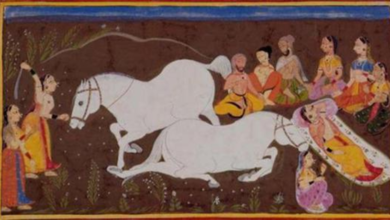
Rishis cutting off Bhikshatana (Shiva’s) Penis in the Darunavanam forest
Hindu scriptures present two principal narratives regarding the origin of the Shiva Linga. One explicitly depicts the Linga as a male generative organ, while the other describes it as a boundless cosmic pillar. Even the latter narrative, when examined closely, ultimately reinforces the phallic symbolism of the Shiva Linga. Notably, the interpretation of the Linga as a male organ is more strongly emphasised across Hindu texts, which is why multiple origin stories are devoted to this version.
When questioned about the meaning or origin of the Shivling, many Hindus limit their explanation to the narrative of the measureless pillar, while conveniently ignoring other textual traditions that explicitly describe it as a male organ, as though such accounts do not exist at all. This article seeks to examine those neglected narratives and bring to light aspects of the tradition that are often deliberately withheld from public discussion.
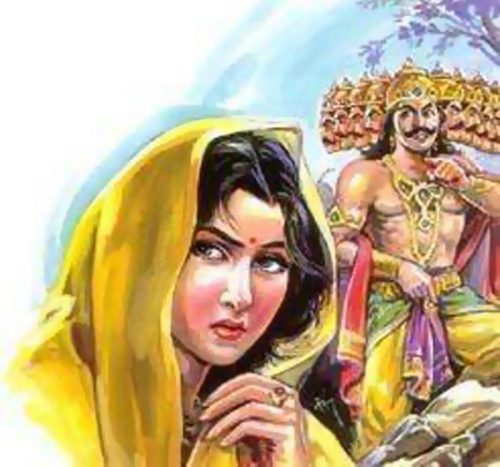
Among these accounts, the most frequently repeated narrative concerns Shiva’s appearance in the Daruvanam forest in his Bhikshatana form, depicted as the Supreme Beggar. In this form, Shiva is described as fully nude.
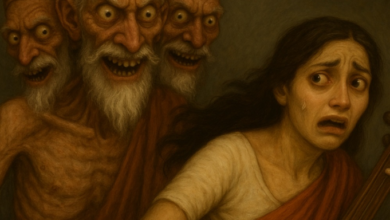
According to these accounts, sages resided in the Daruvanam forest with their families. Shiva entered the forest naked, carrying a begging bowl, and some texts state that he appeared before the wives and daughters of the sages with an erect sexual organ. The narrative describes the women as becoming enchanted by this display. From a critical perspective, such conduct would be regarded as deeply inappropriate, and in a modern context, it would clearly constitute sexual misconduct.
Enraged by Shiva’s actions, the sages attacked him and severed his sexual organ. In some versions, the organ falls as a result of a curse rather than physical violence. The detached organ is said to have grown uncontrollably, causing widespread destruction. Unable to contain the devastation, the sages approached Brahma for guidance, who instructed them to appease Shiva. Shiva agreed to withdraw the destructive force on the condition that a pedestal resembling Parvati’s vagina be fashioned to contain the Linga and that it be worshipped henceforth. The sages complied, and according to these texts, this event marks the origin of Shiva Linga worship.
The following sections examine Hindu scriptures in detail to trace the various versions of this origin narrative.
Shiva Purana, Kotirudra Samhita 4, chapter 12, verses 8-51 “Once the leading Brahmin devotees of Siva engrossed in the meditation of Siva went into the forest for bringing sacrificial twigs. In the meantime Siva himself assuming a very hideous form came there in order to test their devotion. He was very brilliant but stark naked. He had smeared ashes all over his body as the sole ornament. Standing there and holding his penis he began to show all sorts of vicious tricks. It was with a mind to do something pleasing to the forest-dwellers that Siva, favourite of the devotees, came to the forest at his will. The wives of the sages were extremely frightened at this sight. The other women excited and surprised approached the lord. Some embraced him. Others held his hands. The women were engrossed in struggling with one another…When the naked sage did not reply, the great sages told that terrible Puruṣa. “You are acting pervertedly. This violates the Vedic path. Hence let your penis fall on the ground.” When they said thus, the penis of that Avadhūta, who was Śiva of wonderful form, fell down instantly. That penis burnt everything in front; wherever it went it began to burn everything there. It went to Pātāla; it went to heaven; it went all over the earth; it never remained steady anywhere. “When the naked sage did…Brahmā said:— Let the gods propitiate goddess Pārvatī and pray. If she can assume the form of the vaginal passage that penis will become steady…The penis shall be drenched with that water, O great sages. When the sprinkling is made with Śatarudrīya mantras it will become stable. Pārvatī in the form of the Vaginal passage and an auspicious arrow shall form as the pedestal wherein the phallus shall be installed in accompaniment of the Vedic mantras…After propitiating Pārvatī and the bull-bannered lord and performing the rites mentioned before, the excellent penis became static… Śiva became delighted and so also Pārvatī, the mother of the universe. That phallus was held by her in that form then.” Tr. J.L. Shastri (Source)
Following is another translation of this passage by Shiva Sharan (Alain Daniélou),
Shiva Purana, Kothi Rudra Samhita 4.12.17-46 “Shocked by the appearance and behaviour of Shiva, the sages of the forest said to him, ‘You have acted perversely. That is contrary to the scriptures. Your sexual organ will fall to the ground’. When they had thus spoken, the sexual organ of this messenger of Heaven, who was none other than Shiva of the marvellous forms, at once fell to the ground. The phallus burned everything before it; wherever it went, all was consumed. It travelled through the under-world, in heaven and on the earth, never staying in one place. All the worlds and their inhabitants lived in anguish. The sages were struck with dismay. The gods, and the sages knew neither peace nor pleasure any more. [all the sages then went to God Brahma] and Brahma continued, ‘As long as this Phallus is not in a fixed position, no good can come to any of the three worlds. In order to calm its wrath, you must sprinkle this divine sexual organ with holy water, build a pedestal in the form of a vagina and shaft (symbol of the goddess), and install it with prayers, offerings, prostrations, hymns and chants accompanied by musical instruments. Then you shall invoke the god, saying, ‘You are present in everything that exists. The universe is but the form of yourself. O benevolent One! calm yourself and protect the world’. The sages therefore reverently approached Shiva who said to them, ‘The world shall not find peace until receptacle is found for my sexual organ. No other being except the Lady of the Mountain [ie., Parvati] may seize hold of my sexual organ. If she takes hold of it, it will immediately become calm.” Tr. Shiva Sharan (Alain Daniélou)
This account is further corroborated by several other Puranic texts, which are listed and discussed below.
Kurma Purana II.38.52 “The sages said: A certain highly brilliant person has entered the holy Daruvana along with his wife, who was very beautiful in all her limbs. But he was naked. The lordly person fascinated our entire women and daughters, with his charming personality. While his beloved defiled our sons. We heaped various imprecations and curses on him but they were defied and set at nought. He was beaten soundly by us. His Linga was struck down.” Tr. Ganesh Vasudeo Tagare (Source)
Kurma Purana Part II, Chapter 39, verses 1 to 3 states,
Kurma Purana II.39.1-3 “[The sages said:] O lord of all immortal beings, tell us, how we can see the Pinaka-bearing lord once again. You are the saviour of those who seek refuge. [Brahma said:] Make an excellent Linga of the Lord resembling the Linga which was seen by you all and struck down on to the ground, and observing celibacy, worship it with respect along with your wives and sons, through the varios Vedic observances.” Tr. G.V. Tagare (Source)
Brahmanda Purana, Part I, Anusanga Pada 2, chapter 27, verse 45 states,
Brahmanda Purana I.2.27.45 “He [Shiva] was scolded and beaten. His Linga (?penis) was taken out. It is to alleviate his anger that we have sought refuge in you.” Tr. G.V. Tagare (Source)
Furthermore, certain textual traditions present a synthesis of the two primary narratives regarding the origin of the Shivalinga. Specifically, passages from the Vamana and Skanda Purana recount the Daruvana episode through a fusion of the phallic and cosmic pillar motifs. In these accounts, the severed organ becomes endless in form. Vishnu assumes the shape of a boar and burrows into the earth in an attempt to locate its base, while Brahma takes the form of a swan, or according to some versions travels in his lotus vehicle, to discover its upper limit. When both fail to find either the beginning or the end, they return and acknowledge Shiva as the supreme deity, subsequently offering him worship.
These narratives also introduce an additional twist. In certain versions, Brahma attempts to deceive the others by claiming that he had reached the summit of the Linga and presents a Ketaki flower as supposed proof of his ascent.
Skanda Purana Māheśvara-khaṇḍa 1, Kedāra-khaṇḍa 1, chapter 6, verses 2-34 “Lord Śaṃbhu wandered about in the forest Dāruvana for the sake of begging alms. The sole lord of the worlds with quarters for his garments (i.e. naked), having the cluster of his matted hair loosened…At midday the sages, O brāhmaṇas, went to the sacred places (for bath) from their hermitages. At that very time, all the wives of those sages came there. On seeing Śaṃbhu they spoke to one another, “Who is this personage of uncommon appearance, who has come here in the form of a mendicant? We along with our friends shall give him alms.” Saying, “So be it”, they went home and joyously brought various kinds of food as alms…In this manner all young women gathered together at the place where Śaṅkara was (standing). The alms-bowl of Śaṃbhu was filled with cooked food of very good quality. Four types of foodstuffs with all the six tastes filled his bowl. When Śaṃbhu was desirous of returning to the Kailāsa mountain, all those wives of brāhmaṇas joyously followed him forsaking their domestic duties. With their minds attached to him, they walked on and on (after him)…When all those wives (of sages) had left thus, the excellent sages reached their hermitages and found them empty and vacant. They spoke to one another, “Where have all these women (our wives) gone? We do not know by what damned fellow they have been abducted.” Pondering and deliberating thus they searched here and there. Thereupon they saw that they had been following Śiva. On seeing Śiva, the sages angrily closed in upon him. Standing in front of Śiva, all of them said with impetuosity, “What has been done by you, O Śaṃbhu (who profess to be) detached and noble-souled? You are no doubt the kidnapper of the wives of others, i.e. of us, the sages.” Although rebuked thus, Śiva silently went on towards his mountain. Then that immutable Mahādeva was overtaken by the sages. (They then cursed him thus:) “Since you are the abductor of (our) wives, be instantaneously a eunuch.” Thus cursed by the sages, his penis fell down on the ground. As soon as it reached the ground, it became very large immediately and it increased in size (enormously). From beneath and above, the Liṅga covered the seven Pātālas in an instant. Then it pervaded the entire earth and enveloped the firmament. All the heavens were covered. Then it rose beyond the heavens…Viṣṇu and the Lotus-bora god Brahmā both of whom were (gods) of exalted fortune, heard this. Viṣṇu went to the nether worlds and Brahmā went to heaven.” Tr. G.V. Tagare (Source)
A similar account appears in the Vamana Purana, Chapter 6, verses 57 to 84. This passage states that Kama, the god of desire, intended to strike Shiva, prompting Shiva to go to the Daruvanam forest. There, Shiva is said to have seduced the wives of the sages, who consequently cursed him. As a result of this curse, Shiva’s sexual organ fell off and Shiva disappeared from the scene. The text describes widespread fear among the people, accompanied by the appearance of ominous and dreadful portents.
Vamana Purana 6.57- 84 “Going there too Cupid saw Sankara, and Hara finding him ready to strike, fled from that place. Then pursued by Cupid, Hara entered the frightful pine forest where Rsis were settled with their consorts…Seeing him enter, the wives of Bhargavas and Atreyas felt excited and completely lost their self control, excepting the unique Arundhati and the lady Anasuya…Wherever Sankara went women became agitated and with their passion excited, they followed him. Leaving their own hermitages vacant, the wives of the sages followed him, in the same way as the she-elephants follow the he-elephants. O sage, enraged at this sight the Rsis, Bhargavas and Angirasas said, ‘May his Linga drop down on the earth.’ Subsequently the Linga of the deity dropped down rending the earth and the trident-holding Sankara invisible. Thereafter cleaving the earth, the Linga fell down, entered the lower world instantly and rent the universe at the top. Then Hari viewing the measureless Linga and mounting the chief of birds entered the nether world, wonderstruck. O Brahman, making an all round survey from above on his lotus plane Brahman could not reach its end, and returned amazed. O great sage, the Visnu…visited the seven regions under the earth and later came out, but did not reach its end. Approaching the Linga of Hara both Visnu and Brahman began to propitiate the god with hands folded before him…The gods said ‘O Sankara, withdraw the Linga of yours which was hurled down on the earth. O Lord, for this do we propitiate you. Hara said, ‘O Exalted gods, if the gods worship my Linga, then I can take it back and in no other manner.” Tr. Anand Swarup Gupta (Source)
A comparable narrative is recorded in the Linga Purana, though notably, it omits the motif of Shiva’s castration. Instead, the text posits that Shiva entered the forest with the dual intent of testing and enticing the inhabitants. Through a series of provocative gestures and his captivating presence, Shiva successfully beguiled the wives of the sages, serving as both a trial of their virtue and a demonstration of his divine power.
Linga Purana, Section I, chapter 29, verses 5-36 “In order to propitiate the lord of Devas, the sages performed a terrible penance in the Daru forest. They were accompanied by their wives, sons and sacrificial fires…Rudra, wanted to test the sincerity of the dwellers of the Daru forest…Thus in order to test their faith, and sportively too, he assumed a deformed but attractive appearance. He had three eyes and two hands. He was nude, and dark in complexion. Even in this form he was extremely handsome. He was smiling and singing, with seductive play of his eyebrows, thereby creating feelings of love in the hearts of women. He the destroyer of cupid, the lord of extremely handsome features increased their sexual feelings On seeing a man of deformed features, black-red (in colour), even the chaste women followed him with great enthusiasm…One of them, on seeing him did not know that her upper and lower garments had stripped off. Others in their excitement could not distinguish between their kinsmen and the multi-branched trees though they were familiar…Due to the Maya of Rudra even the chaste ladies fell down in an awkward posture with their clothes loosened and their tresses dishevelled, in the very presence of their husbands…On seeing the crowd of women and Rudra in this situation the brahmins, leading sages began to say harsh words. Their powers of austerity were ineffective against Rudra…Thus deluded the sages of Daruvanam did not understand Rudra. They spoke harsh words to Rudra who thereupon disappeared. In the morning all those sages with perplexed minds and blurred thinking went from Daruvana to Brahma of noble soul…they informed him about what had happened in that holy Daru forest…He stood up with palm joined in reverence and bowed to Rudra. He then spoke hurriedly to the sages who had their abodes in Daru forest. Fie upon you all who had attained excellent treasure, O brahmins, but had unluckily wasted it. The man with a Linga who had been seen by you all without Lingas, the person of deformed features was the supreme lord himself.” Tr. Board of Scholars, edied by J.L. Shastri (Source)
In this context, the expression “without linga” refers to impotent men. Mahabharata 13.14.157 states that Shiva engaged in sexual relations with the wives and daughters of the rishis. This passage appears to allude to the Daruvanam forest episode, as it reflects the same narrative framework found in the Puranic accounts describing Shiva’s transgressive conduct among the sages and their families.
Mahabarata, Anusasana Parva 13, section 14, verse 157 “He sports with the daughters and wives of the Rishis. His hair is long and erect. He is perfectly nude for he has the horizon for his dress. He has terrible eyes.” Tr. Manmatha Nath Dutt (Source)
Nilkantha Chaturdhara the commentator of Mahabharata writes,
“It is known that Siva entered the Pine Forest naked in order to entice the wives of the sages.” Nilkantha Chaturdhara on Mahabharata XIII.17.42, Tr. Wendy Doniger
In Skanda Purana I.i.34.116–129, Parvati, the wife of Shiva, explicitly states that Shiva went to the Daruvanam forest in a nude state with the deliberate intention of seducing the wives of sages under the pretext of seeking alms. The text further narrates that Parvati herself stripped Shiva naked before the gods and their attendants after he lost a wager in a game of dice.
Skanda Purana, Part 1, Mahesvarakhanda book 1, Kedarkhanda section 1, chapter 34, verses 11-129 “After saying thus, Parvati, the goddess, beloved of Sankara, became furious. She held Sankara by the hand. The lady of slender limbs took away the serpent Vasuki from his neck. Similarly she removed many other ornaments also. The infuriated lady hurriedly took away the ornaments of Sambhu. His crescent moon and his excellent elephant hide removed. The serpents Kambala and Asvatara tha thad been worn by Mahesa as ornaments were removed by the great goddess laughingly with tricky words. Even his loincloth was taken away laughingly with the utterance of tricky words. At that time the Ganas and the friends (of Parvati) felt embarrassed and ashamed. (The friends and others) turned their faces away. Bhrngi of great oenance, Candi, Munda, Mahaloman, Mahodara and many other Ganas became miserable. On seeing them in that plight, Mahesa became ashamed. Sankara who became angry spoke these words to Parvati: ‘All these sages are laughing satirically. Similarly Brahma, Visnu and these Devas, Indra and others all of them laughing (at me)…On being told thus by Sambhu, the Yogin, Parvati, the chaste lady of charming face, laughed and spoke these words: ‘What have you to do with a loincloth? You are a sage of sanctified soul. (Some time back) you wandered through Daruvana with the cardinal points alone for your garment (i.e. you were naked). Under the pretext of begging for alms, the wives of the sages were enchanted. While you were going, you were greatly adored by them. Your loincloth fell down (penis?) there…” Tr. G.V. Tagare (Source)
The Dharma Samhita section of the Shiva Purana states that, after failing to obtain sexual satisfaction from his wife Gauri, Shiva went to the pine forest in a state of arousal, with an erect penis.
Shiva Purana, Dharmasamhita 10.187; 10.78-80 “When Siva failed to be satisfied by making love to Gauri, his wife, he then went naked into the Pine forest in the guise of madman, his linga erect, his mind full of desire, wishing to obtain sexual pleasures with the wives of the sages.” Tr. Wendy Doniger
The version found in Skanda Purana VI.258.1–20 similarly states that Shiva was overwhelmed by an intense sexual urge. As Parvati was engaged in penance, he attempted to restrain himself by pouring water over his body and bathing repeatedly in rivers and streams, but these efforts proved ineffective. Unable to control his desire, Shiva then went to the hermitage of the sages and seduced their wives. Enraged by this transgression, the sages cursed Shiva, causing his penis to fall off instantly, from which blood began to flow.
Skanda Purana, Nāgara-khaṇḍa 6, Tīrtha-māhātmya section 1, chapter 258, verses 1-20 “When the Daughter of Mountain became engrossed in a great and terrible penance, Hara who had been overwhelmed by Kandarpa (god of Love) roamed over the earth in the Tirthas, cool shades of trees, rivers, streams everywhere. Mahesvara indulged in sprinkling his body with water. Still the Lord oppressed by Kama, did not attain happiness anywhere…Mahesa adopted a handsome form and (roamed about on her banks)…As he passed through the abode of sages at will, he displayed fickle and rash movements of his limbs…Even as he roamed about thus, the wives of the sages became infatuated and mentally fancied him in the form of their husbands…The handsome features of the Lord enraged them further. They shouted ‘Let this fellow be held and beaten. Who is this wicked fellow that has come here?’ Uttering thus, they took up wooden sticks and rushed at him. Afraid of those noble sages, he fled away…When they all could not catch hold of Mahesvara, the angry Brahmanas cursed Siva thus: ‘It was on account of your Linga (penis) that you came to the hermitages like a thief. Since you have abducted other men’s wives, let your Linga fall on the ground. O Tapasa (ascetic), this terrible curse will affect you immediately.’ As soon as this (curse) was uttered, the tremendous fire of the curse adopted an adamantine form, cut off the Linga of Dhurjati and made it fall on the ground. The almightly Lord swooned with his body smeared with blood.” Tr. G.V. Tagare (Source)
The passage cited above also serves as a direct response to those who attempt to evade the plain meaning of the text through semantic manipulation. It explicitly states that blood flowed from Shiva’s body after his Linga was severed as a result of the sages’ curse. Notably, there is no mention of any physical assault by the sages themselves. This detail strongly suggests that the lLinga referred to in the passage is Shiva’s sexual organ, which fell off solely due to the curse pronounced upon him.
Skanda Purana VII.iii.39.5–15 presents yet another version of this narrative. In this account, Shiva experiences an intense sexual urge following the death of his first wife, Sati. Thereafter, he proceeds to the hermitage of the Valakhilya sages, where the subsequent events of the story unfold.
Skanda Purana, book 7 Prabhasa Khanda, Section 3 Arbuda Khanda, chapter 39, verses 5-15 “When due to humiliation of Dakṣya for not being invited to Yajña, Satī…got consumated by death, Kāmadeva taking his bow and arrow of flowers in hand arrived there swiftly. Seeing the invincible Kāmadeva, Śiva then put him as an arrow onto his bow. Apparently out of fear Śiva disappeared. Then he, i.e., Kāmadeva moving about here and there, reached the hermitage of Vālakhilya which was bearing a beautiful look with a good tree outside it. Vālakhilya’s wives then got a glimpse of the handsome Kāmadeva. The group of same women began to embrace the worshipable Liṅga following it up with kissing and repeated touching…The Sage saw change in the women manifesting all the possibility of their going wayward. Unaware as he was, the great soul simply got enraged with Mahādeva. Heated up with distress, he (i.e., the Sage) therefore, to save his wives took out his curse on the worshipable Liṅga of Śiva saying ‘let this worshipable Liṅga fall down for having caused such evils/sins’. A mere sight of the worshipable Liṅga which is reason enough for causing deceit among women is an immediate enemy of the body. Hence, there should be a downfall for this and let this Liṅga fall down.” Tr. G.V. Tagare (Source)
Bhrigu cursing Shiva
Devi Bhagavatam Purana 4.20.36–37 narrates an episode in which Shiva engages in sexual intercourse in a forest and is witnessed by the sage Bhrigu. In response, Bhrigu curses Shiva, as a result of which Shiva’s penis is said to fall off.
Devi Bhagavatam book 4, chapter 20, verses 36-37 “O King! When Mahâdeva, being infatuated with Kâma, went into the forest of Bhrigu and becoming naked, began to copulate, the ascetic Bhrigu, seeing him in that state, exclaimed “O You are very shameless” and cursed Him thus:- Let your penis drop off just now. Mahâdeva, then to satisfy his thirst for passion, began to drink the water of the lake Amrita Vapî, dug by the Dânavas.” Tr. Swami Vijnananda (Source)
Padma Purana VI.255.26 to 40 presents a variant of the narrative. It states that Bhrigu went to Shiva’s abode to meet him, but found Shiva absorbed in sexual union with his wife. Nandi then addressed Bhrigu with harsh words, provoking Bhrigu’s anger, after which he cursed Shiva, declaring that Shiva’s form would be reduced to a Linga placed within the Yoni. The text itself identifies the pedestal of the Shiva Linga as the Yoni, explicitly referring to the female sexual organ. This version directly contradicts later symbolic interpretations that attempt to detach the linga from its sexual context.
Padma Purana Uttara Khanda 6, chapter 255, verses 26-40 Having gone near the door of the house of the magnanimous Śaṅkara and seeing very fierce Nandin with a spear in his hand, he said (to him): “I, the brāhmaṇa Bhṛgu, have come to see Hara, the best god. Quickly announce me (i.e. my arrival) to the magnanimous Śaṅkara.” Hearing the words of him, Nandin, the lord of (Śiva’s) attendants spoke harsh words to the great sage of an unlimited splendour: “The lord is not in the vicinity. Śaṅkara is sporting with goddess (Pārvatī). O best sage, go back if you desire to live.” Thus repudiated by him the (sage) of a great penance remained there, at the door of the great lord, for many days. “Since he, arrogant due to the company of a woman, thinks lightly of me, he shall have the form of clitoris. Approached (i.e. overcome) by vice he slights me, a brāhmaṇa! Reduced to an impious state, he will not be adored by brāhmaṇas. Therefore, all the food, water, flowers and oblations offered to him will undoubtedly be useless.” The very lustrous one, having thus cursed Śaṃkara honoured by the world, said to the very fierce attendant, Nandin, holding a spear, O king: “May Śiva’s devotees, having ash, phallus and bones be impious and out of the Vedic fold.” The sage, having thus cursed Rudra, Tripura’s killer, went to Brahmā’s world…” Tr. N.A. Deshpande (Source)
Self-Castration
There is also a narrative in which Shiva is said to have voluntarily cast off his own sexual organ. A related account appears in the Dharma Samhita of the Shiva Purana and in the Mahabharata. According to this version, Brahma instructed Rudra or Shiva to create living beings, after which Shiva immersed himself in water and remained there for an extended period. When Shiva did not emerge, Brahma lost patience and proceeded to create living beings himself. Upon eventually returning and discovering that Brahma had already completed the act of creation, Shiva became enraged and cast off his penis, declaring it unnecessary.
Mahabharata Sauptika Parva 10, section 17, verses 17-26 “After the creatures had multiplied and the Grandsire had become well pleased, the first-born rose from the water and beheld the living creation. He saw that diverse kinds of creatures had been created and that they had multiplied by their own energy. At this sight, Rudra became angry and caused his procreative limb to disappear in the bowels of the Earth. The unfading Brahma, soothing him by soft words, said unto him, “O Sharva, what wert thou doing so long within the water? For what reason, also hast thou caused thy limb of generation to disappear in the bowels of the Earth?” Thus questioned, that lord of the universe wrathfully answered the lord Brahman, “Somebody else has created all these creatures! What purpose then would be served by this limb of mine? I have by my austerities, O Grandsire, created food for all these creatures. These herbs and plants also will multiply like those that will subsist upon them!” Having said these words, Bhava went away, in cheerlessness and rage, to the foot of the Menjavat mountains for practising severer austerities.” Tr. Kisari Mohan Ganguly (Source)
Shiva Purana, Dharmasamhita 49:23b-46, 74-86 “He agreed to this and laughed, for he was secretly amused, and he said to Brahma, ‘There is no good use for this Linga except for the creation of progeny.’ And as he said this he broke it off and threw it upon the surface of the earth. The Linga broke through the earth down to the subterranean hell and went to the very sky. Vishnu sought the end of it below, and Brahma flew upwards, but they did not find the end of it, for all their vital effort. Then a voice arose out of the sky as the two of them sat there, and it said, ‘If the Linga of the god with braided hair is worshipped, it will certainly grant all desires that are longed for in the heart.’ When Brahma and Vishnu heard this, they and all the divinities worshipped the Linga with devotion, with their hearts set upon Rudra (Shiva).” Tr. Wendy Doniger
A Hindu scholar named Swami Parmeshwaranand writes.
“According to the account given in the Dharmasamhita of the Shiva Purana, during the ekarnava state before creation, Brahma approached Shiva-Rudra and beseeched him to create the universe, Shiva agreed and entered into the vast ocean in order to prepare himself for the enormous task. However, he did not come out of the ocean for a considerbly long time. In the meantime, Brahma became fretful; he could not wait any longer and therefore brought about his own creation. When, later, Shiva-Rudra emerged out of the water, he found that the creation had already accomplished. He, there, cut off his generative organ as it was no longer necessary and threw it down on the earth. Since then the Linga became the form in which Shiva came to be worshipped.”- Encyclopaedic Dictionary of Puranas, Vol 1, By Swami Parmeshwaranand, page 1239
The Curse That Transformed the Linga into an Object of Worship
The Padma Purana states that Gayatri transformed the curse into a boon.
Padma Purana, Sṛṣṭi-khaṇḍa 1, chapter 17, verses 262-265. “Then Gāyatrī, the giver of boons said to Rudra: “Those, men, who will worship your genital organ (in the form of phallus) even though it had fallen, being purified and earning merit thereby, will share (i.e. enjoy) heaven. That state which men get by worshipping your genital organ (in the form of phallus), cannot be had in (i.e. by) maintaining sacred fire or offering oblations into it. Those who will, in the early morning worship your genital organ (in the form of phallus) with a bilva-leaf, will enjoy the world of Rudra.” Tr. by N.A. Deshpande (Source)
The context of this narrative is that Brahma, Vishnu, and Shiva were cursed by Savitri after Shiva and Vishnu arranged a woman’s marriage to Brahma. Enraged by this act, Savitri, the wife of Brahma, pronounced the curse described in Skanda Purana VII.I.165.87–89.
Skanda Purana, Prabhāsa Khaṇḍa 7, Prabhāsa-kṣetra-māhātmya section 1, chapter 165, verses 87-89 “Similarly the angry lady spoke to Rudra: ‘O Hara, while you are in Daruvana, the infuriated sages will curse you (as follows). ‘Oh! Kapalika, O insignificant one, you desire to carry off our wives. Hence this accursed Linga (penis) of yours, O Rudra, will fall on the ground.’ Bereft of manliness, you shall be afflicted with the curse of the sages. Your wife stationed on the banks of Ganga will console you.” Tr. G.V. Tagare (Source)
Some verses on the Importance of Shivling Worship
In the following Shiva Purana verse, Shiva’s male organ is considered his symbol.
Shiva Purana, Vidyesvara Samhita 1, chapter 16, verses 104-107 “The phallus is united with vagina and vagina is united with phallus. For the sake of perpetual enjoyment here and hereafter the devotee shall worship the phallic emblem which is lord Śiva Himself. He is the sun giving birth and sustenance to the worlds. His symbol is justified in the coming into existence of things. Persons should worship Śiva, the cause of birth, in his phallic form. That which makes the Puruṣa known, is called Liṅga, the symbol. The unification and fusion of the symbols of Śiva and Śakti is thus called Liṅga.” Tr. J.L. Shastri (Source)
Linga Purana, Section I, chapter 21, verses 1-3 “…Obeisance to you, O deity of holy rites, of infinite splendour…the trident-bearer, of excellent penis deserving worship, the staff-holder and of dry and arid semen.” Tr. Board of Scholars, edited by J.L. Shastri (Source)
Shiva Purana, Vidyeshwara Samhita 1, chapter 9, verses 43-44 “The phallic symbol and the symbolised Śiva are non-different. Hence this phallic emblem is identical with me. It brings devotees quite near to me. It is worthy of worship therefore. O dear sons, if phallic emblem of this sort in installed I can be considered installed, though my idol is not installed.” Tr. J.L. Shastri (Source)
Another translation for the above verse.
Shiva Purana, Vidyeshwara Samhita 1,9.43-44 “Shiva said, ‘I am not distinct from the Phallus. The Phallus is identical with me. It draws my faithful to me, and therefore must be worshipped. My well beloved! Wherever there is an upright male organ, I myself am present, even if there is no other representation of me.” Tr. Shiva Sharan (Alain Daniélou)
Devi Bhagawatam 9.41.48 “Laksmi always remains there with the greatest gladness where conch-shells are blown, where there are conchsells, the S’alagrama stone, the Tulasi leaves and the service and meditation of Laksmi are daily done. Where the phallic emblem of Siva is worshipped… ” Tr. Swami Vijnananda (Source)
Varaha Purana 72.10 “People who seek pleasures sacrifice to me in my form as linga (phallus)….” Tr. Venkitasubramonia Iyer, edited by J.L. Shastri (Source)
Yoni (Vagina) worship can also be found in the Upanishad.
Brihadaranyaka Upanishad 6.4.2-3 “Prajapati said to Himself: “Well, let Me make a firm basis for it (semen).” So He created woman. Having created her, He worshipped her bottom portion. Therefore one should worship the bottom portion of a woman. He (Prajapati) extended His organ that projects and with it impregnated her.” (Source)
Pictures of some Shivlings bearing striking resemblance to Penis
Some of these Shivlings are ancient.
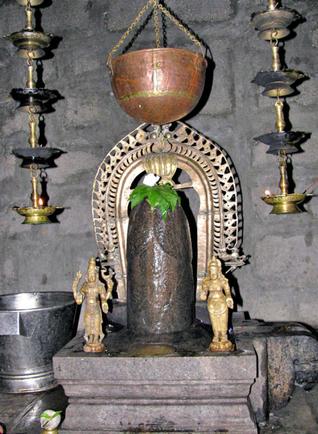
An ancient lingam 200 B.C old found at Aradhanarishwara Temple at Indabettu village in Dakshina Kannada district. Source: TheHindu.com
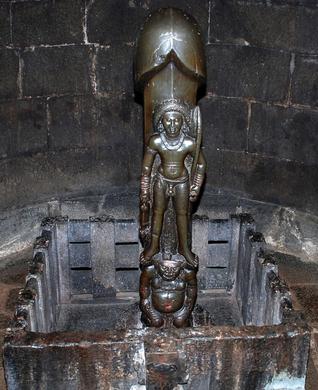
Divinely sculpted: A second century BC idol of Lingodbhava cult of Lord Shiva, the first of its kind found in South India, at Gudimallam temple in Chittoor district. Source: TheHindu.com
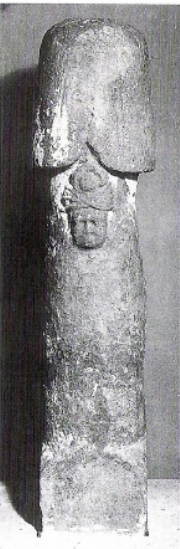
Ek Mukha Lingam, Aghapura, Bharatpur, Rajasthan. First Century A.D
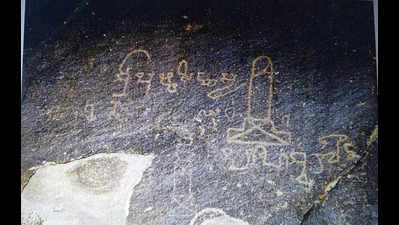
Shivalinga Inscription in Gilgit. 4th Century C.E [Source]
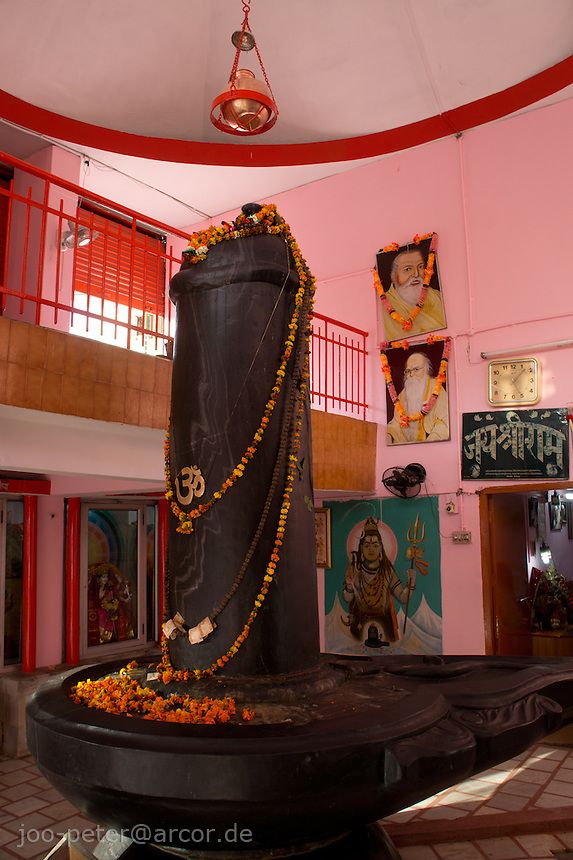
Rishikesh Shivling
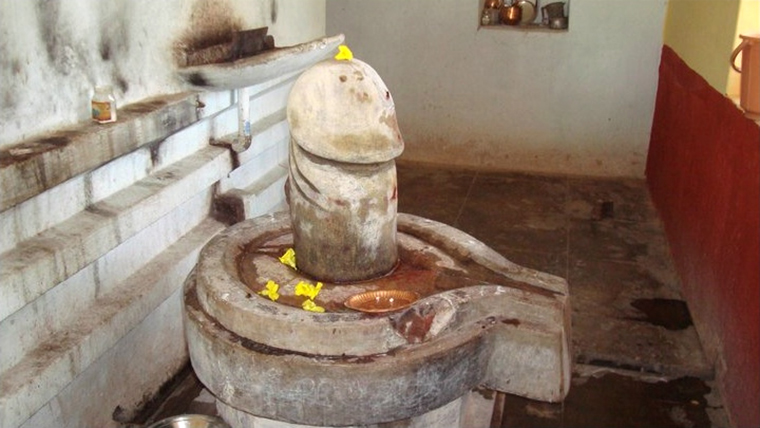
Devipuram Shivling, Andhra Pradesh
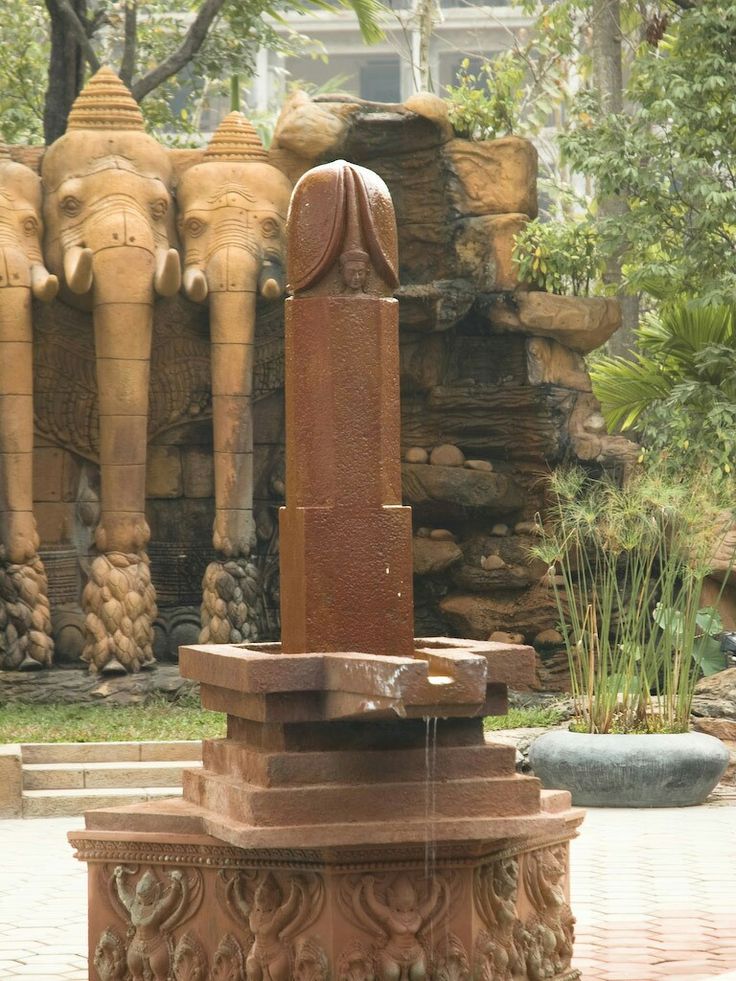
Khmer style Shivling, Cambodia
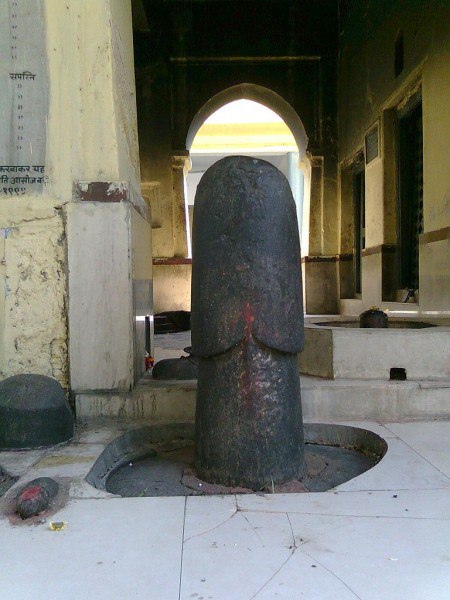
Believed to be Shivling, Vishnupad temple in Gaya
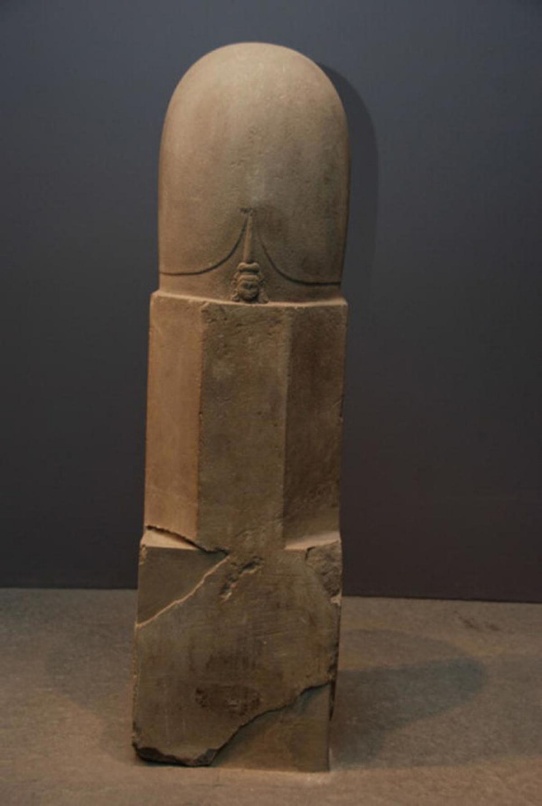
The stone pillar of the Fu Nan period, 6th century CE. It is at the Museum of Vietnamese History, Hochi Minh city, Vietnam. Source: TheHindu.com